

1. Battery Capacity
The capacity of a solar battery, which is measured in kilowatt-hours (kWh), is a significant determinant of its price. A higher capacity allows for more energy storage, which is essential during power outages. Generally, larger batteries (e.g., 20 kWh compared to 5 kWh) come with a higher upfront cost but can lower the cost per kWh stored, making them more economical in the long run.
2. Battery Type and Chemistry
Different types of batteries have varying costs based on their chemistry. The most common options include:
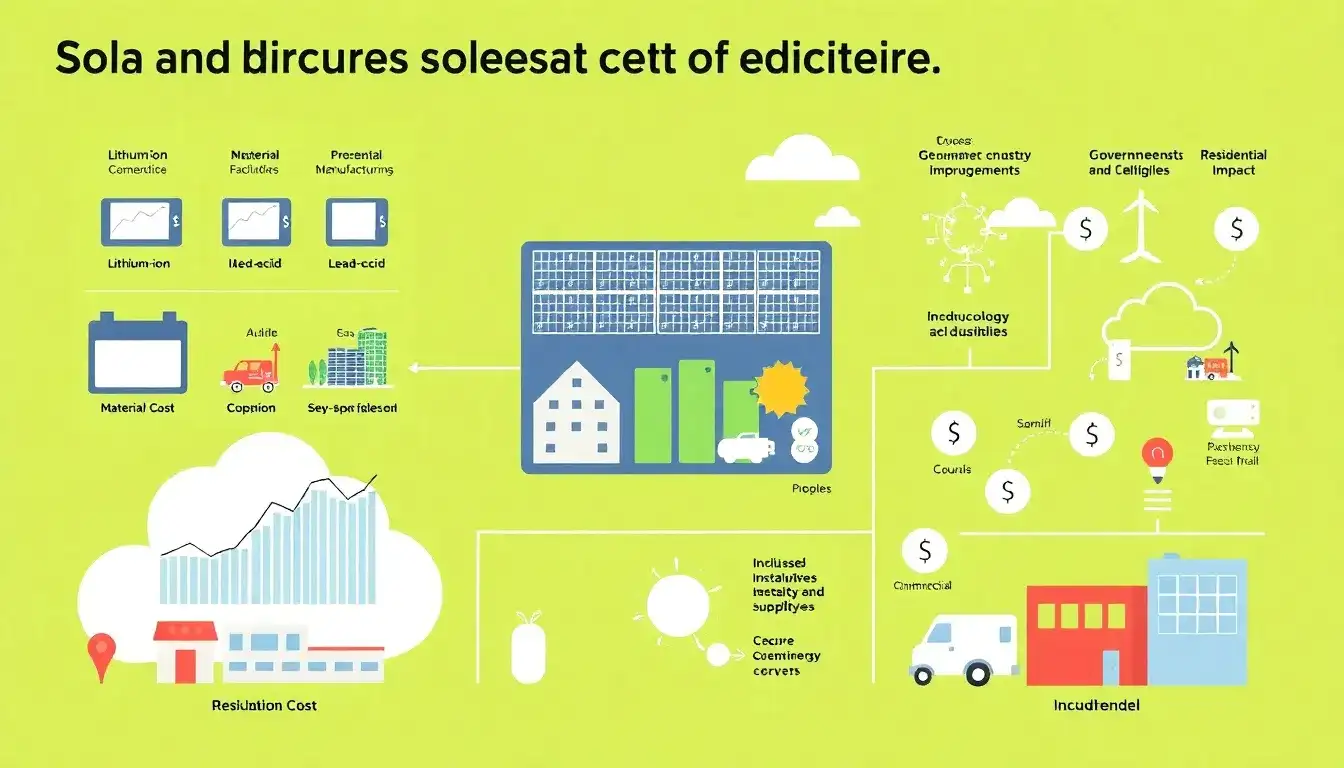
- Lithium-ion Batteries: Known for their efficiency and longevity, these batteries typically cost more, ranging from $400 to $850 per kWh.
- Lead-acid Batteries: These are generally cheaper and range from $150 to $400 per kWh, but they have a shorter lifespan and lower efficiency.
- Nickel-Cadmium Batteries: More expensive than lead-acid but less commonly used due to environmental concerns and costs between $500 and $1,300 per kWh.
3. Installation Costs
Labor and installation fees can also greatly influence the overall cost. If a solar battery is installed simultaneously with solar panels, it often reduces the labor costs since the necessary electrical work can be completed in one go. In contrast, retrofitting a battery into an existing system typically incurs higher costs due to additional wiring and labor needed for installation.
4. Inverter Requirements
Most batteries store DC power, while household appliances require AC power. Thus, an inverter is needed to convert the DC stored in the battery to AC. Depending on whether a hybrid inverter is included or an additional inverter needs to be purchased separately, this can significantly affect costs, possibly adding several thousand dollars to the total.
5. Location and Installer
The geographic location can impact costs due to variations in local labor rates and market demand. Additionally, the choice of installer plays a crucial role in determining the installation price, as more reputable or experienced installers may charge higher fees.
6. Financial Incentives
Various financial incentives, such as federal tax credits (which can reduce costs by up to 30%) and state or local rebate programs, can significantly lower the cost of solar battery systems. Homeowners should carefully consider these incentives when calculating the total cost.
7. Quality and Brand
The brand and quality of the battery can also affect pricing. High-quality batteries from established brands may carry a higher price tag but often offer better performance, longer lifespans, and more reliable warranties compared to lesser-known brands.
Understanding these factors can help homeowners make informed decisions about their solar battery investments, balancing initial costs with long-term benefits and savings.
Original article by NenPower, If reposted, please credit the source: https://nenpower.com/blog/what-are-the-main-factors-that-influence-the-cost-of-solar-batteries/

