

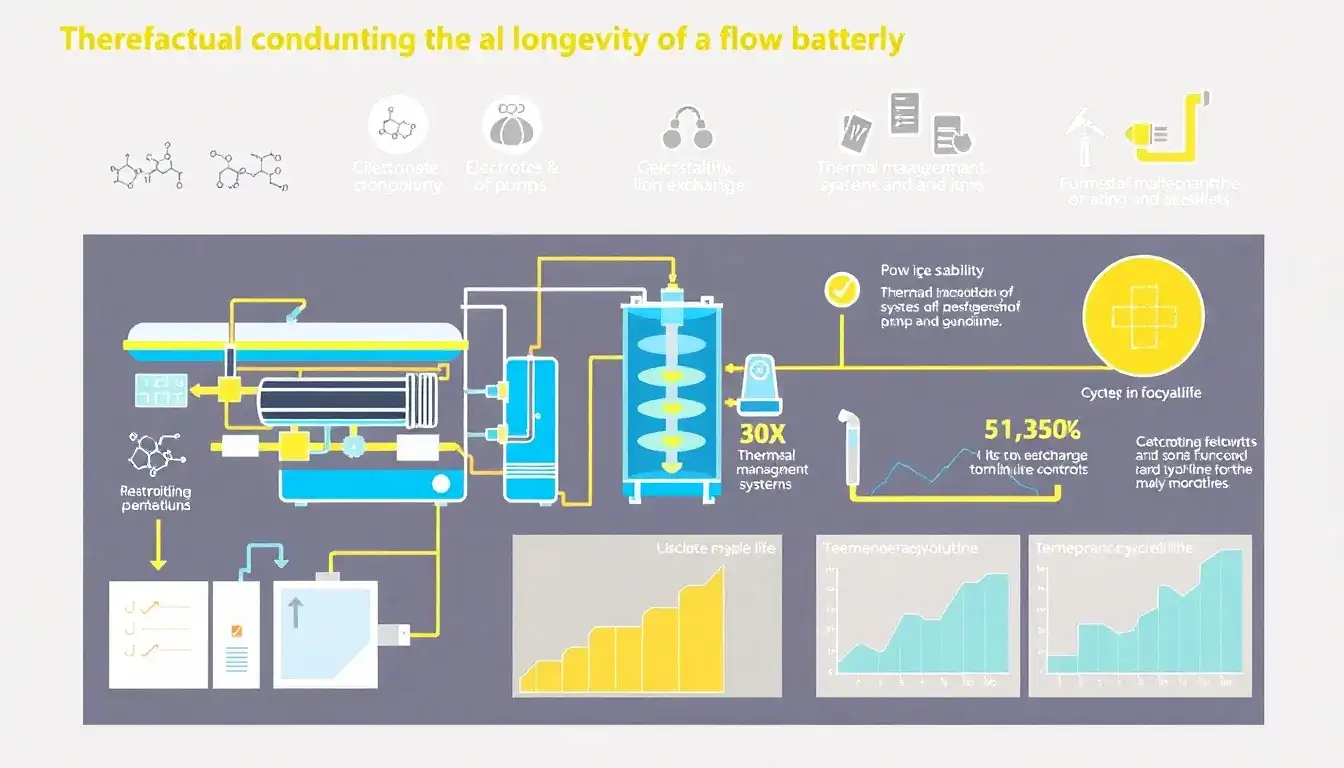
The longevity of flow batteries, particularly vanadium redox flow batteries (VRFBs), is influenced by several key factors:
Main Factors Contributing to Longevity
-
Quality of the Electrolyte
The composition and purity of the electrolyte play a crucial role in maintaining the performance and extending the lifespan of VRFBs. High-quality vanadium and proper chemical composition are essential to prevent degradation and ensure long-term efficiency. -
Frequency of Charge and Discharge Cycles
While VRFBs are designed for thousands of cycles, excessive charge/discharge beyond recommended limits can cause wear and reduce lifespan. Maintaining the manufacturer’s cycle guidelines helps in extending battery life. -
Maintenance Schedule Adherence
Regular maintenance, including monitoring electrolyte levels, balancing state of charge, inspecting the cell stack, and performing diagnostics, is vital. Neglecting routine checks or delaying repairs can lead to cumulative damage and shortened lifespan. -
Operating Environment
Housing the system in a clean, climate-controlled environment with controlled temperature (typically between 10°C and 40°C) is crucial. Extreme temperatures and environmental conditions like dust and humidity can degrade components and reduce lifespan. -
Component Quality and Design
Using high-quality components like membranes and pumps can enhance efficiency and longevity. Additionally, ensuring that the design allows for easy maintenance and flexibility in operation can contribute to extending the lifespan. -
State of Charge Balancing
Regularly balancing the state of charge between the positive and negative tanks helps maintain efficiency and prevents degradation over time. -
Electrolyte Replenishment and Recycling
Over time, the electrolyte may degrade. Regular recycling and replenishment can maintain its integrity and extend the battery’s life.
Advantages of Flow Batteries
Flow batteries offer several advantages that inherently contribute to their longevity:
- Long Cycle Life: They can withstand thousands of charge/discharge cycles with minimal degradation.
- No Solid-to-Solid Phase Transitions: This characteristic reduces degradation compared to lithium-ion batteries.
- Safety and Low Maintenance: Aqueous electrolytes and separate energy storage and power generation reduce risks and maintenance needs.
Original article by NenPower, If reposted, please credit the source: https://nenpower.com/blog/what-are-the-main-factors-that-contribute-to-the-longevity-of-flow-batteries/

