

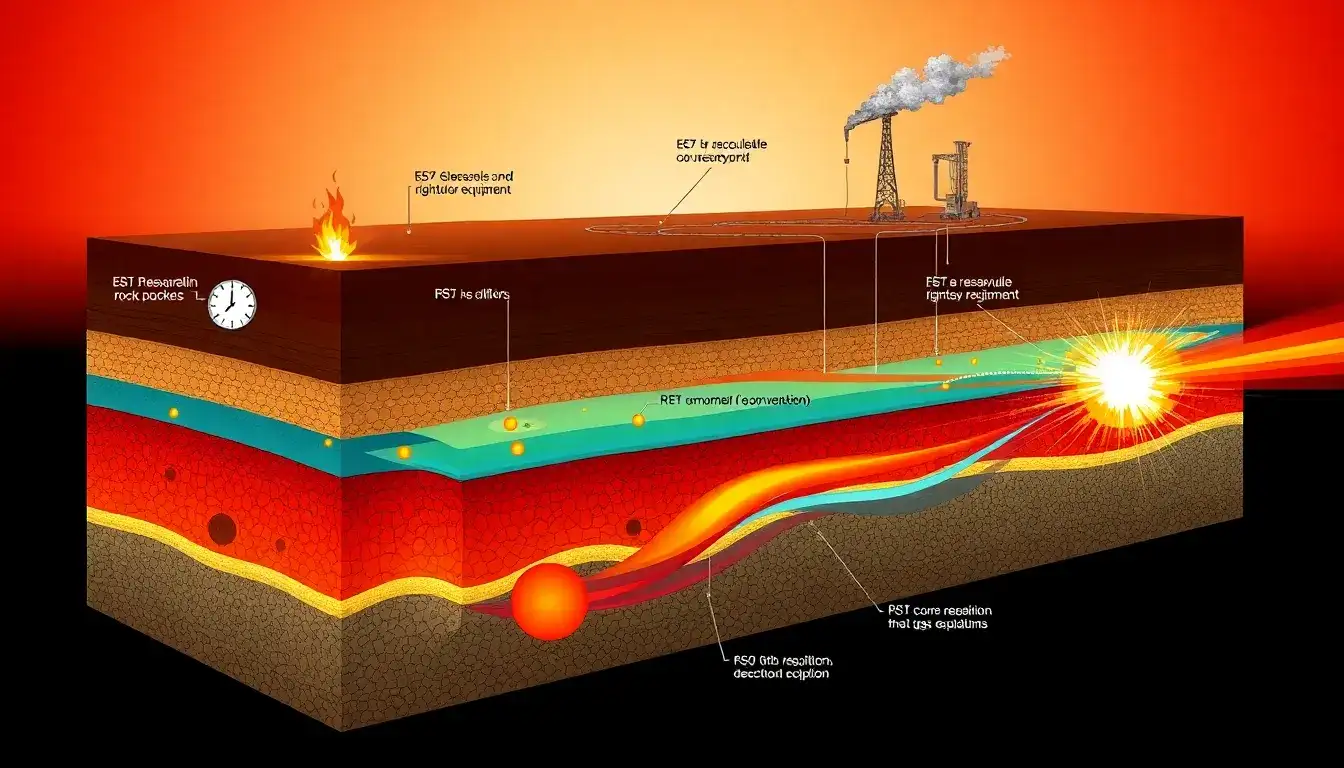
The main factors contributing to the ignition and explosion potential in depleted natural gas reservoirs can be summarized as follows:
- Presence of Residual Hydrocarbons: Depleted natural gas reservoirs often contain residual hydrocarbons, which serve as fuel for potential fires or explosions.
- Oxygen Supply: Compressed air injected into these reservoirs provides the necessary oxygen for combustion, especially when used for energy storage purposes.
- Ignition Sources: Various mechanisms can provide the heat or spark needed for ignition. These include:
- Heat of Compression: As compressed air is injected into the reservoir, it can generate heat during the compression process.
- Friction: Relative motion of materials within the formation during air injection can produce friction, which can act as an ignition source.
- Combustion Conditions: The classic fire triangle requires three elements for combustion: fuel (residual hydrocarbons), oxygen (from compressed air), and heat (from ignition sources). When these conditions are met, there is a potential for fires or explosions.
These factors combined create a hazardous environment where ignition and explosions can occur if not properly managed.
Original article by NenPower, If reposted, please credit the source: https://nenpower.com/blog/what-are-the-main-factors-that-contribute-to-the-ignition-and-explosion-potential-in-depleted-natural-gas-reservoirs/

