

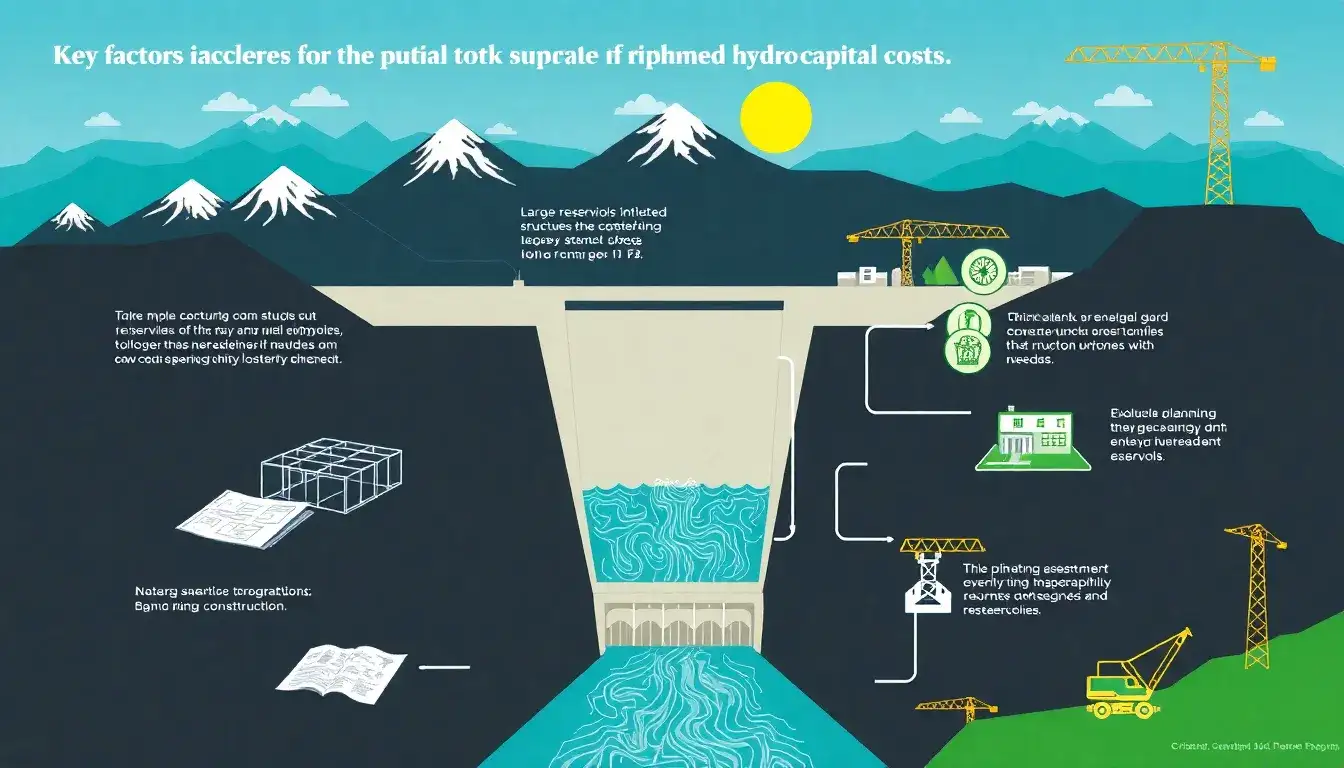
The high initial capital costs of pumped hydro storage (PHS) are primarily driven by several key factors:
- Construction and Infrastructure Costs:
- Dam and Reservoir Construction: The creation of two large reservoirs, often requiring significant civil engineering works, including excavation and construction materials like concrete and steel.
- Powerhouse and Turbines: The installation of turbines, generators, and associated equipment for power generation and pumping operations.
- Land Acquisition and Environmental Impact Studies:
- Costs associated with land acquisition, environmental impact assessments, licensing, and permitting procedures are substantial.
- Equipment and Materials:
- The need for high-quality, durable materials to withstand long-term usage and ensure safety adds to the expense.
- Site-Specific Factors:
- Hydraulic Head: The height difference between the upper and lower reservoirs, which affects the size and complexity of the facility. Higher heads can reduce reservoir size but require more complex engineering.
- Distance Between Reservoirs: This can impact the length of tunnels or waterways needed, adding to overall costs.
- Indirect Costs:
- These include project management fees, contingency funds, insurance, taxes, and other corporate overheads.
- Design and Planning Costs:
- Detailed engineering studies and planning phases contribute significantly to initial costs.
Original article by NenPower, If reposted, please credit the source: https://nenpower.com/blog/what-are-the-main-factors-that-contribute-to-the-high-initial-capital-costs-of-pumped-hydro-storage/

