

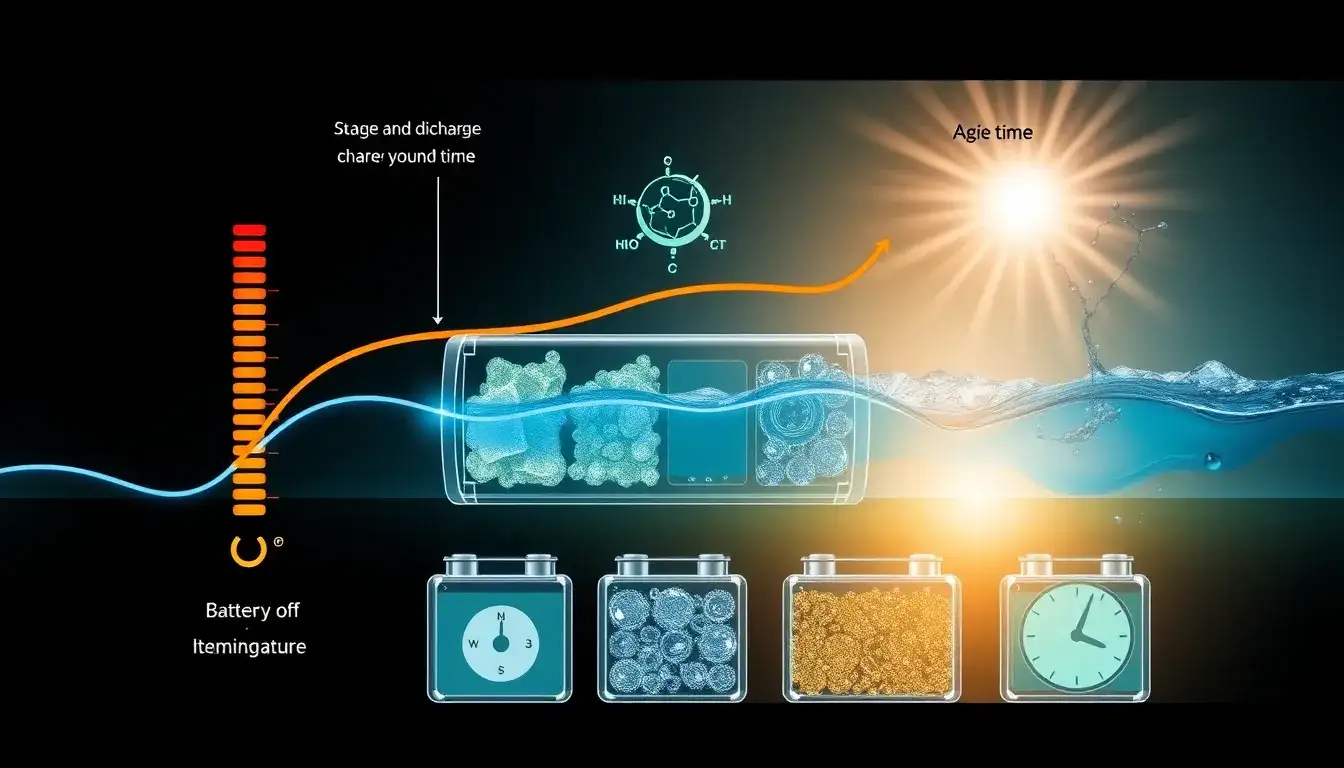
The main factors contributing to electric vehicle (EV) battery aging can be categorized into calendric aging (time-dependent) and cyclic aging (usage-dependent) processes:
1. Calendric Aging (Storage-Related)
- Temperature: High ambient temperatures accelerate chemical degradation and increase internal resistance. For every 10°C (50°F) reduction in operating temperature, battery lifespan can approximately double.
- State of charge (SOC): Storing batteries above 90% SOC causes rapid electrolyte breakdown and solid-electrolyte interphase (SEI) layer growth.
- Time: All lithium-ion batteries degrade progressively, even without use.
2. Cyclic Aging (Usage-Related)
- Depth of discharge (DOD): Large discharge cycles (e.g., 60% DOD) cause more stress than multiple small cycles (e.g., 20% DOD).
- Charging speed: Frequent DC fast charging generates excess heat, accelerating electrode degradation.
- Energy throughput: Total energy moved through the battery directly correlates with capacity loss.
3. Environmental & Behavioral Factors
- Thermal management: Liquid-cooled systems (e.g., Tesla) degrade ~2.3% annually versus 4.2% for air-cooled (e.g., Nissan Leaf).
- Driving habits: Aggressive acceleration, heavy loads, and steep climbs increase current draw, straining the battery.
- Charge maintaining: Keeping SOC between 20%-80% minimizes stress, while full charges or deep discharges exacerbate aging.
4. Internal Degradation Processes
- SEI growth: Electrolyte decomposition forms insulating layers on electrodes, reducing lithium-ion availability.
- Lithium plating: Low-temperature charging deposits metallic lithium on anodes, permanently reducing capacity.
- Electrolyte dry-out: Degraded electrolytes increase resistance and create thermal runaway risks.
These factors collectively reduce capacity (range) and power (acceleration/charging speed) over time, typically leading to 8-15 year lifespans under normal conditions.
Original article by NenPower, If reposted, please credit the source: https://nenpower.com/blog/what-are-the-main-factors-that-contribute-to-ev-battery-aging/

