

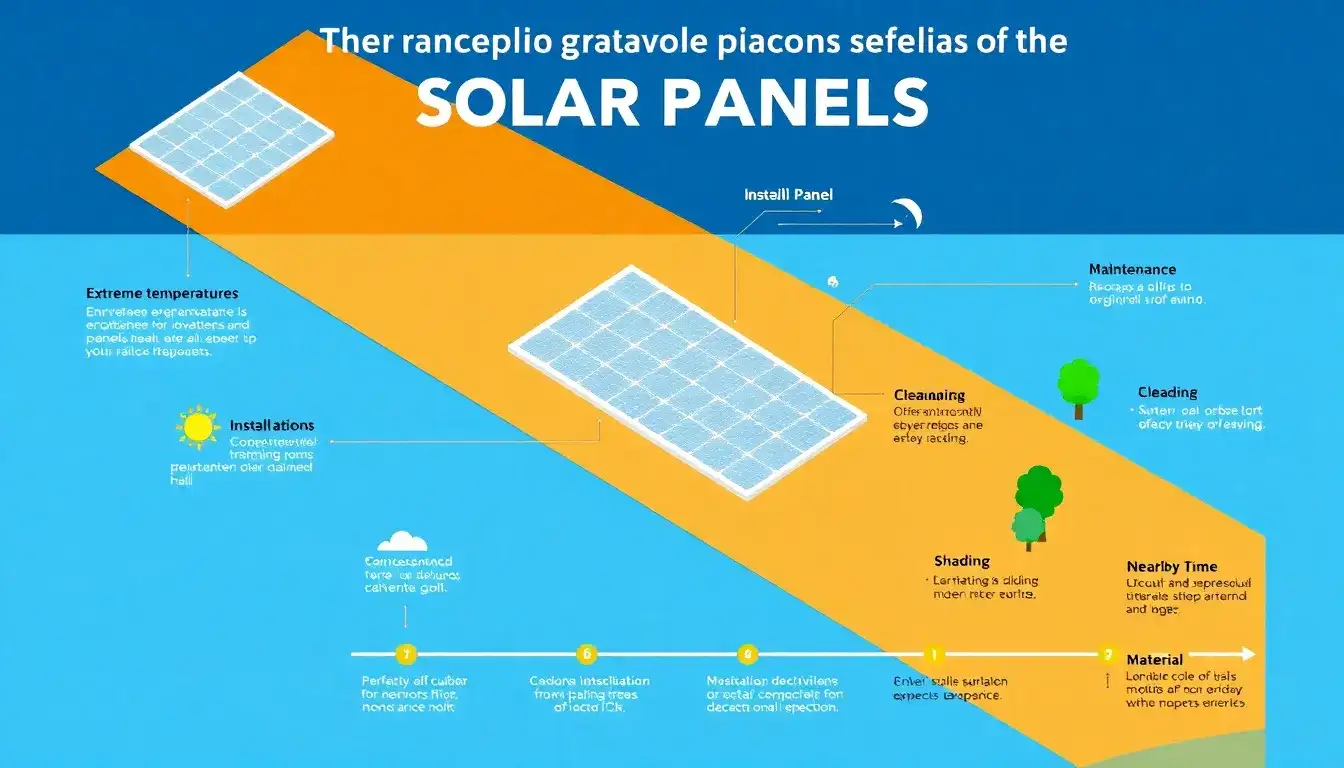
The lifespan of solar panels is influenced by several key factors:
- Material Quality: The durability and efficiency of solar panels are heavily dependent on the quality of materials used in their construction. High-grade materials can resist degradation from UV exposure and temperature fluctuations better than low-quality ones.
- Installation Techniques: Proper installation ensures that solar panels are securely mounted, allowing for adequate air circulation and optimal orientation to the sun. This helps prevent overheating and suboptimal performance.
- Weather and Environmental Conditions: Solar panels exposed to harsh environments, such as frequent high winds, hail, or extreme temperature variations, are at a higher risk of physical damage and quicker degradation. Coastal regions may experience corrosion due to salt mist, while desert regions may suffer from sand abrasion.
- Regular Maintenance Practices: Regular cleaning to remove dust and debris, along with inspections to check for damage or wear, can extend the life of solar panels. Ensuring panels are free from shading and have optimal tilt angles also contributes to maintaining their efficiency.
- Technological Advances and Upgrades: While not a direct factor affecting lifespan, advancements in technology can lead to more efficient and durable panels. Upgrades can also provide opportunities to improve existing systems.
Additionally, degradation rates, influenced by UV exposure and environmental factors, typically range from 0.5% to 1% annually. Proper handling during installation and storage is also crucial to avoid microcracks and scratches that can impact lifespan.
Original article by NenPower, If reposted, please credit the source: https://nenpower.com/blog/what-are-the-main-factors-that-affect-the-lifespan-of-solar-panels/

