

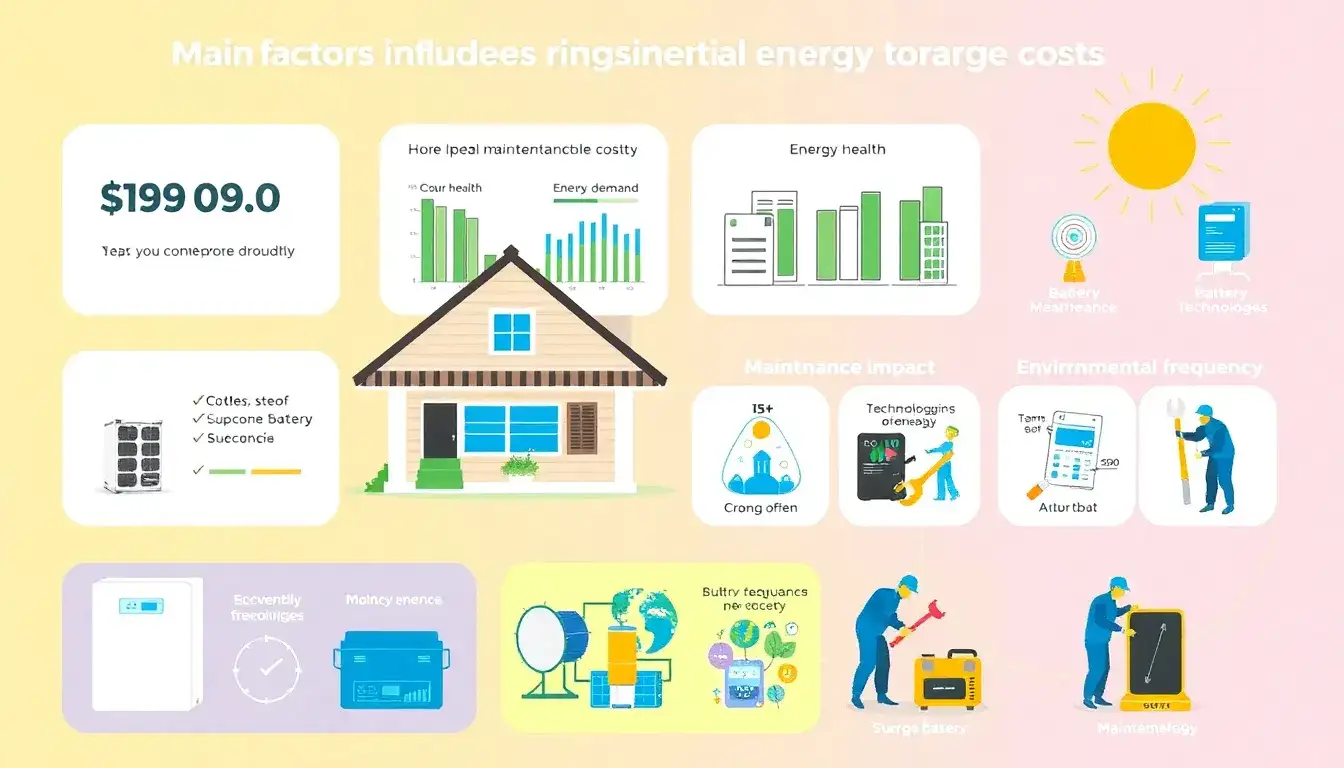
The main factors influencing the maintenance costs of residential energy storage systems include:
- Type of Battery Technology: Different battery technologies, such as lithium-ion or lead-acid, have varying maintenance requirements. Lithium-ion batteries generally require less maintenance but may need specialized disposal at the end of their life cycle.
- Component Durability and Reliability: Components like inverters, cooling systems, and wiring need routine checks to ensure they are functioning properly. High-quality components can reduce long-term maintenance costs.
- System Age and Condition: As systems age, components may need replacement, increasing maintenance costs over time. Battery replacement typically occurs every 10 to 15 years.
- Usage Patterns: More frequent use of the energy storage system may require more frequent inspections and potential replacements of parts, though lithium-ion systems are generally robust.
- Environmental and Operational Conditions: Factors such as temperature, humidity, and whether the system is regularly cleaned can affect system longevity and maintenance needs.
- Software Updates and Monitoring: Modern systems often require software updates to maintain efficiency, which can contribute to ongoing maintenance costs.
Overall, while residential energy storage systems require minimal maintenance compared to traditional fossil fuel systems, planning for these factors can help manage long-term costs effectively.
Original article by NenPower, If reposted, please credit the source: https://nenpower.com/blog/what-are-the-main-factors-influencing-the-maintenance-costs-of-residential-energy-storage-systems/

