

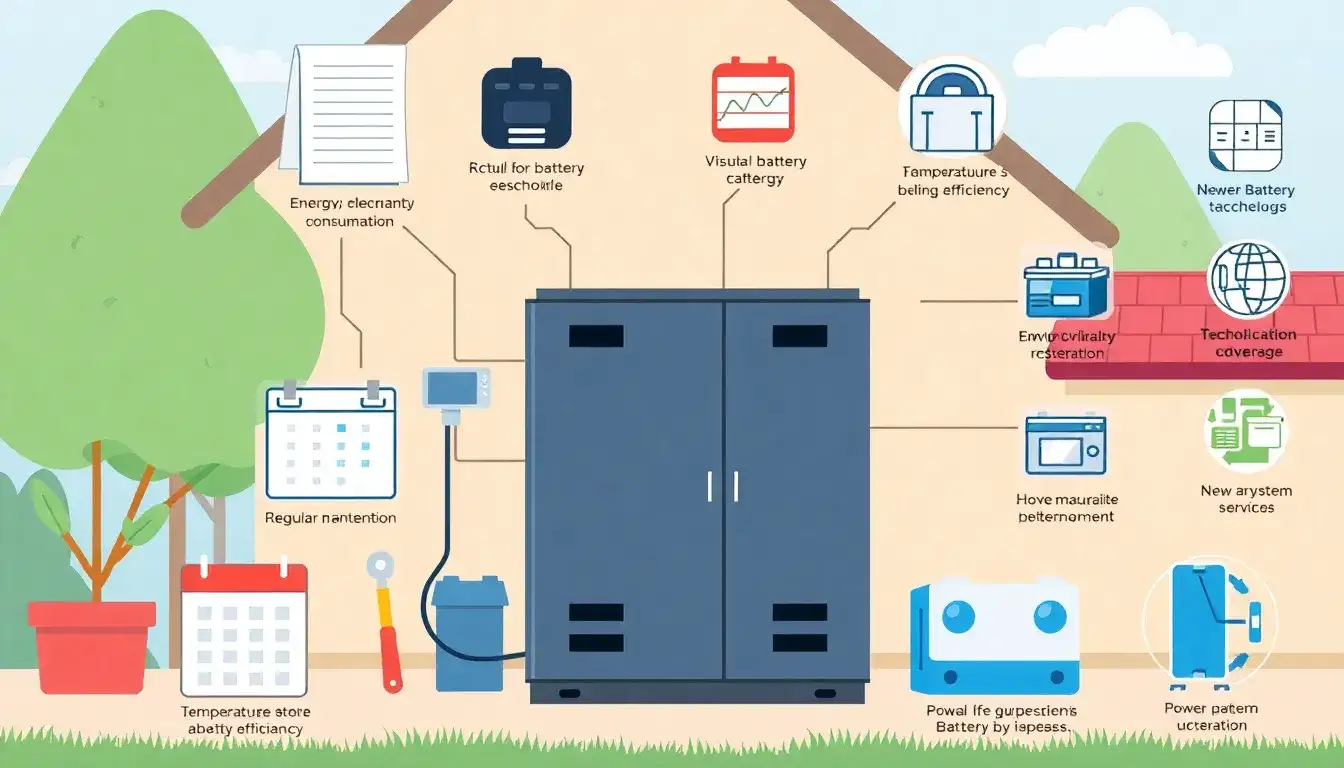
The main factors influencing the maintenance costs of residential battery systems include:
- Battery Type and Chemistry:
- Lithium-ion batteries, while more expensive upfront, have fewer moving parts and thus generally lower maintenance costs compared to older technologies like lead-acid batteries.
- The type of lithium-ion chemistry, such as Lithium Iron Phosphate (LFP) or Nickel Manganese Cobalt (NMC), can impact long-term reliability and maintenance needs.
- Usage Patterns and Conditions:
- Factors like charge cycles, temperature, and proper use significantly affect how long a system will last before needing replacement.
- Environmental conditions can impact battery performance and longevity.
- System Design and Complexity:
- The complexity of the overall system, including additional components like inverters and monitoring systems, can influence maintenance needs.
- Systems with integrated monitoring can provide early warnings for maintenance needs.
- Maintenance Tasks and Frequency:
- Routine inspections, firmware updates, and occasional component replacements are typical maintenance activities.
- The frequency and cost of these tasks depend on the system’s design and operating conditions.
- End-of-Life Disposal and Recycling:
- Planning for battery recycling or disposal is essential, as it involves specialized processes for types like lithium-ion batteries.
These factors contribute to the overall maintenance cost of residential battery systems, which are generally lower than those for conventional fossil fuel systems.
Original article by NenPower, If reposted, please credit the source: https://nenpower.com/blog/what-are-the-main-factors-influencing-the-maintenance-costs-of-residential-battery-systems/

