

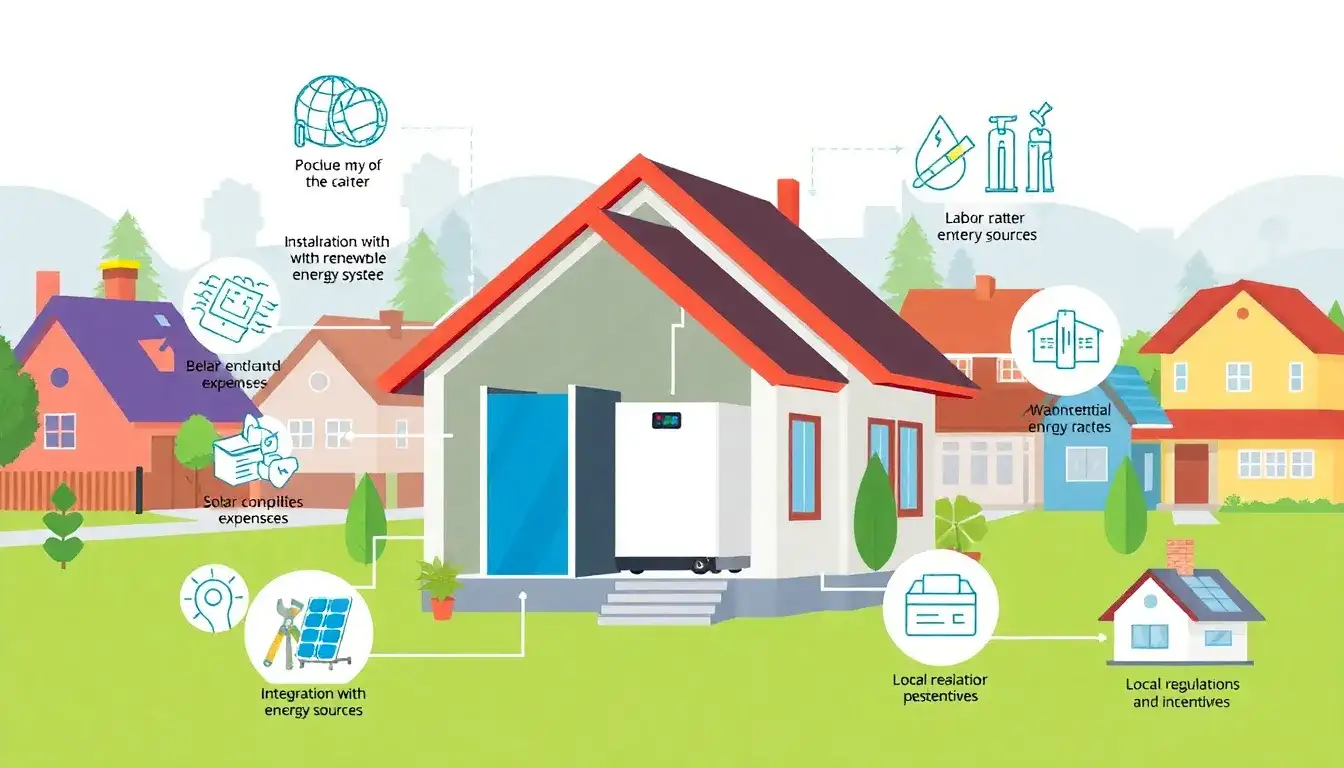
The installation costs of residential energy storage systems, such as solar battery systems, are influenced by several key factors:
Main Factors Influencing Installation Costs
1. Equipment Quality and Brand
- The cost varies based on the quality and brand of the equipment. High-quality batteries from reputable brands like Tesla, Enphase, and SolarEdge are typically more expensive but offer longer lifespans and better warranties. Lesser-known brands may be cheaper initially but could lead to higher maintenance costs in the long run.
2. Installation Complexity and Labor Fees
- The complexity of the installation process significantly impacts costs. Factors include the location, existing electrical infrastructure, and the need for additional components like inverters or critical load panels. Complex setups or those requiring significant upgrades will incur higher labor fees.
3. System Size and Capacity
- Larger systems generally offer economies of scale; however, the total cost increases with capacity. For instance, a 10 kWh system might cost around $10,750, while a 20 kWh system could cost about $21,500.
4. Geographical Location
- Labor costs, regulatory requirements, and local incentives can vary significantly by region. States with high labor costs or stringent regulations, such as California, may have higher installation costs compared to areas with supportive policies.
5. Inverter Costs
- An inverter is necessary to convert DC electricity from batteries to AC usable by appliances. Inverter costs can range from $1,000 to several thousand dollars, depending on the type and brand.
6. Permitting and Inspection Fees
- These administrative costs ensure compliance with local regulations and typically range from a few hundred to a couple thousand dollars, depending on local requirements.
7. Financial Incentives and Rebates
- Federal and state incentives can significantly reduce installation costs. For instance, the Federal Investment Tax Credit (ITC) offers a 30% tax credit on the total installation cost when batteries are installed with solar panels.
8. Labor Installation Costs
- Professional installation involves complex electrical work, system configuration, and testing, with labor costs ranging from $2,000 to $8,000 depending on complexity.
9. Additional Components and Upgrades
- Additional equipment like critical load panels or electric panel upgrades may be necessary, adding to the overall cost. Using load management devices can sometimes eliminate the need for separate critical load panels.
Original article by NenPower, If reposted, please credit the source: https://nenpower.com/blog/what-are-the-main-factors-influencing-the-installation-costs-of-residential-energy-storage-systems/

