

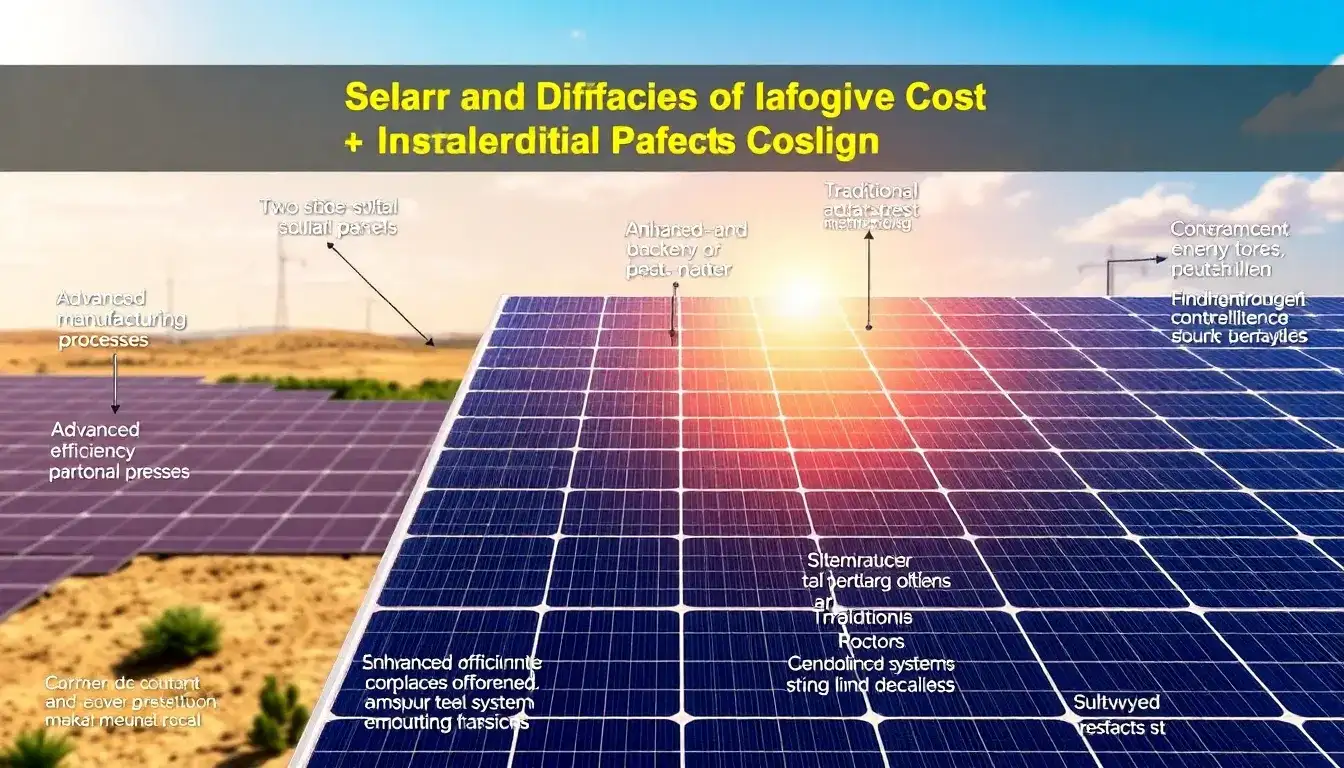
The higher initial cost of bifacial solar panels compared to their monofacial counterparts is influenced by several key factors:
- Double-Glass Construction: Bifacial panels typically feature glass on both sides, which enhances durability but increases material costs. This robust design contributes to longer warranties and an extended operational lifespan.
- Increased Efficiency and Complexity: Bifacial panels capture sunlight from both sides, increasing efficiency and energy yield. However, this dual-sided design requires more sophisticated technology, adding to the production cost.
- Specialized Mounting and Installation Requirements: To maximize their benefits, bifacial panels often require specialized mounting systems that allow for optimal tilt angles and elevation to capture reflected light effectively. This complexity can increase labor costs and installation expenses.
- Higher Component Costs: The increased cost of manufacturing bifacial panels due to their complex structure and materials also contributes to the higher upfront cost. This includes higher-quality components necessary for capturing light from both sides.
- Market and Regulatory Factors: Tariffs and other regulatory factors can influence the cost of bifacial solar panels. For instance, historical tariffs on solar panels, including bifacial modules, have affected prices in regions like the United States.
Original article by NenPower, If reposted, please credit the source: https://nenpower.com/blog/what-are-the-main-factors-influencing-the-higher-initial-cost-of-bifacial-solar-panels/

