

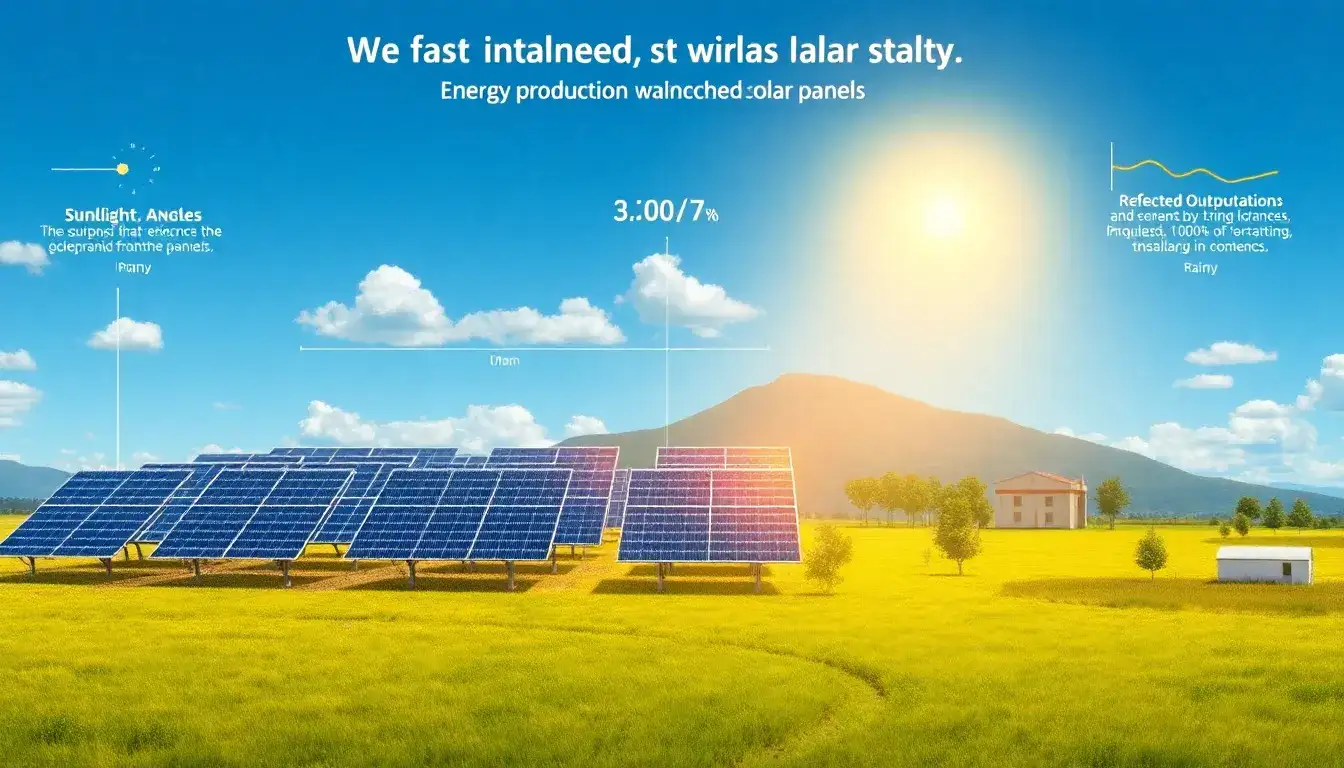
The energy production variability of bifacial solar panels is influenced by multiple interrelated factors that affect the amount of solar irradiance captured by both the front and rear sides of the panels. The main factors include:
1. Ground Surface Albedo
- Albedo is the reflectivity of the surface beneath the solar panels, which determines how much light is reflected onto the rear side of bifacial modules.
- High-albedo surfaces like snow (reflectivity ~80-85%) can significantly boost rear-side energy generation, leading to power gains of 10-25% or more compared to monofacial panels.
- Surfaces with lower reflectivity, such as soil, grass, or water, produce smaller bifacial gains. For example, soil reflectivity ranges between 20-33%, while water is 5-12% reflectivity, resulting in lower rear-side contributions.
2. Bifaciality Factor
- This is the ratio of the rear-side power generation capability to the front side under standard test conditions (STC).
- It typically ranges between 60% and 95%, depending on the cell technology; PERC cells usually exhibit about 0.7, while advanced SHJ cells can reach up to 0.92.
- The bifaciality factor directly affects how much energy the back surface can convert, thus affecting overall system output.
3. Mounting Configuration and Array Geometry
- Parameters such as row height, tilt angle, pitch (row spacing), and ground coverage ratio (GCR) influence the shading and irradiance on the rear side.
- Increased row spacing tends to increase rear-side irradiance and energy yield, as shading is reduced.
- Shade factors accounting for blockages from mounting structures can reduce rear-side irradiance.
- However, some parameters like row height and pitch may have less impact (<0.5%) on annual energy production compared to albedo and bifaciality factor.
4. Environmental Conditions
- Snow coverage on panels and ground influences energy output. Snow accumulation can block the front side, dramatically reducing power output, but also increases albedo, potentially boosting rear-side gain when the snow slides off.
- Temperature changes influence snow sliding, affecting how much snow remains on panels.
- Soiling, dirt, and snow accumulation reduce energy yield by decreasing irradiance on the panels.
- Climate and weather variability, including diffuse and direct irradiance components, strongly affect bifacial performance.
5. Module Technology and Material
- Different bifacial module types (PERC, HJT, IBC, TOPCon) exhibit varying bifaciality and performance depending on the environment.
- HJT technology performs best in high reflectivity environments such as snow, while PERC is more average across scenarios.
- Technology choice should consider local ground reflectivity to optimize power generation.
6. Shading and Mechanical Losses
- Shading from mounting structures (torque tubes, frames) on the back side reduces available irradiance and thus rear-side energy production.
- Transmission factors accounting for light losses around and through modules also contribute to variability in output.
Summary Table of Main Factors Influencing Energy Production Variability of Bifacial Panels
| Factor | Description / Impact |
|---|---|
| Ground Surface Albedo | Reflectivity beneath panels affects rear irradiance; snow and white surfaces provide highest gains |
| Bifaciality Factor | Rear/front power ratio; higher factor means greater rear-side energy production |
| Mounting Configuration | Row height, tilt, spacing, and GCR affect shading and rear irradiance; row spacing usually increases yield |
| Environmental Conditions | Snow coverage, temperature, soiling, and weather variability affect irradiance and snow clearance |
| Module Technology | Different cell types have different bifaciality and reflectivity responses |
| Shading/Mechanical Losses | Structural shading and transmission losses reduce rear irradiance |
Overall, the variability in bifacial solar panel energy production stems from complex interactions between site-specific ground albedo, module bifaciality, installation geometry, local climate, and maintenance conditions. Optimizing these factors can yield 6-30% higher energy production compared to monofacial panels depending on site and system design.
Original article by NenPower, If reposted, please credit the source: https://nenpower.com/blog/what-are-the-main-factors-influencing-the-energy-production-variability-of-bifacial-solar-panels/

