

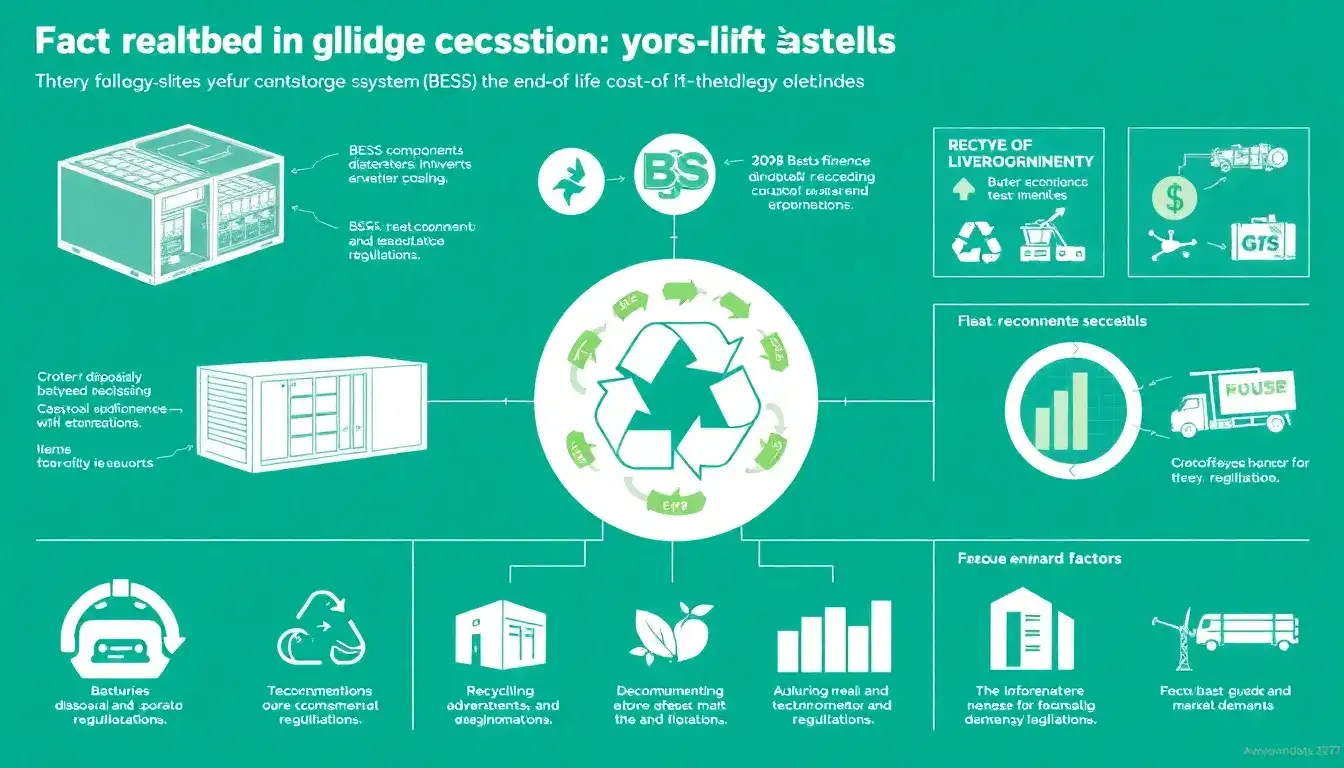
Main Factors Influencing End-of-Life Costs for BESS
- Type of Battery Chemistry:
- Lithium-ion Batteries: These require special recycling processes due to their chemical composition, which can add to the end-of-life costs. While they are the most popular due to their high efficiency, they demand careful handling at the end of their lifecycle.
- Recycling and Disposal Technologies:
- The cost and availability of recycling technologies can significantly affect end-of-life costs. Efficient recycling methods can reduce costs by recovering valuable materials from spent batteries.
- Regulatory Frameworks:
- Local and national regulations regarding battery disposal can impact costs. Compliance with evolving standards requires planning and may involve additional expenses.
- Storage and Handling:
- Proper storage before disposal or recycling is crucial to avoid accidents and ensure compliance with safety standards, which can influence costs.
- Supply Chain and Material Recovery:
- The ability to recover materials effectively can offset disposal costs. Transparent and sustainable supply chains are essential for minimizing ecological impacts and potentially lowering end-of-life expenses.
- Government Incentives and Policies:
- Governments may offer incentives or tax credits for responsible end-of-life management, which can help reduce costs.
- Installation Location and Accessibility:
- The location of a BESS, whether it is in a remote or easily accessible area, can affect the logistics and costs associated with retrieving and handling spent batteries.
- System Design and Modularity:
- Systems designed with modularity in mind can be more cost-effective during end-of-life phases, as components may be easily separated and recycled.
Original article by NenPower, If reposted, please credit the source: https://nenpower.com/blog/what-are-the-main-factors-influencing-the-end-of-life-costs-for-bess/

