

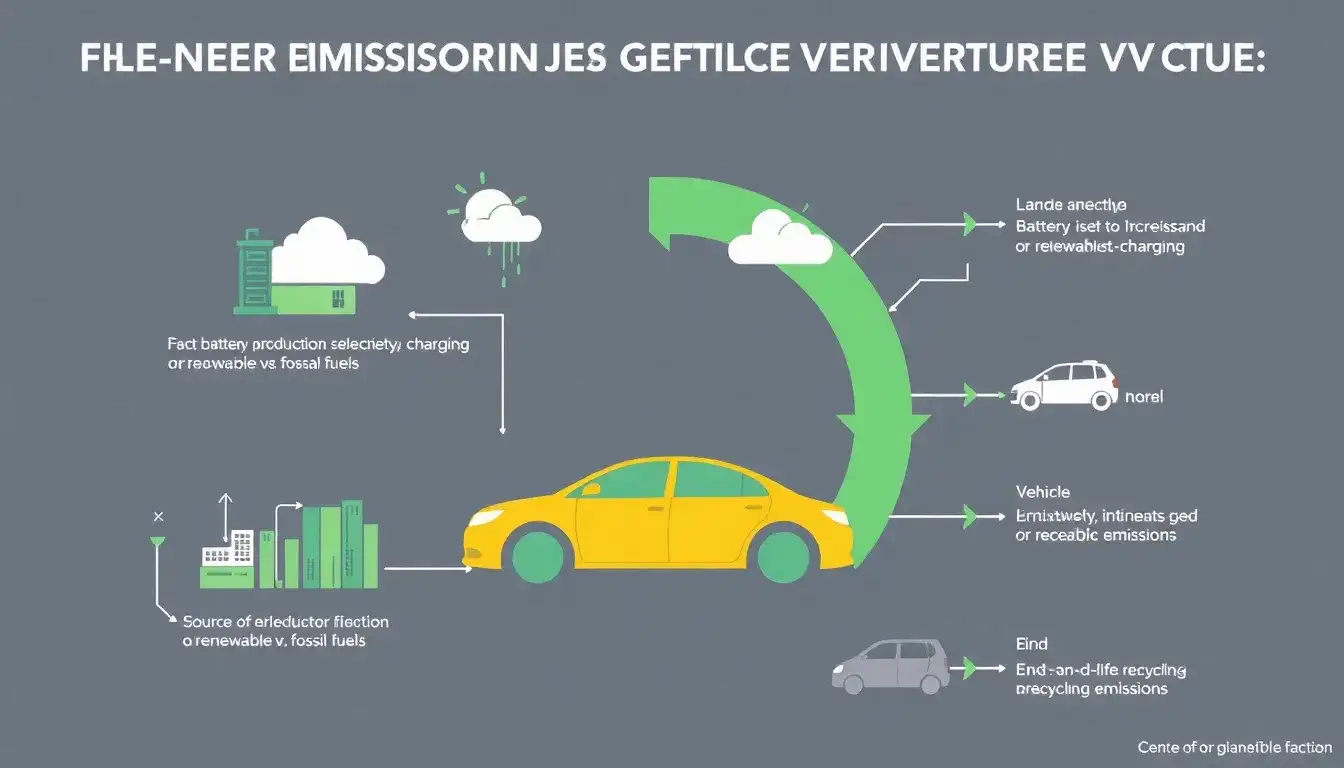
The main factors influencing the emissions of electric vehicles (EVs) can be broadly categorized into tailpipe emissions, fuel-cycle emissions, and vehicle lifecycle emissions:
1. Tailpipe Emissions
- EVs, including battery electric vehicles (BEVs) and plug-in hybrid electric vehicles (PHEVs) when running solely on electricity, have zero tailpipe emissions because they do not burn fuel onboard. This contrasts with conventional gasoline or diesel vehicles that produce exhaust emissions directly from the vehicle.
2. Fuel-Cycle (Upstream) Emissions
- Although EVs have no tailpipe emissions, the electricity used to charge them often comes from power plants that may burn fossil fuels, leading to indirect emissions. These emissions depend heavily on the energy mix of the electrical grid in a given geographic area.
- In regions where electricity is generated primarily from low-emission sources such as renewables, nuclear, or hydropower, EVs provide a much greater reduction in life cycle emissions compared to internal combustion engine vehicles.
- Conversely, in areas with electricity generation dominated by coal or other high-emission fossil fuels, the upstream emissions linked to EV charging can be significant, reducing the overall emissions advantage of EVs.
3. Vehicle Lifecycle Emissions
- The production, materials, and end-of-life processing of EVs also contribute to emissions. Battery production, in particular, is energy-intensive and can have high associated emissions.
- When evaluating emissions on a “cradle-to-grave” or life cycle basis—which includes vehicle production, fuel production, use phase, and disposal—EVs often still have lower total emissions than gasoline vehicles, especially as the electric grid becomes cleaner over time.
4. Vehicle Use Factors
- Vehicle miles traveled (VMT) also influence total emissions; more driving means more electricity consumption and thus more upstream emissions.
- Driving conditions such as urban vs. highway driving, climate (hot or cold weather), and driving behavior (aggressive or smooth driving) can affect EV energy efficiency and emissions associated with electricity production.
- EVs tend to maintain better efficiency under low-load conditions (e.g., stop-and-go urban traffic) compared to internal combustion engines.
Summary of Main Factors Influencing EV Emissions
| Factor | Description | Effect on EV Emissions |
|---|---|---|
| Tailpipe Emissions | Zero for EVs when running on electricity | Eliminates direct vehicle emissions |
| Electricity Generation Mix | Proportion of renewables vs. fossil fuels in the power grid | Determines upstream emissions from EV charging |
| Battery and Vehicle Production | Emissions from manufacturing batteries and vehicles | Adds to life cycle emissions |
| Vehicle Use (Miles, Conditions) | Total distance driven, driving behavior, weather and climate impacts on EV efficiency | Influences total electricity consumption and emissions |
| Grid Emission Intensity | Carbon intensity of electricity generation per kWh | Directly impacts EV-related emissions from charging |
In conclusion, the main factors influencing electric vehicle emissions are the emissions intensity of the electricity used for charging, the lifecycle emissions from vehicle and battery production, and the vehicle’s use pattern and driving conditions. EVs generally produce fewer emissions than conventional vehicles, particularly where the electricity comes from cleaner sources.
Original article by NenPower, If reposted, please credit the source: https://nenpower.com/blog/what-are-the-main-factors-influencing-the-emissions-of-electric-vehicles/

