

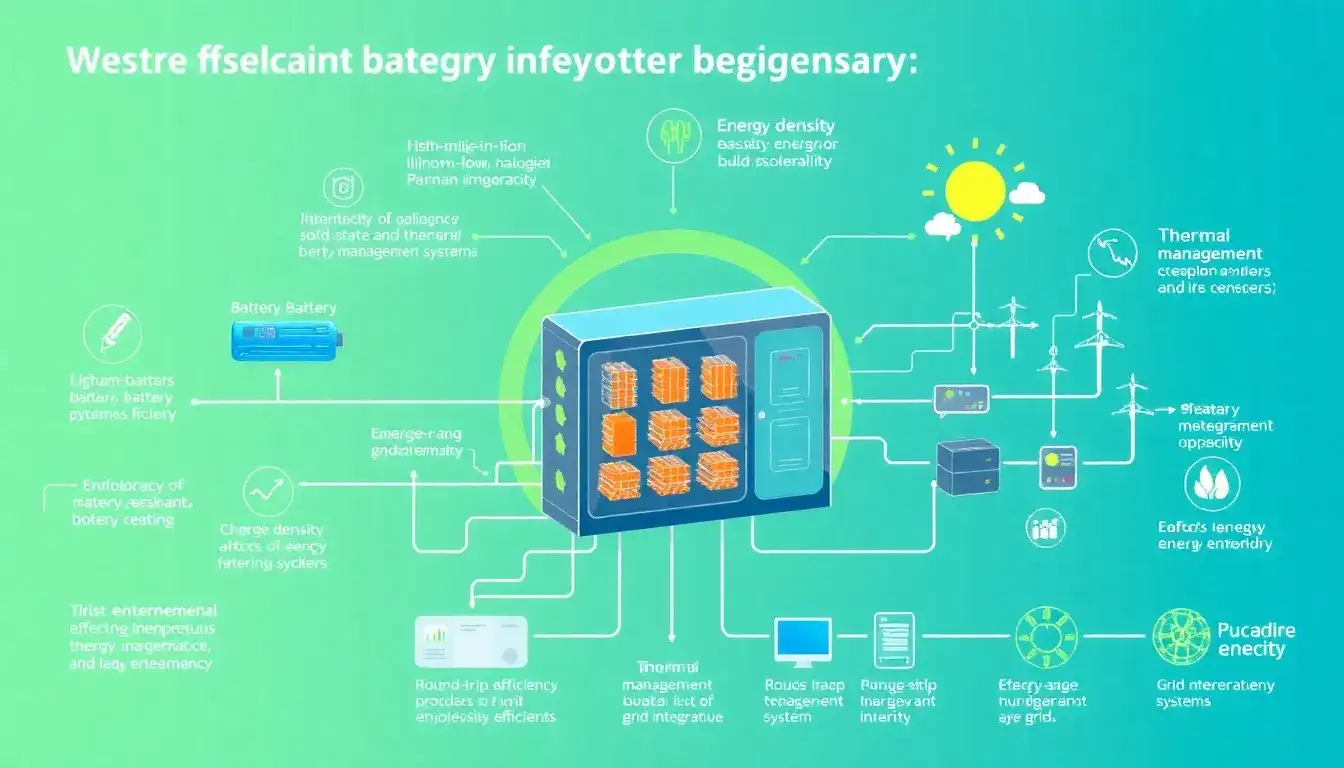
Battery energy storage systems (BESS) have become pivotal in managing energy supply, particularly with the increasing reliance on renewable resources. The efficiency of these systems is influenced by several key factors, which can be summarized as follows:
Main Factors Influencing Battery Energy Storage Efficiency
1. Charging and Discharging Efficiency
The efficiency of a BESS is heavily dependent on the process of charging and discharging. This is often measured using the Round-Trip Efficiency (RTE), which is the ratio of energy output during discharge to energy input during charging. Ideal RTE values are typically around 80% to 86%, meaning that 14% to 20% of the energy is lost in the process. Key components affecting RTE include the battery technology employed, as well as the management of charge and discharge rates.
2. Battery Technology
The type of battery used significantly impacts efficiency. Lithium-ion batteries, for example, are known for their high energy density, low self-discharge rates, and excellent charge/discharge efficiency, making them preferred for many modern applications. In contrast, older technologies like lead-acid batteries generally perform less efficiently. Factors such as battery quality and the manufacturing standards also play a critical role in determining overall performance.
3. Environmental Conditions
Temperature is a crucial factor that affects battery performance and longevity. Excessive heat can accelerate degradation, while low temperatures can reduce efficiency. Maintaining optimal operating temperatures helps ensure that batteries perform reliably over time. Additionally, humidity and other environmental factors can influence battery health and effectiveness by imposing mechanical stress or corrosion risk.
4. Depth of Discharge (DoD)
DoD refers to the percentage of the battery’s capacity that is used during a discharge cycle. Batteries can be harmed by excessive DoD, as deep discharges tend to shorten lifespan and affect overall performance. Ideally, systems should operate with a balance that maximizes usable energy while maintaining battery health.
5. Charge and Discharge Rates
The rate at which a battery is charged or discharged has a significant effect on its lifespan and efficiency. Rapid charging or discharging can lead to overheating and degradation, whereas slower rates often promote longer life and stability. It is essential to design systems that align with the operational requirements while ensuring that the charging and discharging rates are within safe limits.
6. Cycling Frequency
The frequency of charging and discharging cycles, often referred to as cycling, also affects battery life. Each cycle contributes to wear and tear, and thus, higher cycling rates can lead to rapid performance degradation. Understanding the expected cycle life of the battery is important for planning maintenance and potential replacement.
7. Maintenance and Management Systems
Regular maintenance is vital for optimal efficiency of a BESS. This includes monitoring battery health, ensuring proper connections, and replacing components when necessary. Effective energy management systems that optimize charge-discharge cycles can significantly enhance the overall efficiency and longevity of the storage system.
By addressing these factors, users can enhance the efficiency and reliability of battery energy storage systems, making them a more effective tool in energy management strategies, especially in conjunction with renewable energy sources.
Original article by NenPower, If reposted, please credit the source: https://nenpower.com/blog/what-are-the-main-factors-influencing-the-efficiency-of-battery-energy-storage-systems/

