

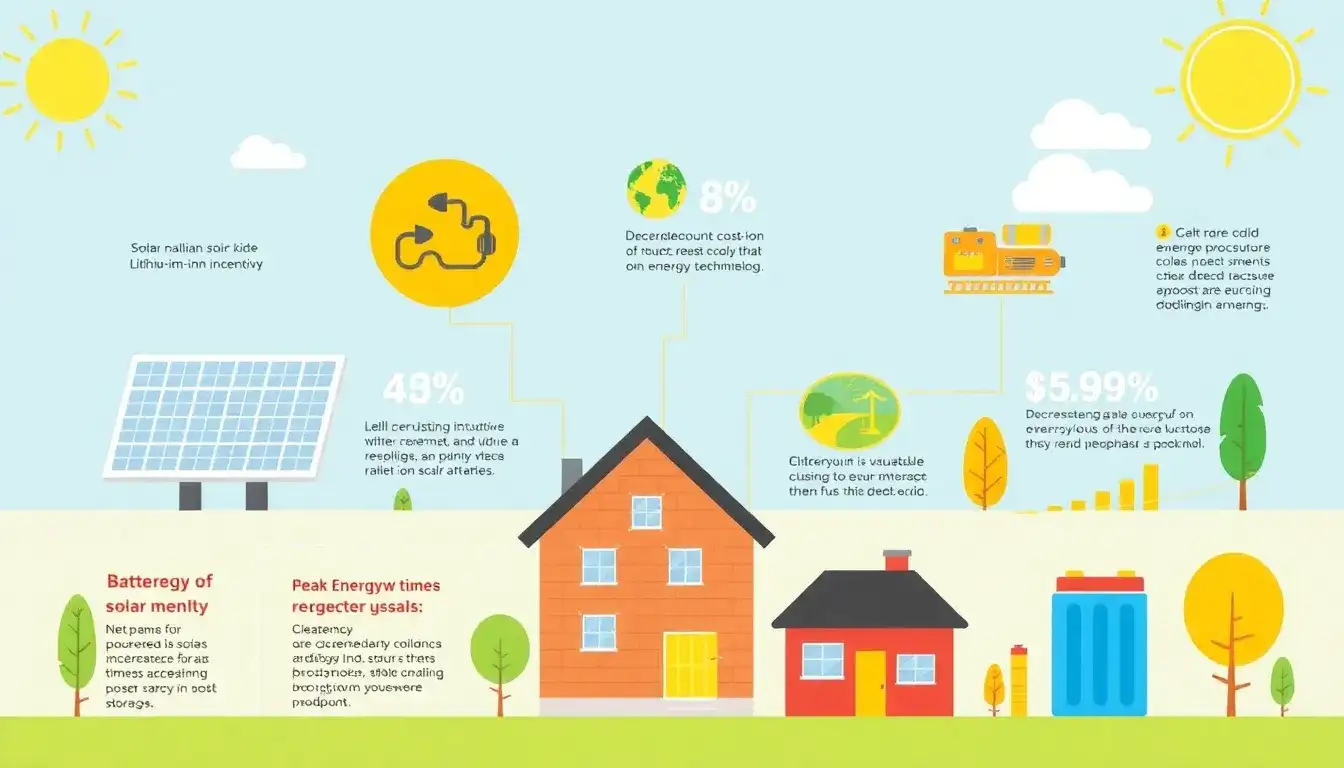
The main factors influencing the cost savings from solar batteries include the following:
1. Battery Capacity and Quantity
The size of the battery storage system is crucial. Larger or multiple batteries can store more solar energy, increasing self-sufficiency and backup power, which can lead to higher savings on electricity bills. However, bigger capacity also means higher upfront costs, so finding the optimal balance based on your energy use and goals is key.
2. Integration with Solar Panel System
Whether the battery is installed as part of a new solar system or added later affects overall cost and savings. Batteries installed simultaneously with solar panels tend to be less expensive than retrofitting an existing system. Also, having compatible equipment (like an inverter designed for battery integration) can reduce costs and improve performance.
3. Financial Incentives and Rebates
Government incentives such as the federal Investment Tax Credit (ITC), local rebates, and utility programs can significantly reduce the net cost of solar battery systems. For example, qualifying systems can receive a 30% federal tax credit, and some states offer additional rebates up to several thousands of dollars, enhancing overall cost savings.
4. Battery Type and Quality
The chemistry and quality of the battery affect both the initial cost and long-term savings. Lithium-ion batteries are more expensive but offer better efficiency, longer lifespan, and greater energy density, which translates to more savings over time. Cheaper options like lead-acid batteries have shorter lifespans and require more maintenance, which can reduce cost-effectiveness.
5. Energy Usage Patterns and Electricity Rates
Savings also depend on how you use the stored energy and your local energy rates. For instance, charging batteries during off-peak hours with cheaper electricity or using stored solar energy during peak rates can maximize savings. Combining solar batteries with time-of-use tariffs (charging when electricity is cheap and discharging when expensive) can lead to substantial financial benefits.
6. Installation Costs and System Complexity
Installation labor, additional equipment needed (such as specialized inverters), and the complexity of integrating battery storage with the current electrical system can influence total costs. More complex setups or higher labor costs reduce net savings.
Summary Table of Main Factors Influencing Solar Battery Cost Savings
| Factor | Impact on Cost Savings |
|---|---|
| Battery capacity & quantity | More storage = higher upfront but more savings |
| New vs retrofit installation | New systems cheaper to integrate, higher savings |
| Financial incentives | Tax credits and rebates significantly reduce cost |
| Battery type & quality | Higher quality = better lifespan, greater savings |
| Energy usage & rates | Maximizing use during peak rates increases savings |
| Installation complexity | Higher complexity = higher cost, less net savings |
In conclusion, maximizing cost savings from solar batteries involves selecting the right battery capacity and type for your needs, installing it efficiently (preferably with new solar systems), taking advantage of financial incentives, and optimizing usage according to energy rates and consumption patterns.
Original article by NenPower, If reposted, please credit the source: https://nenpower.com/blog/what-are-the-main-factors-influencing-the-cost-savings-from-solar-batteries/

