

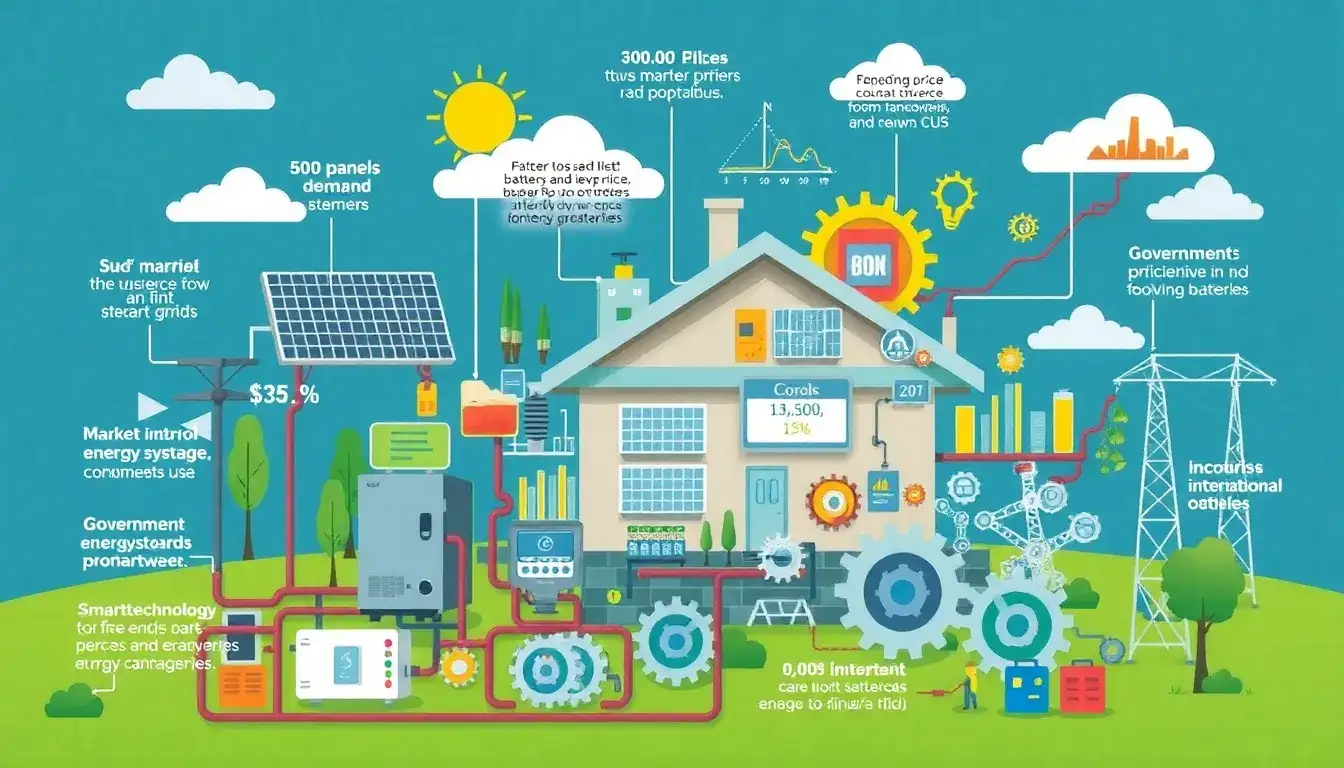
The cost of residential energy storage systems is influenced by several key factors:
Main Factors Influencing Cost
- System Size and Capacity: The larger the system, the higher the cost. This includes both power capacity (in kW) and energy storage capacity (in kWh). Larger systems often benefit from economies of scale, reducing the cost per kWh.
- Battery Technology: The type of battery used significantly affects the cost. Lithium-ion batteries are more expensive than lead-acid batteries but offer better performance and a longer lifespan. Other emerging technologies may have higher initial costs but could offer future advantages.
- Components and Balance of System (BoS): Components other than batteries, such as inverters, cooling systems, and wiring, can add up to 30-40% of the total system cost.
- Installation and Location: The complexity of installation, which can vary according to the system size and location, impacts the overall cost. Installation costs typically account for 10-20% of the total expense. Remote or hard-to-reach locations may increase these costs due to transportation and labor expenses.
- Maintenance and Upgrades: While energy storage systems require less maintenance than traditional generators, ongoing costs include routine inspections, software updates, and occasional component replacements.
- Government Incentives: Tax credits, subsidies, and grants can significantly reduce the upfront cost of energy storage systems.
- Geographical and Regulatory Factors: Local regulations, permitting requirements, and geographical conditions like climate can affect installation costs and project timelines.
Original article by NenPower, If reposted, please credit the source: https://nenpower.com/blog/what-are-the-main-factors-influencing-the-cost-of-residential-energy-storage-systems/

