

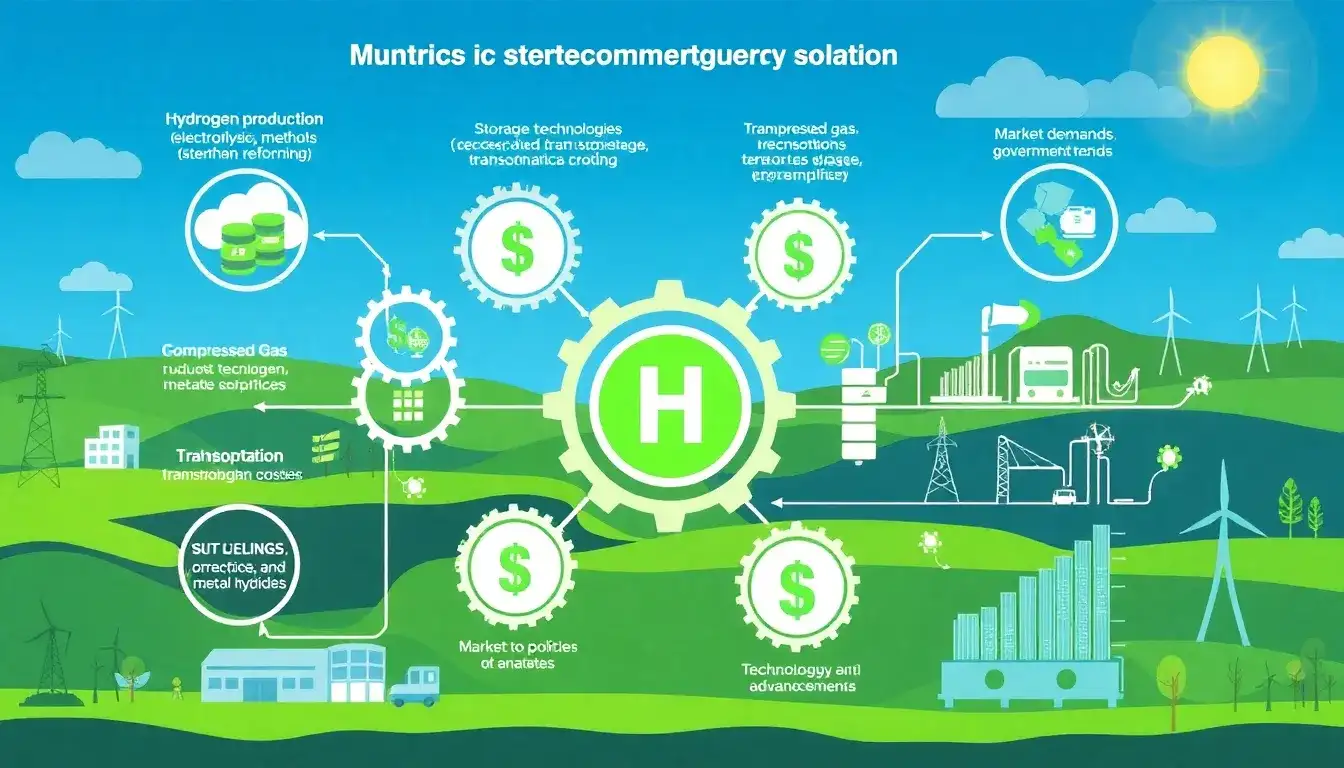
The cost of hydrogen energy storage systems is influenced by several key factors, which can be broadly categorized into system components, operational factors, scalability, and technological advancements. Here’s a detailed breakdown:
System Components
- Materials and Manufacturing: The choice of materials, such as steel liners and carbon shells for LH2 tanks, significantly affects costs. Higher quality materials like stainless steel may increase costs due to their requirement for more complex designs and testing.
- Tank and Insulation Design: Thicker insulation, necessary for cryogenic storage, increases system costs but reduces capacity. The balance between insulation thickness and tank capacity is crucial.
- Valves and Piping: Especially for LH2, specialized valves to prevent leakage are costly, adding 30-40% to total costs.
Operational Factors
- Storage Technology: Different storage technologies like pressurized gas, liquid hydrogen (LH2), and cryo-compressed hydrogen each have unique cost profiles. For example, LH2 storage is more expensive due to the need for advanced insulation and cryogenic handling.
- Capacity and Size: Larger capacities can reduce costs per unit of hydrogen stored due to economies of scale in manufacturing and installation.
- Storage Duration: Short-term storage options like pressurized tanks can be more expensive per kilogram than long-term storage solutions like salt caverns, which offer lower costs over longer storage periods.
Scalability
- Production Volume: High-volume production helps reduce costs through economies of scale. Manufacturing large quantities of systems annually can significantly lower costs per unit.
- Standardization: Standardizing system designs and components can lead to cost savings by reducing custom design and testing costs.
Technological Advancements
- Efficiency and Innovation: Technological advancements in electrolysis, fuel cells, and storage materials can lead to better efficiencies and reduced costs over time.
- Learning Curve Effects: As production and demand increase, costs typically decrease due to learning curve effects and improved manufacturing processes.
These factors interplay to determine the overall cost-effectiveness of hydrogen storage systems, making each application’s cost structure unique based on specific requirements and conditions.
Original article by NenPower, If reposted, please credit the source: https://nenpower.com/blog/what-are-the-main-factors-influencing-the-cost-of-hydrogen-energy-storage-systems/

