

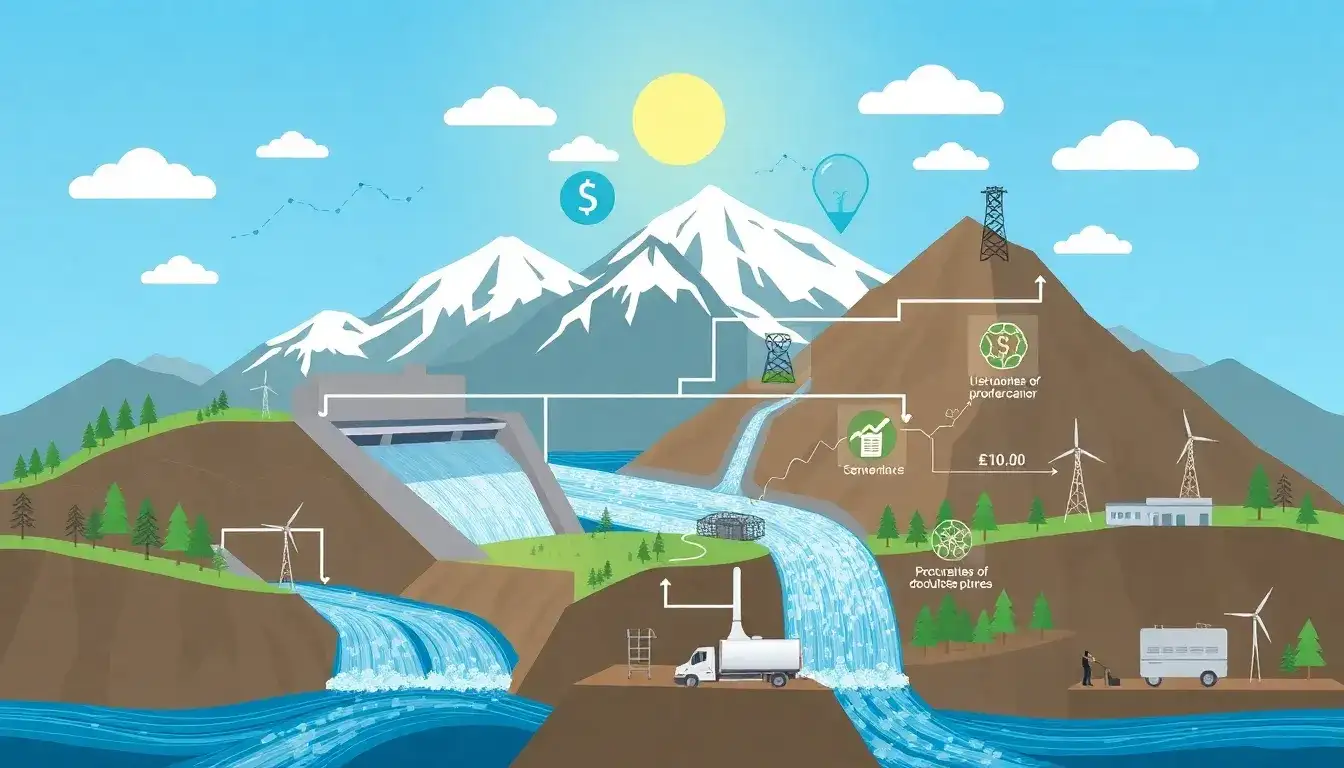
The cost-effectiveness of pumped hydro storage (PHS) is influenced by several key factors:
- Geography and Terrain:
- Natural vs. Artificial Reservoirs: The availability of suitable natural or artificial reservoirs significantly affects costs. Natural reservoirs may reduce initial construction costs, while artificial reservoirs provide more control over the design and efficiency.
- Height Difference: A substantial vertical distance between the upper and lower reservoirs is necessary to achieve efficient energy storage. This natural or engineered height difference impacts both the efficiency and the cost of constructing the system.
- Capital Costs:
- High Initial Investment: Building PHS facilities involves high upfront costs due to the need for constructing large dams, reservoirs, and turbines. However, these facilities can operate for several decades, potentially over a century, which helps spread the cost over time.
- Energy Efficiency and Losses:
- Conversion and Evaporation Losses: The efficiency of PSH systems is affected by conversion losses during pumping and generation, as well as evaporation from the water surface. Despite these losses, PSH can achieve energy recovery rates of 70–80% or more.
- Operational and Market Factors:
- Market Prices: The ability to buy electricity at low prices and sell it during peak demand periods increases the economic viability of PHS. In some cases, operators can profit from negative electricity prices by storing energy during these periods.
- Grid Stability and Capacity: PHS plays a crucial role in stabilizing the grid by smoothing out load variations and providing peak power when needed, which can lead to cost savings by reducing the need for other, less efficient forms of power generation.
- Policy and Regulatory Framework:
- A supportive policy and regulatory environment can enhance the economic feasibility of PHS projects by providing incentives, subsidies, or favorable market conditions that encourage investment.
Overall, while PHS offers significant benefits in terms of energy storage capacity and grid stability, its cost-effectiveness is heavily dependent on site-specific factors, operational efficiency, and the broader market and regulatory context.
Original article by NenPower, If reposted, please credit the source: https://nenpower.com/blog/what-are-the-main-factors-influencing-the-cost-effectiveness-of-pumped-hydro-storage/

