

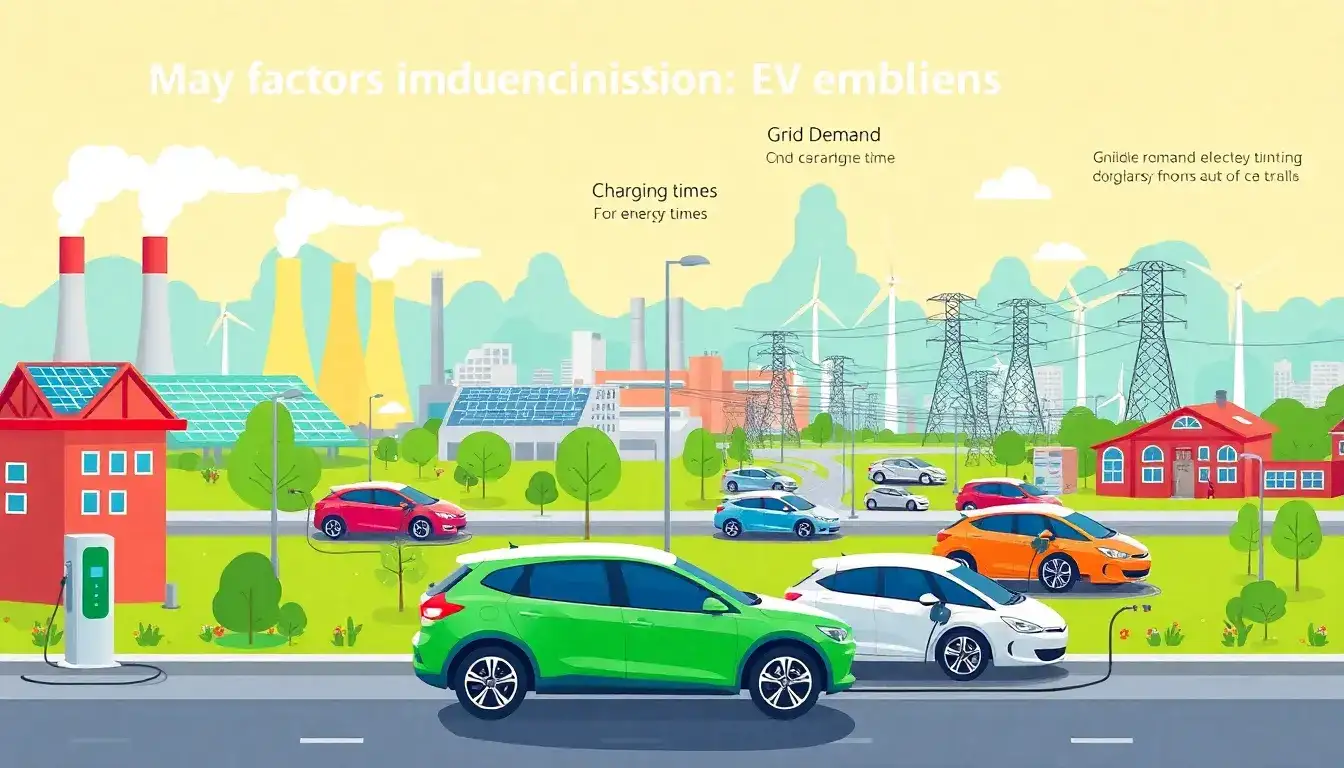
The main factors influencing the carbon emissions from electric vehicle (EV) charging include:
-
Source of Electricity and Grid Mix:
- The type of electricity used to charge EVs significantly affects carbon emissions. Renewable sources like wind, solar, or hydroelectric power result in much lower emissions compared to fossil fuels like coal or natural gas.
- Regions with a higher proportion of renewable energy in their grid mix offer cleaner charging options.
-
Timing of Charging:
- Charging during periods when the grid’s emissions are low (e.g., during peak renewable energy production) can reduce the carbon footprint of EVs.
- Smart charging strategies can optimize emissions reduction by aligning with favorable grid conditions.
-
Vehicle Efficiency:
- The efficiency of the electric vehicle itself—how far it can travel per unit of electricity—also impacts the overall carbon emissions per mile.
-
Lifecycle Emissions:
- Beyond charging, lifecycle emissions also include the emissions from manufacturing the vehicle and its battery, though these are generally smaller than those from electricity consumption itself.
-
Charging Infrastructure and Location:
- Where and when drivers charge their vehicles (e.g., at home, at work) can influence emissions due to differences in local electricity generation mixes.
By understanding these factors, drivers and policymakers can mitigate the carbon impact of EV charging and maximize the environmental benefits of electric vehicles.
Original article by NenPower, If reposted, please credit the source: https://nenpower.com/blog/what-are-the-main-factors-influencing-the-carbon-emissions-from-ev-charging/

