

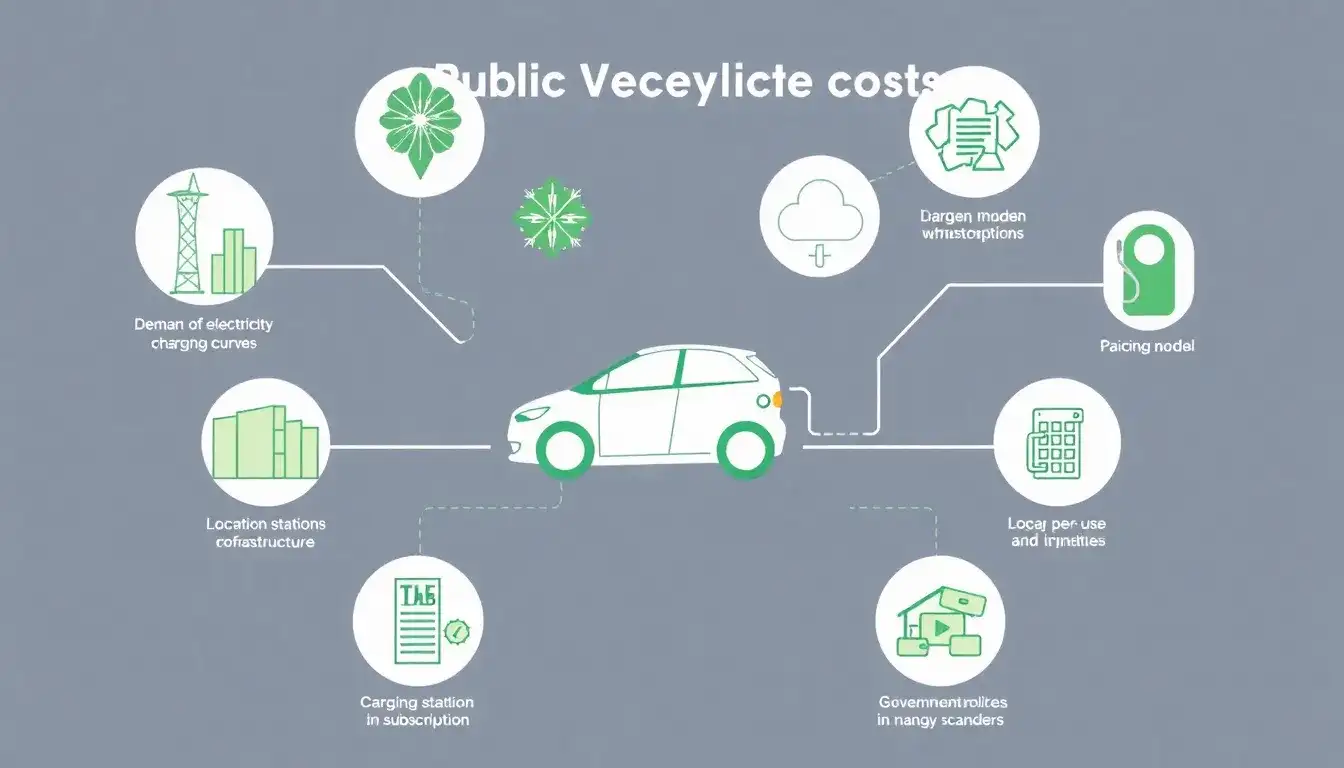
The main factors influencing public electric vehicle (EV) charging costs include:
- Location and Local Electricity Rates: Public EV charging costs can vary significantly based on local electricity rates, which differ across regions due to regulatory factors and infrastructure costs.
- Type and Level of Charger Used: The cost of charging varies between Level 2 and DC Fast Chargers. Level 2 charging is generally cheaper, ranging from $0.10 to $0.30 per kWh, while DC Fast Charging ranges from $0.20 to $0.40 per kWh.
- Charging Network and Infrastructure: Different charging networks may charge different fees, either per kWh, per session, or even based on time, contributing to cost variations.
- Pricing Models: Charging stations often use various pricing structures, including per kWh, per unit time, and per session charges, which can make costs vary widely from one station to another.
- Regulations and Incentives: Legal and regulatory frameworks, along with incentives offered by local governments or businesses, can influence public charging costs and availability.
- Usage and Demand: Peak usage times and locations with high demand for charging can affect pricing. High usage may increase costs at popular stations.
These factors combine to create a complex pricing landscape for public EV charging.
Original article by NenPower, If reposted, please credit the source: https://nenpower.com/blog/what-are-the-main-factors-influencing-public-charging-costs/

