

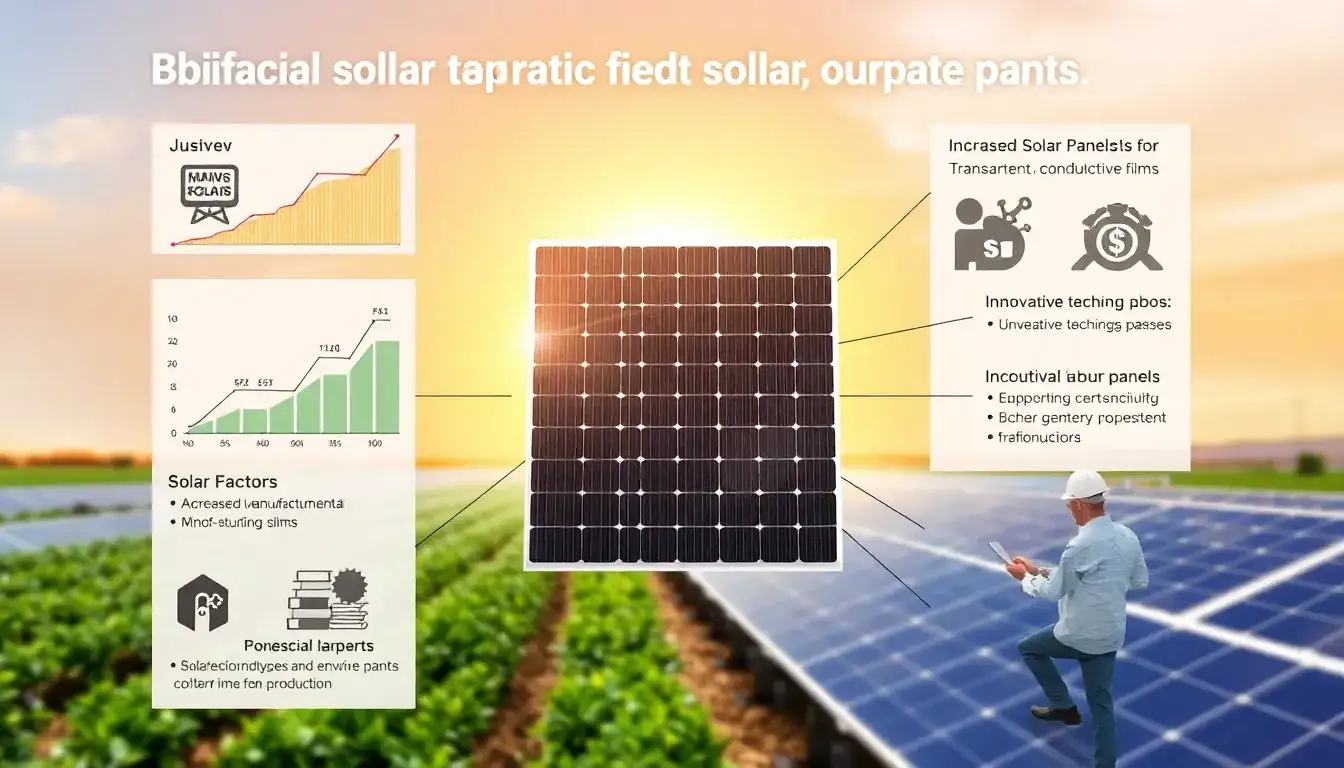
The higher cost of bifacial solar panels is driven by several main factors:
- Double-sided design and specialized manufacturing: Bifacial panels capture sunlight on both front and back sides, requiring advanced manufacturing processes and more complex materials, which increase production costs compared to traditional monofacial panels.
- Higher material usage: Since the backside of the panel is active, bifacial panels often use more glass or transparent materials on both sides, contributing to their higher price.
- Increased efficiency and performance: Bifacial panels can produce 6% to 10% more energy than monofacial panels, but achieving this higher performance level involves higher quality cells and technology, which add to the initial cost.
- Manufacturer reputation and warranties: Panels from reputable manufacturers often come at a premium price due to better quality control, performance guarantees, and longer warranties.
- Panel size and efficiency rating: Larger and higher-efficiency bifacial panels typically cost more due to the additional materials and advanced cell technology required.
- Installation complexities: Bifacial panels may require specialized mounting systems and considerations for maximizing rear-side irradiance, which can increase the overall installation cost.
Overall, while bifacial solar panels have a higher upfront cost (around $0.50 to $0.70 per watt, or approximately 10-20% more than monofacial panels), their ability to generate more energy over time can justify the premium for many applications.
Original article by NenPower, If reposted, please credit the source: https://nenpower.com/blog/what-are-the-main-factors-driving-the-higher-cost-of-bifacial-solar-panels/

