

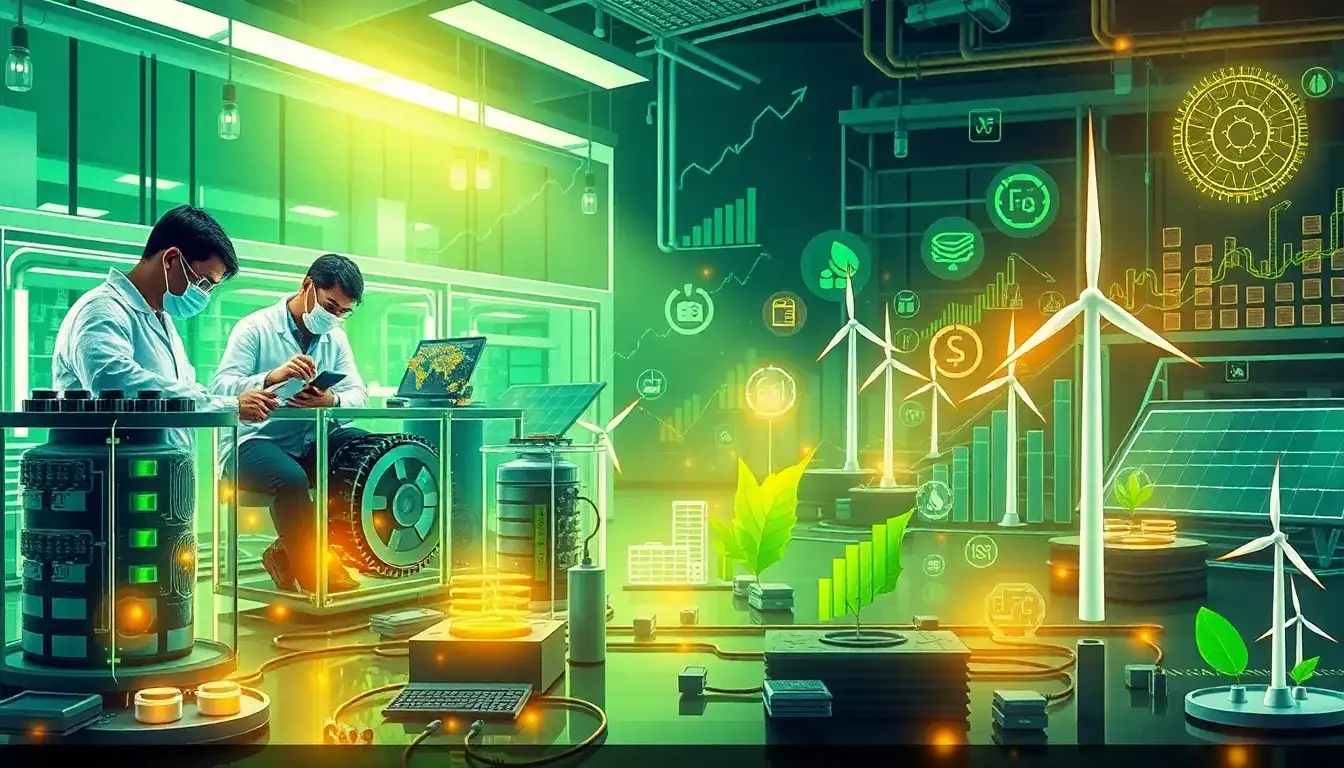
The main factors driving cost reductions in energy storage systems include:
Key Drivers of Cost Reduction
-
Advancements in Materials Science and Technology:
- Innovations in battery components, such as larger cell sizes and higher energy density, contribute to reduced costs.
- The development of new materials can make batteries more efficient and cheaper.
-
Efficient Manufacturing Processes:
- Streamlining production through automation and waste reduction can lower manufacturing costs.
- Economies of scale achieved by increasing production volumes drive down costs further.
-
Repurposing of Retired EV Batteries:
- Using end-of-life electric vehicle batteries in stationary energy storage applications (second-life systems) reduces costs since initial production costs are already covered during their first life.
-
Balance of System (BOS) and Soft Costs Optimization:
- Reducing BOS costs by improving the efficiency and design of components not directly related to the battery pack itself helps lower overall system costs.
- Minimizing soft costs, such as administrative and maintenance expenses, through strategic planning and optimization can also lead to cost reductions.
-
Policy and Incentives:
- Government incentives like tax credits and subsidies encourage investment in energy storage, accelerating cost reduction.
- Supportive policies and regulations facilitate the adoption of energy storage systems by making them more economically viable.
-
Innovative Business Models:
- Models like Energy Storage as a Service (ESaaS) reduce upfront investment for customers, making energy storage more accessible.
- Other financing mechanisms such as green bonds and public-private partnerships help mobilize capital for energy storage projects.
Original article by NenPower, If reposted, please credit the source: https://nenpower.com/blog/what-are-the-main-factors-driving-the-cost-reductions-in-energy-storage/

