

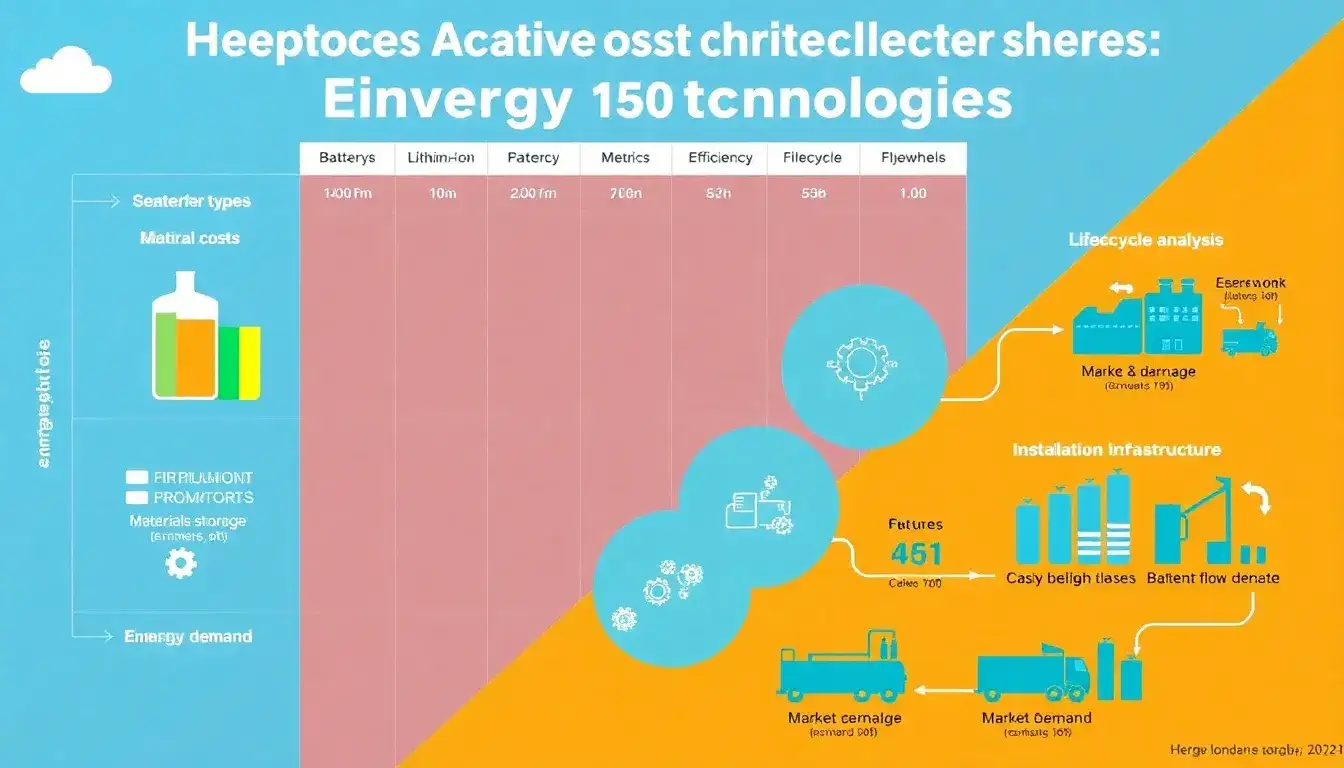
The main factors driving cost differences between various energy storage technologies involve several key components and considerations:
-
Technology Type and Materials:
- Battery Chemistries: Different battery chemistries like lithium-ion (e.g., LFP, NMC), lead-acid, vanadium redox flow, and others have distinct material costs and efficiencies, affecting overall system cost.
- Technology Advancements: Innovations in battery materials and designs influence costs, with newer technologies often being more expensive initially but potentially more efficient.
-
System Size and Scale:
- Economies of Scale: Larger systems, such as those at the 100 MW scale, often benefit from economies of scale, reducing costs per unit of storage compared to smaller systems.
- Infrastructure Requirements: The need for specific infrastructure like reservoirs for pumped hydro storage or caverns for compressed air energy storage significantly affects costs.
-
Storage Duration and Power Capacity:
- Duration and Capacity: The cost per kWh decreases with longer storage durations for some technologies (e.g., compressed air energy storage), while the cost per kW increases as the system’s power output capability grows.
- Design Complexity: Systems requiring higher power capacities or longer durations might involve more complex engineering and additional components, raising costs.
-
Installation and Operational Costs:
- Site Preparation and Installation: Expenses related to site preparation, engineering, and installation vary widely depending on location and system complexity.
- Operational and Maintenance Costs: Factors such as software updates, monitoring systems, and thermal management impact ongoing expenses.
-
Degradation and Lifespan:
- Degradation Costs: The lifespan and degradation rate of a storage system influence long-term costs, with some technologies requiring more frequent replacements or maintenance.
- Capacity Management: Strategies to extend system life and efficiency, such as controlled charging and thermal management, affect operational costs.
-
Market and Economic Factors:
- Market Trends and Competition: The cost of energy storage technologies can be influenced by market trends, competition among manufacturers, and global supply chains.
- Subsidies and Policy Support: Government incentives can affect the initial investment and operational costs by providing subsidies or tax benefits.
These factors interplay to create a complex landscape of costs across different energy storage technologies.
Original article by NenPower, If reposted, please credit the source: https://nenpower.com/blog/what-are-the-main-factors-driving-the-cost-differences-between-energy-storage-technologies/

