

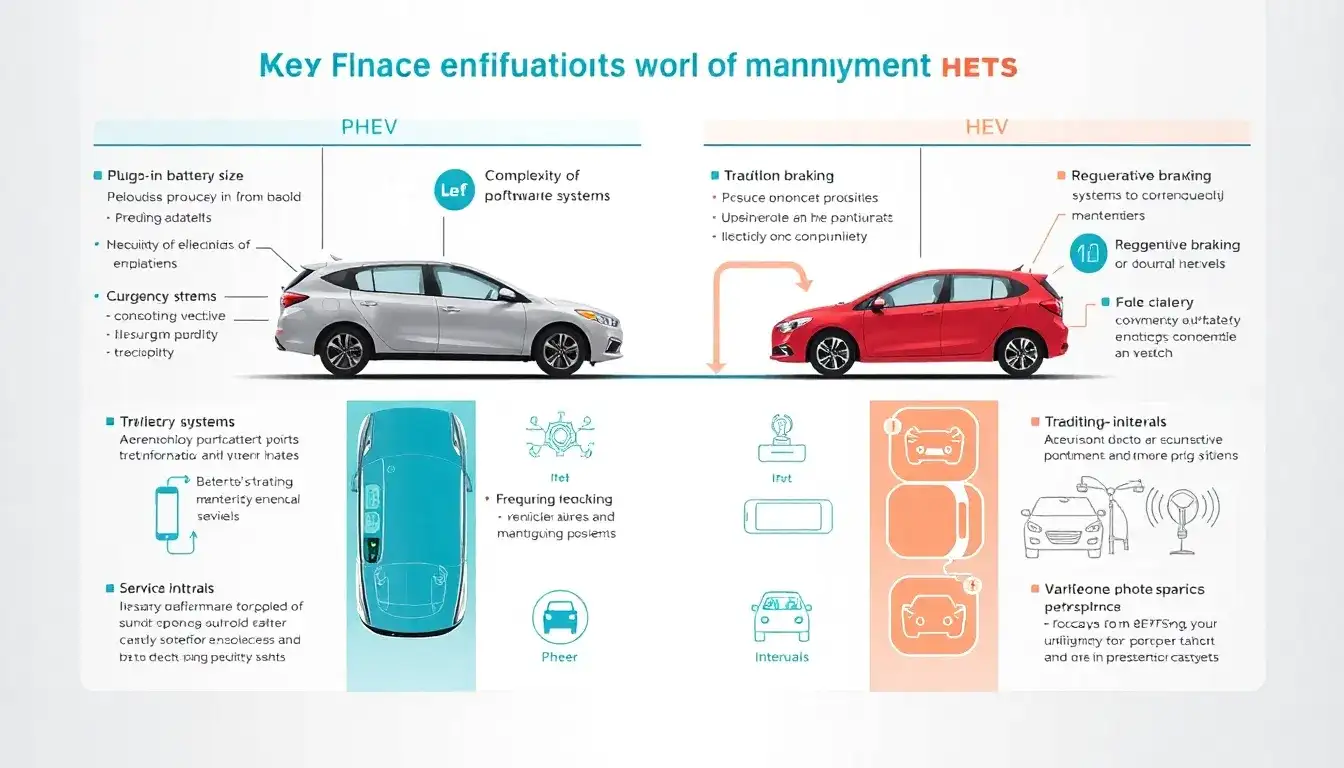
When comparing the maintenance costs of Plug-In Hybrid Electric Vehicles (PHEVs) and Hybrid Electric Vehicles (HEVs), several key factors come into play:
Main Factors Contributing to Maintenance Costs
1. Complexity and Components
- PHEVs: These vehicles have a more complex setup with both a gasoline engine and an electric motor, along with additional components such as power electronics and a battery pack. However, despite this complexity, their maintenance costs are generally lower due to reduced wear on the engine and braking system.
- HEVs: Similar to PHEVs, HEVs also combine a gasoline engine with an electric motor. However, they typically use the electric motor more sparingly compared to PHEVs, which can affect overall component wear.
2. Braking System Maintenance
- Both PHEVs and HEVs: Both benefit from regenerative braking, which significantly reduces brake pad wear. This feature leads to fewer replacements and lower maintenance costs over time.
3. Engine Wear and Fuel Consumption
- PHEVs: The ability to use electric power can reduce engine usage, potentially extending its life and lowering overall maintenance costs.
- HEVs: While they also reduce engine stress, the balance between engine and electric motor usage can vary, potentially affecting long-term engine wear.
4. Battery and Electric System Maintenance
- PHEVs: The electrical system, including batteries and motors, generally requires minimal scheduled maintenance. Batteries, however, have a finite lifespan and may need replacement outside warranty periods, which can be costly.
- HEVs: Similar to PHEVs, the electrical components require little maintenance, but HEVs typically rely less on battery power for propulsion.
5. Scheduled Maintenance Similarities
- Both PHEVs and HEVs require similar general maintenance as conventional vehicles, including oil changes and tire rotations.
In summary, both PHEVs and HEVs benefit from reduced maintenance costs compared to conventional vehicles, primarily due to regenerative braking and reduced engine stress. However, PHEVs may offer advantages in terms of lower engine wear when driven extensively in electric mode, though their battery systems may require eventual replacement.
Original article by NenPower, If reposted, please credit the source: https://nenpower.com/blog/what-are-the-main-factors-contributing-to-the-maintenance-costs-of-phevs-compared-to-hevs/

