

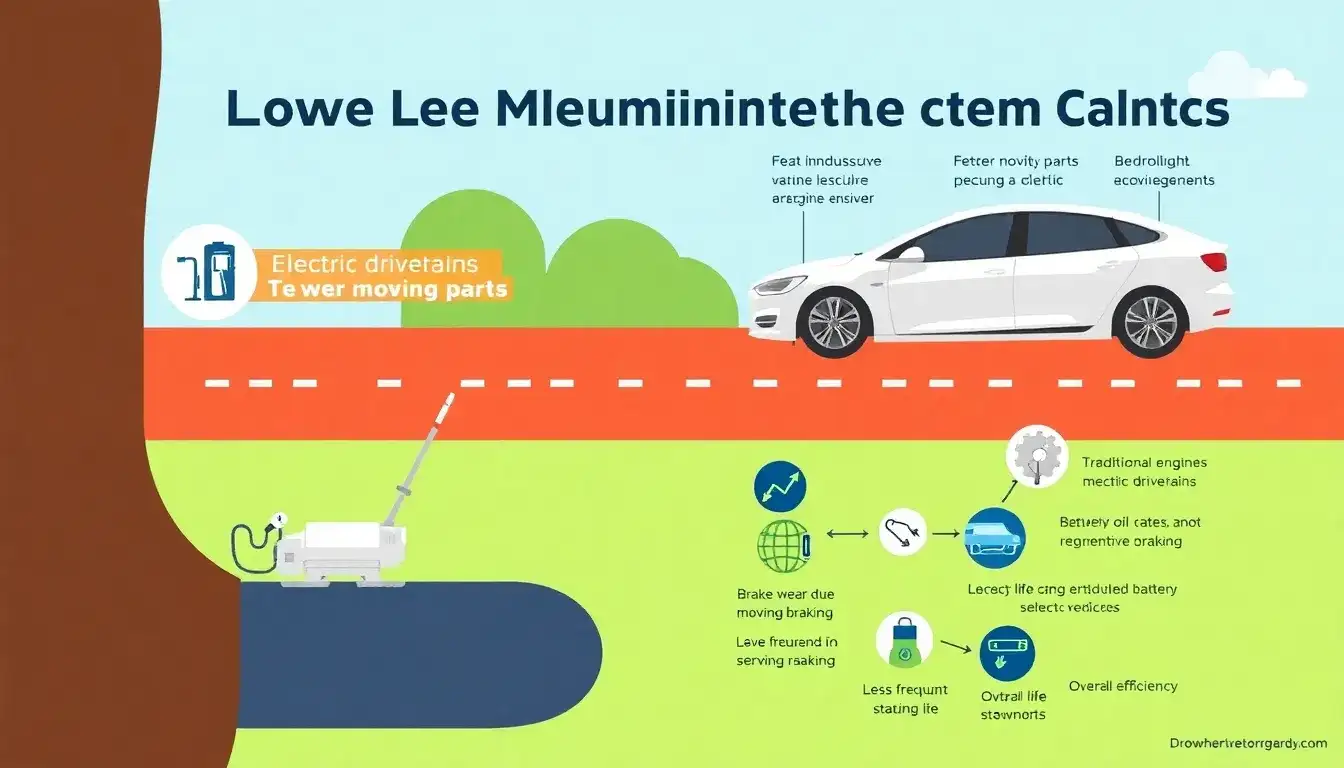
The main factors contributing to the lower maintenance costs of electric vehicles (EVs) compared to gasoline-powered cars are:
- Fewer Moving Parts: EVs have a much simpler drivetrain without components such as a multi-speed transmission, exhaust system, or engine oil system. This reduces the number of parts that can wear out or require replacement over time.
- No Oil Changes or Engine Fluids: Since EVs do not have internal combustion engines, they require no oil changes, no oil filters, and significantly fewer fluid replacements. The main fluid maintenance is limited to things like windshield washer fluid and coolant for the battery systems.
- Reduced Brake Wear: EVs use regenerative braking, which slows the vehicle by converting kinetic energy back into battery power. This process reduces traditional brake usage, extending the life of brake pads and rotors and lowering brake maintenance costs.
- Simpler Routine Maintenance: Maintenance for EVs typically involves less frequent inspections and software updates rather than complex engine tune-ups or transmission servicing. This reduces both maintenance frequency and labor intensity.
- Lower Downtime: EVs tend to require less frequent and less intensive service, meaning they spend less time out of operation for repairs or routine maintenance, which can be especially important for fleet operators.
These factors combined lead to approximately 50% lower lifetime maintenance costs for electric vehicles compared to traditional gasoline-powered cars. This cost advantage, along with savings on fuel, makes EVs more economical over their operating life despite sometimes higher upfront purchase prices.
Original article by NenPower, If reposted, please credit the source: https://nenpower.com/blog/what-are-the-main-factors-contributing-to-the-lower-maintenance-costs-of-electric-vehicles/

