

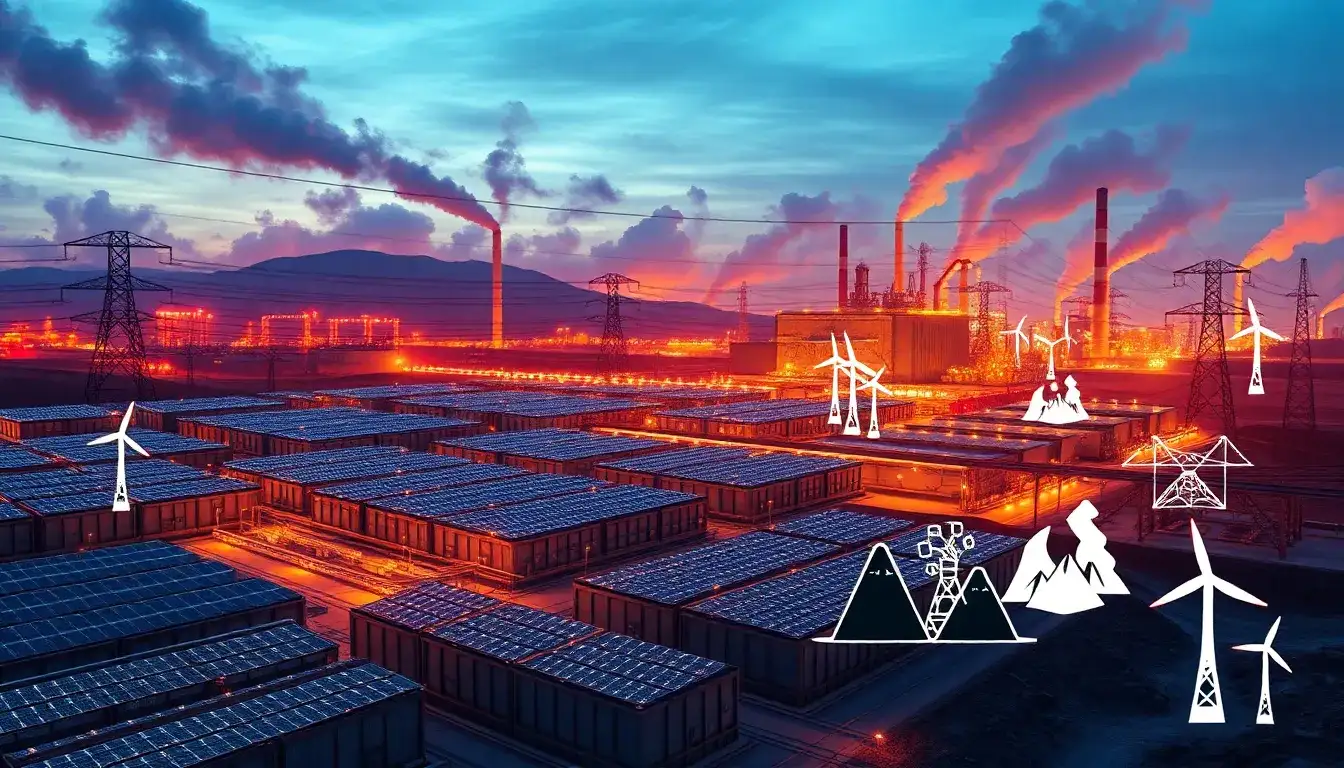
Main Factors Contributing to Increased Emissions from Utility-Scale Batteries
1. Emissions from Battery Production and Manufacturing
- Producing utility-scale battery energy storage systems (BESS) involves significant greenhouse gas emissions, largely due to the energy-intensive processes required for extracting raw materials, manufacturing battery components (such as anode, cathode, battery management system, and pack housing), and assembling the batteries.
- The electricity used in manufacturing is a major contributor: emissions depend heavily on the carbon intensity of the electricity grid powering the production factory. For instance, each kW of battery power capacity or kWh of energy storage produced consumes a considerable amount of electricity, which leads to upstream scope 3 emissions proportional to the grid’s emission factor in that location.
2. The Carbon Intensity of Charging Electricity
- During operation, batteries charge from the grid and discharge electricity later, potentially during peak demand or renewable supply fluctuations. If the grid electricity used for charging batteries is derived from carbon-intensive sources (like coal or gas), the net effect can be an increase in emissions rather than a reduction.
- Some standalone utility-scale batteries currently in operation have been found to increase emissions because they charge during high-emission periods or otherwise inefficiently, offsetting any emissions savings they might provide.
3. Storage and Operational Factors
- The storage capacity and power capacity ratio influence emissions. Different applications require different balance points between kW (power) and kWh (energy storage), affecting how many emissions are associated with building and operating the system.
- High capacity factors (the ratio of actual output over maximum possible output) exceeding about 85% can lead to “spillage” or energy wasted unless storage duration is increased, which can reduce efficiency and increase emissions.
4. Life Cycle Emissions and Avoided Emissions Balance
- While production emits significant greenhouse gases upfront, emissions can be offset over the battery’s lifetime if it charges during low-carbon periods and discharges at high-carbon periods, thus avoiding more emissions from fossil fuel generation. However, if this balance is not optimized due to poor timing or grid conditions, the battery system may not achieve net emission reductions.
Summary Table of Factors
| Factor | Description | Impact on Emissions |
|---|---|---|
| Battery production energy use | Electricity consumption in manufacturing | High emissions, especially in coal-heavy grids |
| Carbon intensity of charging | Grid emission factor during battery charging | High-carbon charging increases net emissions |
| Power vs energy capacity | Ratio affects production emissions and use cases | Imbalanced design can increase emissions |
| Operational efficiency | Capacity factor and energy spillage | Inefficiency leads to wasted energy and emissions |
| Lifetime avoided emissions | Emissions saved by shifting load and replacing fossil generation | Positive only if managed properly |
In essence, the main contributors to increased emissions from utility-scale batteries are their energy-intensive manufacturing processes powered by carbon-heavy grids, and operational inefficiencies related to when and how the batteries are charged and discharged relative to the grid’s carbon intensity. Optimizing the timing of battery use and sourcing cleaner electricity for both production and charging is essential to reduce these emissions significantly.
Original article by NenPower, If reposted, please credit the source: https://nenpower.com/blog/what-are-the-main-factors-contributing-to-the-increased-emissions-from-utility-scale-batteries/

