

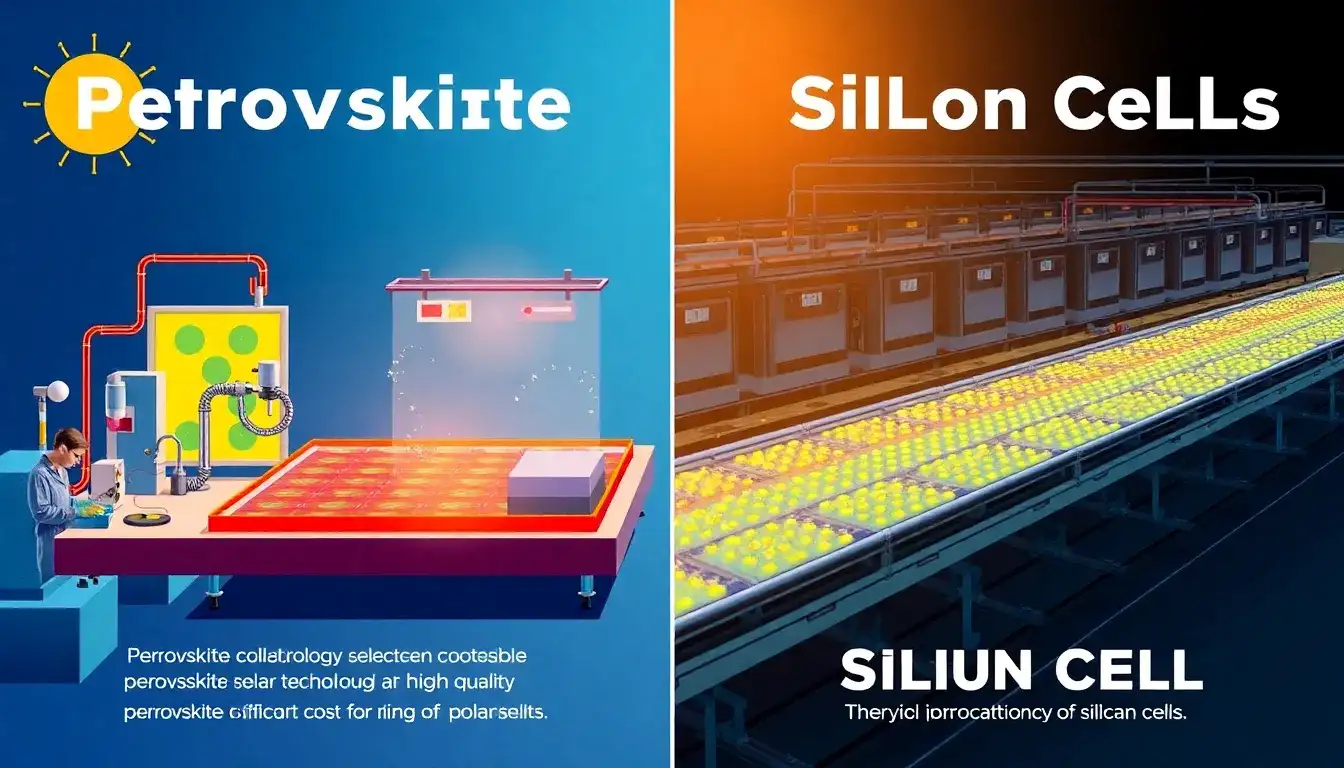
While perovskite solar cells offer promising efficiency and cost advantages in some aspects, several factors contribute to their higher cost compared to silicon-based cells:
-
Material Costs and Quality:
- Material Purity: Perovskite requires very high-purity precursors to minimize defects, which can increase costs. However, the cost of precursor inks is relatively reasonable, around $250 per square meter in 2022.
- Comparison to Silicon: Polysilicon material costs around $100 per square meter, making traditional silicon cells less expensive in terms of raw material costs.
-
Production Complexity and Efficiency:
- Scaling and Manufacturing Processes: Although perovskite cells are easily fabricated and have potential for low-cost roll-to-roll manufacturing, current production volumes are much lower than those for silicon, which economies of scale have reduced costs over time. Optimized manufacturing could significantly reduce costs.
- Efficiency Variations: Currently, less optimized production can result in lower efficiency and more defects, requiring additional testing and quality control measures.
-
Stability and Lifespan:
- Durability Issues: One of the biggest challenges for perovskite cells is their lack of long-term stability and durability compared to silicon cells, which can operate for 20-30 years. This short lifespan increases costs in the long term for replacements and maintenance.
- Degradation Factors: UV exposure can degrade perovskite cells quickly, which requires additional protective layers or stabilization technologies, adding costs.
-
Additional Costs and Challenges:
- Layer Costs: Materials like mesoporous layers used in perovskite cells can be expensive, contributing to overall costs.
- Research and Development: Despite the potential for lower material costs, significant investment is needed to overcome stability and efficiency challenges, which currently makes silicon a more cost-effective option for widespread commercial use.
Original article by NenPower, If reposted, please credit the source: https://nenpower.com/blog/what-are-the-main-factors-contributing-to-the-higher-cost-of-perovskite-solar-cells-compared-to-silicon-based-cells/

