

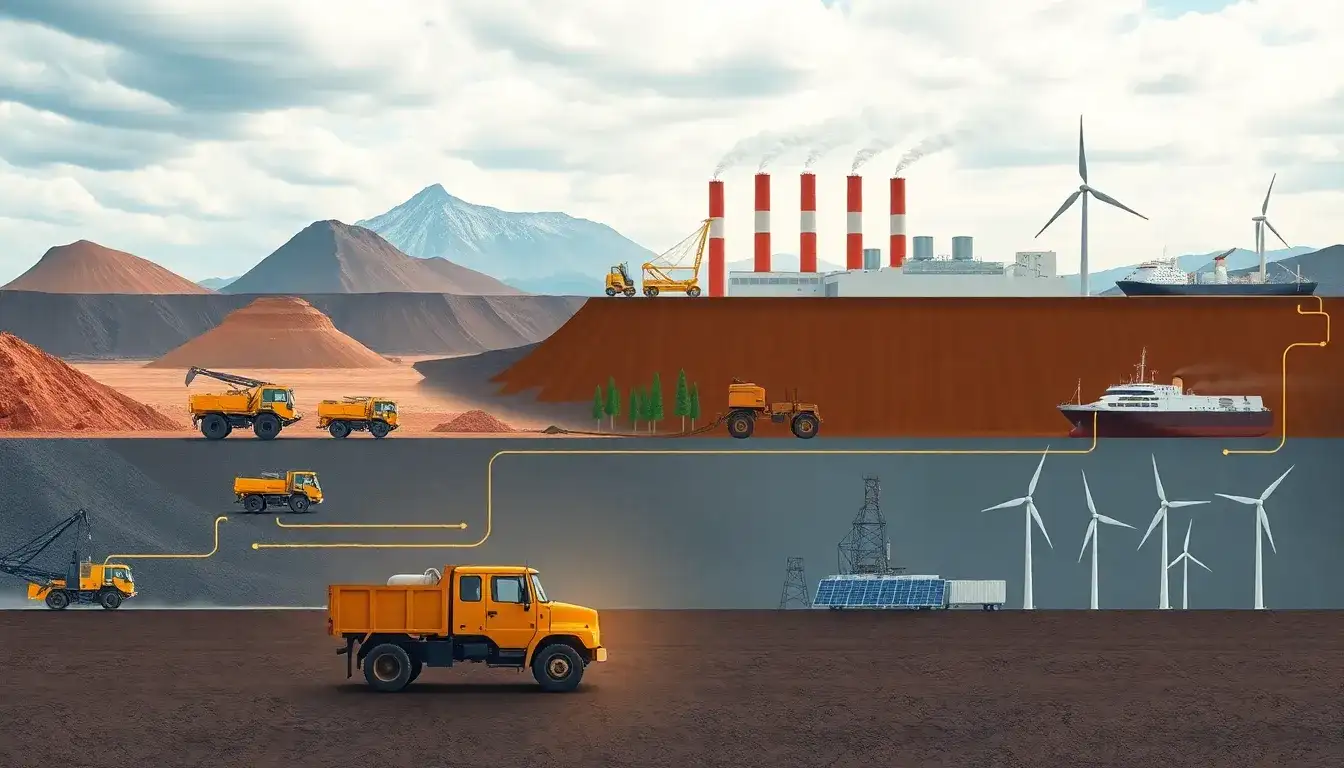
The main factors contributing to the high carbon footprint of EV battery production include:
- Materials Extraction and Processing:
- The mining of materials like lithium, nickel, cobalt, manganese, and graphite results in significant greenhouse gas emissions. For example, for every ton of mined lithium, 15 tons of CO2 are emitted.
- The refining and processing of these materials add further to the emissions.
- Energy-Intensive Manufacturing:
- The production of battery components requires high temperatures, which are typically achieved by burning fossil fuels, thereby adding to CO2 emissions.
- The energy mix used in manufacturing is crucial; locations relying heavily on coal, such as many Chinese facilities, have a higher carbon footprint compared to those using renewable energy.
- Production Technology and Location:
- The carbon footprint varies significantly depending on the production technology used and the location of manufacturing facilities. Regions with cleaner energy mixes can reduce battery emissions.
- Transportation and Supply Chain:
- While not as direct, transportation of raw materials and finished products also contributes to emissions, though this is less emphasized compared to production steps.
Addressing these factors through sustainable mining, renewable energy integration, and more efficient manufacturing can help reduce the carbon footprint of EV batteries.
Original article by NenPower, If reposted, please credit the source: https://nenpower.com/blog/what-are-the-main-factors-contributing-to-the-high-carbon-footprint-of-ev-battery-production/

