

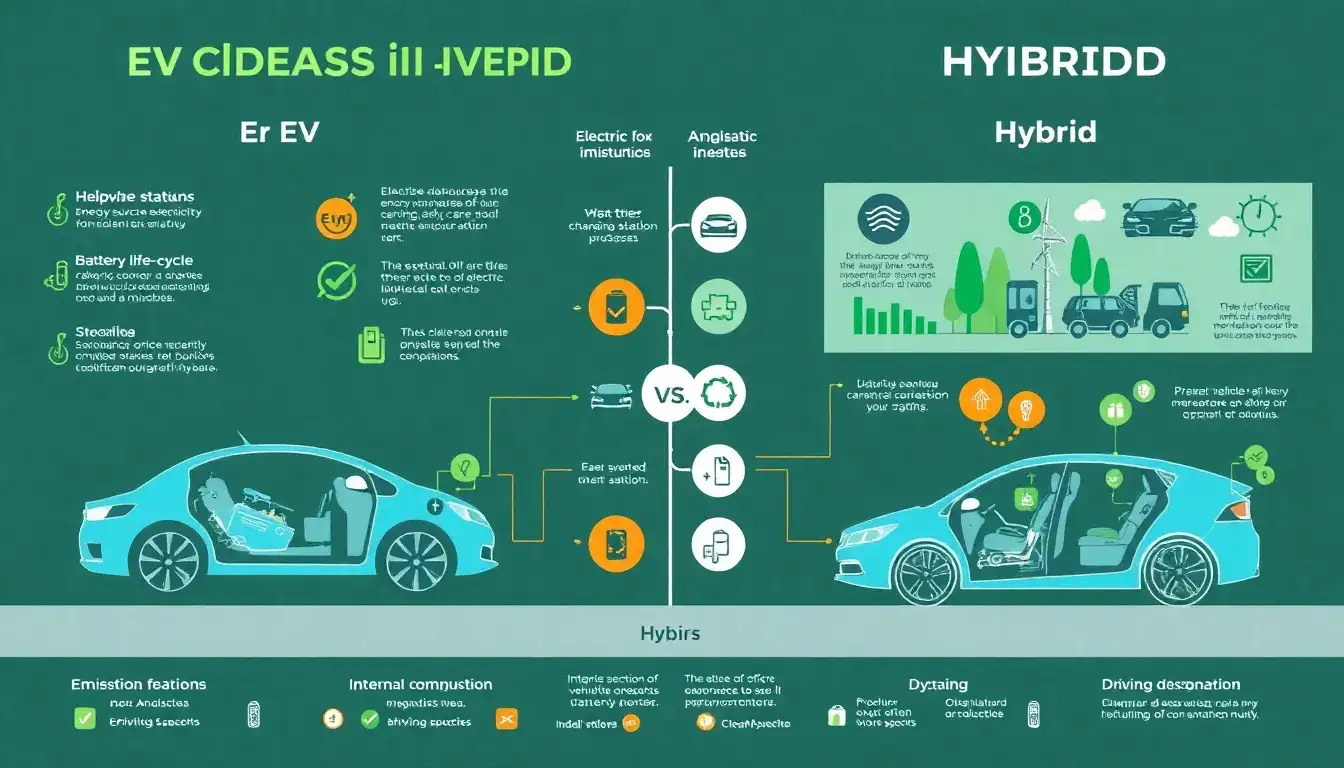
The main factors contributing to emissions differences between electric vehicles (EVs) and hybrids stem from their power sources, energy use patterns, and manufacturing impacts:
1. Tailpipe Emissions and Fuel Use
- Electric Vehicles (EVs) produce zero tailpipe emissions because they run solely on electricity stored in batteries, which means no direct carbon dioxide (CO2) emissions during driving. However, their indirect emissions depend on how the electricity is generated; electricity from renewable sources results in very low life cycle emissions, whereas coal or natural gas-based electricity increases emissions.
- Hybrids (both traditional hybrids and plug-in hybrids, PHEVs) use a combination of an internal combustion engine and an electric motor. Traditional hybrids recharge their smaller batteries via the gasoline engine and regenerative braking, emitting CO2 from burning fuel, though less than conventional gasoline cars. PHEVs can run on battery power for limited distances but switch to gasoline once the battery is depleted, leading to some tailpipe emissions depending on usage patterns.
2. Life Cycle Emissions Including Manufacturing and Fuel Production
- EVs tend to have higher emissions upfront from battery production, which is energy-intensive and generates significant CO2 during material extraction and manufacturing. Despite this, their overall life cycle emissions are lower because their operational phase emissions are minimal, especially when charged with clean electricity.
- Hybrids have lower initial manufacturing emissions due to smaller or fewer batteries, but their continued reliance on gasoline means ongoing fuel-cycle emissions (extraction, refining, distribution, and combustion of gasoline) add to their total emissions.
3. Energy Efficiency
- Hybrids are very efficient in city driving and frequent stop-and-go traffic since their electric motor assists the gasoline engine, reducing fuel burn. Mild hybrids reduce emissions more efficiently in some real-world conditions due to smaller batteries and lighter weight compared to full EVs that require large batteries to avoid range anxiety.
- Full EVs have a clear advantage in overall efficiency per mile because electric drivetrains convert a higher proportion of grid energy into motion. This efficiency is highly variable depending on the electricity’s carbon intensity.
4. Usage and Geographic Factors
- The emissions advantage of EVs or hybrids depends greatly on driving patterns and where the electricity comes from. In regions with clean electricity grids, EVs have a larger emissions benefit over hybrids. In areas with coal-heavy grids, hybrids can sometimes be comparable or even cleaner in terms of total emissions when including upstream electricity emissions.
- How PHEVs are driven matters: if frequently charged and used mostly in electric mode, emissions are lower; if mostly run on gasoline, emissions approach that of a hybrid.
Summary Table of Emissions Factors
| Factor | Electric Vehicles (EVs) | Hybrids (HEVs & PHEVs) |
|---|---|---|
| Tailpipe Emissions | Zero | Lower than conventional cars but not zero |
| Upstream Fuel/Energy Emissions | Depends on electricity source; can be low | Gasoline extraction + refining + combustion |
| Manufacturing Emissions | Higher due to large battery production | Lower due to smaller battery |
| Energy Efficiency | High, but affected by battery size and usage | High in stop-and-go; depends on electric assist |
| Geographic/Electric Grid Impact | Significant (clean grid = big advantage) | Less sensitive, but still influenced by fuel type |
| Usage Pattern Impact | Best when charged regularly and used in electric mode | Depends strongly on gasoline vs electric usage |
In conclusion, the emission differences are primarily driven by the energy source for propulsion (electricity vs. gasoline), battery size and manufacturing impacts, driving patterns, and electricity grid cleanliness. EVs generally have lower life cycle emissions, especially where electricity is generated from low-carbon sources, while hybrids may outperform EVs under specific conditions like dirty electricity grids or infrequent EV charging.
Original article by NenPower, If reposted, please credit the source: https://nenpower.com/blog/what-are-the-main-factors-contributing-to-the-emissions-differences-between-evs-and-hybrids/

