

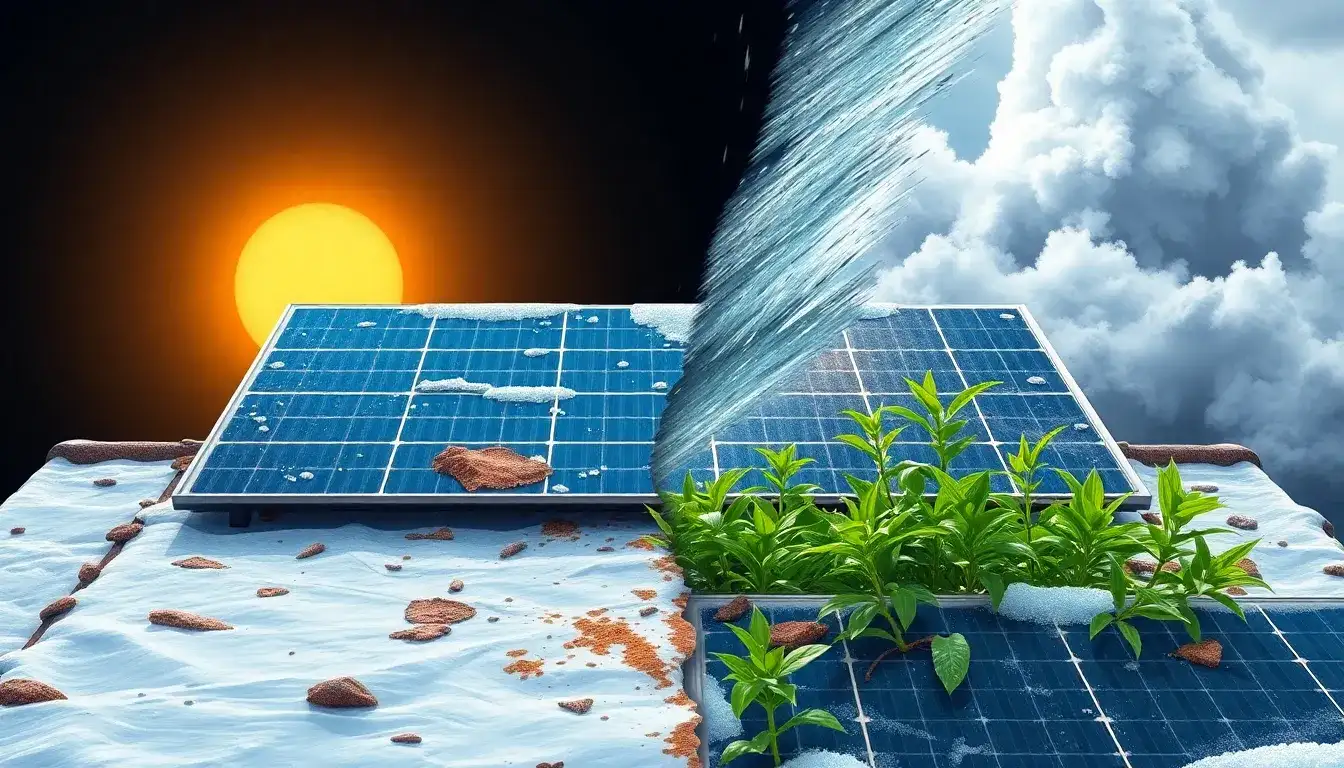
The main factors contributing to the degradation of solar panels in extreme weather conditions include mechanical stresses, temperature effects, and environmental influences as detailed below:
Mechanical Stress from Extreme Weather Events
- Wind, hail, and snow exert mechanical stresses that can cause cracked solar cells and damage to the PV modules and system components. For example, hail larger than 25 mm, winds exceeding 56 mph, and snow depths over 1 meter have been shown to accelerate long-term performance losses in solar panels.
- High winds and hurricanes can dislodge mounting racks or cause impact damage from debris, though panels themselves are typically designed to withstand strong winds if properly installed. Poor installation increases vulnerability to storm damage.
- Snow accumulation can add significant weight and stress on panels and racking, potentially causing cracks or mechanical failure. Panels are commonly installed at an angle to facilitate snow shedding.
Thermal Effects and Temperature Extremes
- Heat stress from prolonged exposure to high temperatures reduces the efficiency and accelerates degradation. Panels in hotter climates experience nearly double the annual performance loss compared to cooler areas (0.88% vs 0.48% per year).
- Thermal cycling (expansion and contraction due to temperature fluctuations) causes wear on soldered connections and internal components, contributing to degradation over time.
- Although solar panels can survive extreme heat (up to about 200°F), efficiency decreases as temperature rises above 95°F due to the temperature coefficient effect on semiconductor materials.
Environmental Factors
- Moisture, rain, and flooding can cause short-term outages and damage sensitive inverter components. Flooding is a major cause of system outages but generally results in short-term performance interruptions rather than permanent degradation.
- Dirt, dust, and debris accumulation blocks sunlight and creates hot spots that may damage cells if not cleaned regularly.
- Wildfire smoke reduces sunlight reaching panels, temporarily lowering output by up to 30%, though it does not physically degrade panels.
- Corrosive effects from salt in coastal areas can also accelerate material degradation if panels are not properly sealed.
Other Factors Influencing Weather-Related Degradation
- Panel quality and assembly play a critical role. Poor materials or incompatible components can exacerbate degradation, especially under environmental stresses. Thinner glass or frames and suboptimal assembly can increase susceptibility to cracks and other damage.
- Installation practices, such as secure mounting and proper angle, are vital to minimize damage from wind and snow loading.
- Current industry testing standards (IEC 61215) may underestimate damage thresholds, especially related to hail impact, suggesting a need for more rigorous and realistic weather stress testing.
Summary Table of Main Degradation Factors from Extreme Weather
| Factor | Effect on Solar Panels | Notes |
|---|---|---|
| Wind and hurricanes | Physical damage to modules and mounting racks | Proper installation greatly reduces risk |
| Hail (≥25 mm) | Cracked cells and module damage | Current testing standards may be insufficient |
| Snow loads (>1 m) | Mechanical stress, potential cracking | Panels installed at angle to aid snow shedding |
| High temperatures | Reduced efficiency, thermal expansion/contraction | Hot climates show nearly double degradation rates |
| Flooding and rain | Short-term outages, potential inverter damage | Mostly temporary but can cause performance loss |
| Dirt, dust, and debris | Reduced sunlight, hot spots causing damage | Requires regular cleaning |
| Smoke from wildfires | Reduced sunlight exposure (up to 30% efficiency loss) | Does not physically degrade panels |
| Corrosive salty air | Material degradation | Coastal installations require special protection |
| Quality and assembly | Influences resistance to weather-related damage | High-quality materials and proper assembly crucial |
| Installation practices | Affects system resilience to weather stresses | Proper mounting and positioning critical |
In conclusion, solar panels degrade in extreme weather due to mechanical stresses from hail, wind, and snow; thermal stresses from heat and temperature fluctuations; environmental factors like moisture and debris; and the intrinsic quality and installation of the panels. Improving manufacturing standards, rigorous weather testing, and high-quality installation can mitigate these effects and prolong panel lifespan.
Original article by NenPower, If reposted, please credit the source: https://nenpower.com/blog/what-are-the-main-factors-contributing-to-the-degradation-of-solar-panels-in-extreme-weather-conditions/

