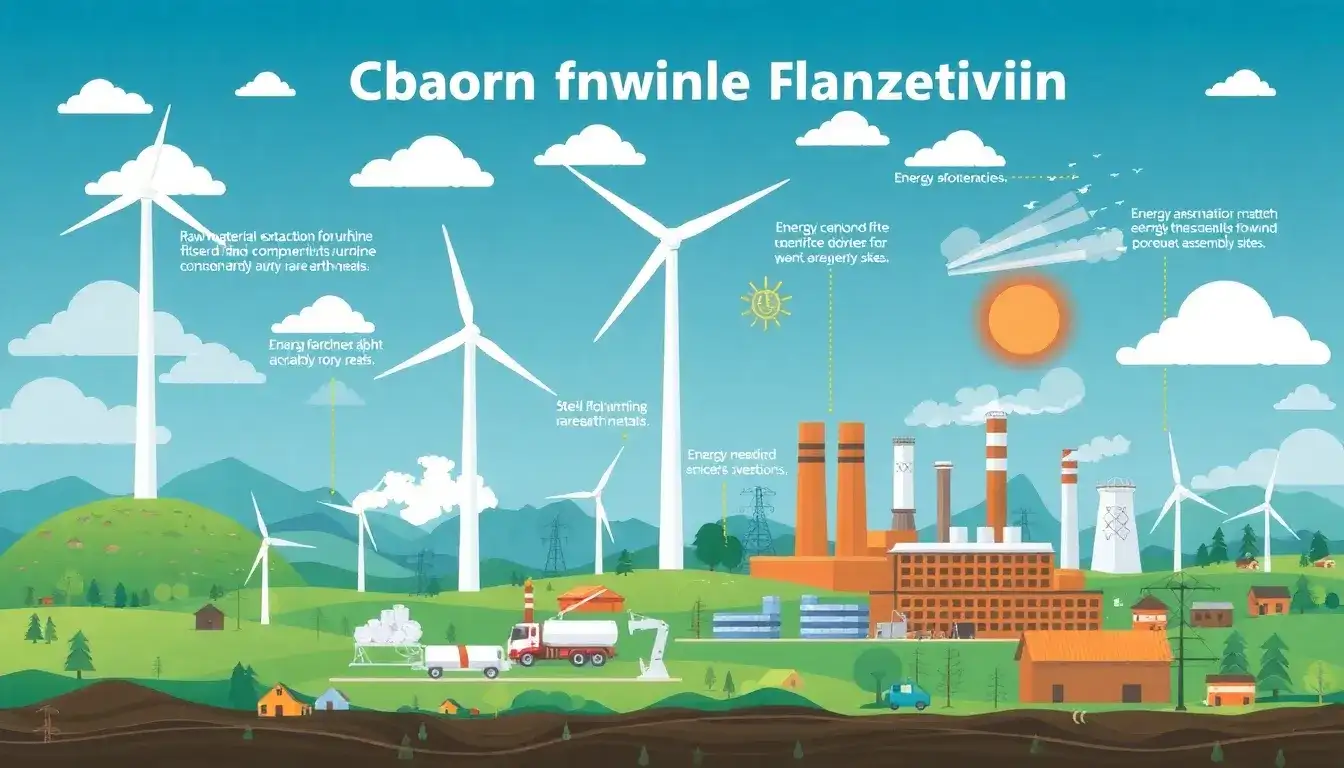
The main factors contributing to the carbon footprint of wind turbine manufacturing center largely on the raw materials used and the energy consumed in the manufacturing process.
Key contributing factors include:
-
Raw Material Extraction and Processing:
The production of primary raw materials such as steel, concrete, aluminum, and fiberglass is highly carbon-intensive. For example, steel production alone accounts for about 30% of a turbine’s total carbon footprint, due to the energy required for processes like blast furnaces that emit significant CO2 (e.g., 1,350 kg CO2 per 1,000 kg of pig iron) and related inputs such as iron ore, coking coal, and limestone. Concrete used in foundations also contributes substantially, and the rebar in concrete involves steel emissions as well. -
Turbine Component Manufacturing:
The manufacturing phase includes shaping and assembling turbine parts. Turbine blades, often made from fiberglass, contribute about 12-15% of the carbon footprint due to material and processing energy. Other components like the nacelle and tower also demand energy-intensive manufacturing steps. -
Energy Consumption During Production:
Energy usage in manufacturing facilities, dependent on the carbon intensity of the local electricity grid, adds to the footprint. This includes electricity for fabricating materials, assembling components, and testing turbines. -
Transportation and Construction:
Transporting heavy and large components to the installation site and the construction process itself contribute carbon emissions, though these are smaller compared to raw materials and manufacturing emissions.
Overall, between 75-85% of the life cycle carbon footprint of a wind turbine (both onshore and offshore) arises from manufacturing and construction phases, with raw materials like steel, concrete, aluminum, and fiberglass being the primary drivers.
While these “front-loaded” emissions are significant, the carbon impact amortizes over the operational lifetime of the turbine, which generates clean electricity with very low emissions per kWh compared to fossil fuels. Furthermore, ongoing improvements in decarbonizing supply chains and manufacturing processes are reducing this footprint over time.
Summary Table of Carbon Footprint Contributors:
| Factor | Contribution | Notes |
|---|---|---|
| Steel production | ~30% of total footprint | High CO2 emissions due to blast furnaces and raw material inputs |
| Concrete and rebar | Significant share | Cement and steel in rebar are carbon-intensive |
| Fiberglass blades | 12-15% of footprint | Energy and materials used in blades manufacture |
| Manufacturing energy | Variable depending on electricity source | Includes energy for fabrication and assembly |
| Transport and construction | Smaller but present | Emissions from moving and erecting components |
In conclusion, the primary factors driving the carbon footprint of wind turbine manufacturing are the embodied emissions from raw materials—especially steel, concrete, and fiberglass—and the energy used during manufacturing. These combined account for the majority of emissions before the turbine begins operation.
Original article by NenPower, If reposted, please credit the source: https://nenpower.com/blog/what-are-the-main-factors-contributing-to-the-carbon-footprint-of-wind-turbine-manufacturing/