

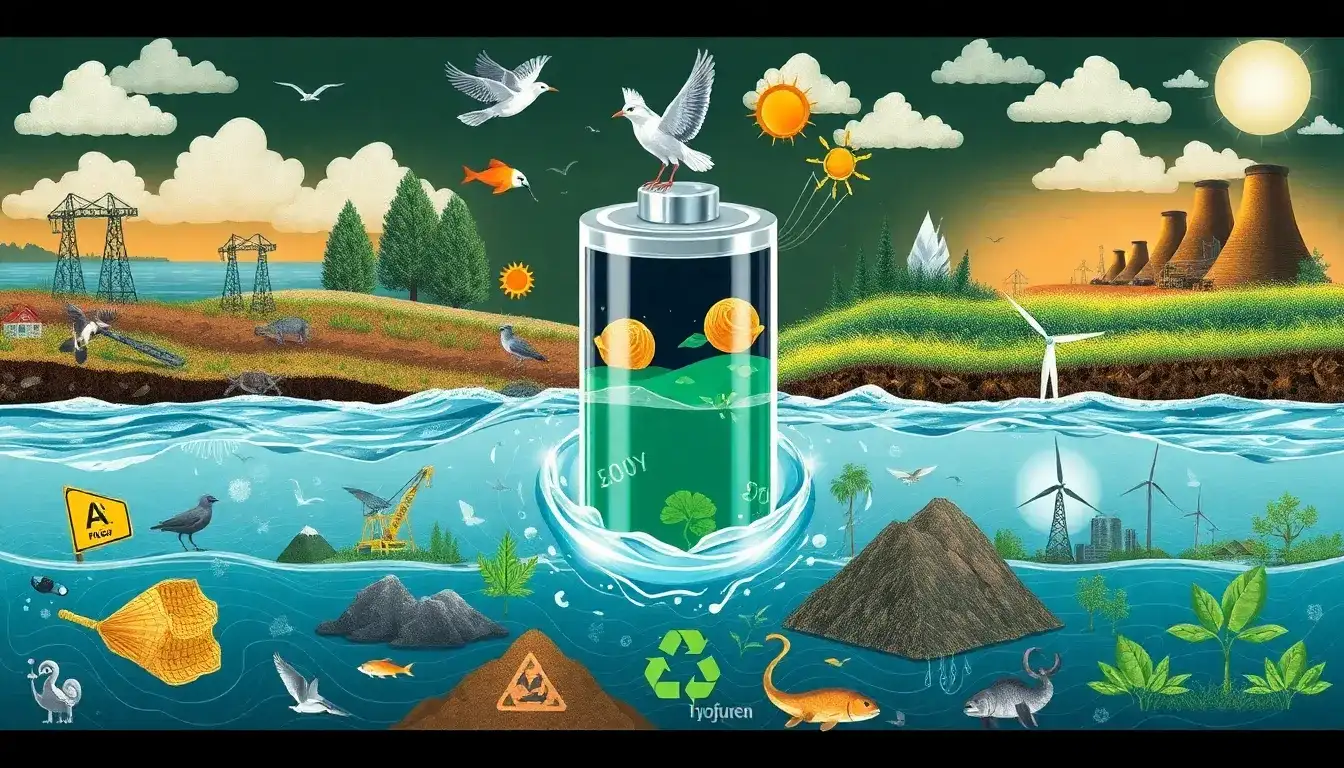
Environmental Risks of Lithium-Ion Batteries
- Resource Extraction Impacts:
- Water Usage: Lithium mining, especially in arid regions like the Lithium Triangle in South America, consumes vast amounts of water (approximately 2.2 million liters per ton of lithium), leading to severe water shortages and impacting local agriculture and communities.
- Land Degradation: Open-pit mining for lithium clears large areas of land, causing habitat destruction, loss of biodiversity, and soil degradation.
- Toxic Chemicals: Brine extraction uses chemicals that can contaminate air, soil, and water.
- Mining of Other Materials:
- Cobalt: Primarily mined in the Democratic Republic of Congo, cobalt mining is associated with hazardous byproducts, sulfuric acid generation, child labor, and environmental toxification.
- Nickel: Similar to cobalt, nickel mining leads to environmental degradation and has been linked to contaminated land and water in several regions.
- Manufacturing and Energy Use:
- The production of lithium-ion batteries is energy-intensive, often relying on fossil fuels like coal, which significantly contributes to greenhouse gas emissions.
- Battery manufacturing has a higher carbon footprint than conventional battery types used in internal combustion vehicles.
- Disposal and Recycling:
- Landfill Fires: Most lithium-ion batteries end up in landfills, where they can cause hazardous fires due to improper disposal, posing a severe environmental and safety risk.
- Toxic Leaching: Improper disposal leads to the release of toxic metals like copper, nickel, and lead into soil and groundwater.
- Recycling Challenges: Recycling is costly and inefficient due to the diversity in battery designs, with only about 5% of global lithium-ion batteries being recycled.
- Overall Impact:
- The lifecycle emissions of electric vehicles, which rely heavily on lithium-ion batteries, can be higher than those of traditional vehicles, especially if the energy used to charge them comes from non-renewable sources.
Addressing these environmental risks will require sustainable mining practices, improved recycling technologies, and the transition to renewable energy sources throughout the battery lifecycle.
Original article by NenPower, If reposted, please credit the source: https://nenpower.com/blog/what-are-the-main-environmental-risks-associated-with-lithium-ion-batteries/

