

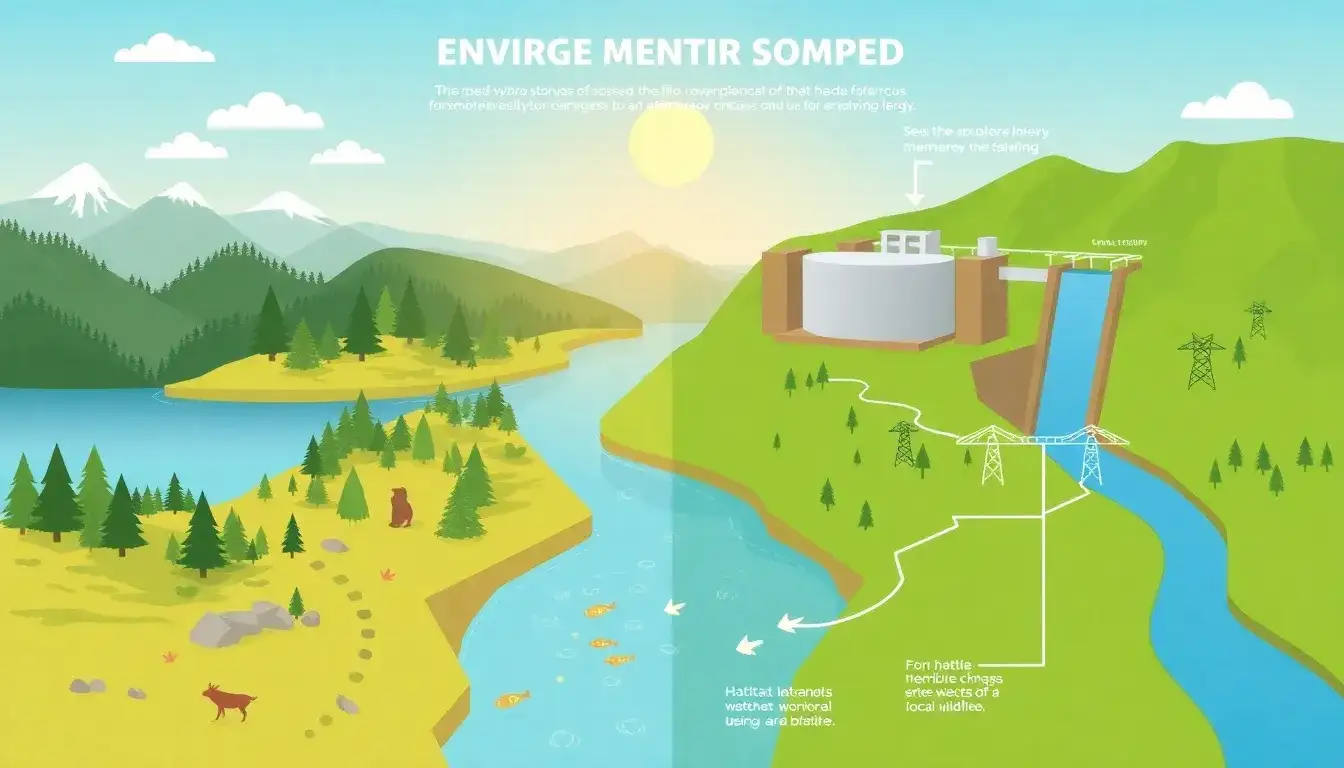
Pumped hydro storage (PHS) systems have several environmental impacts, which differ somewhat between the main types: open-loop and closed-loop systems.
Main Environmental Impacts of Pumped Hydro Storage Systems
1. Aquatic and Water Resource Impacts
- Open-loop PHS is connected continuously to natural water bodies such as rivers and lakes. This can result in extensive impacts on aquatic ecosystems, including changes in water temperature, flow patterns, and habitat disruption for fish and other aquatic species.
- Closed-loop PHS systems are not continuously connected to natural water bodies, which reduces impacts on aquatic ecosystems and water quality compared to open-loop systems. However, water sourcing for closed-loop systems—such as groundwater or isolated reservoirs—can still affect aquatic habitats and may involve complex water rights issues.
2. Greenhouse Gas Emissions and Climate Impact
- PHS generally has low life cycle greenhouse gas emissions compared to other energy storage technologies, making it one of the cleanest options for large-scale energy storage. Closed-loop PHS systems, in particular, are identified as having the lowest global warming potential among energy storage methods when considering full life-cycle impacts like construction and materials.
- Despite the low emissions, certain reservoirs, especially in open-loop systems, can emit greenhouse gases like methane due to decomposition of organic matter submerged in reservoirs.
3. Terrestrial and Geologic Impacts
- Construction of reservoirs, dams, tunnels, and associated infrastructure can lead to land use changes, habitat loss, and soil erosion.
- Closed-loop PHS projects, especially those that are underground or use groundwater, may have higher localized impacts on geology, soils, and groundwater resources compared to open-loop systems, as they often require excavation and modification of subsurface hydrology.
4. Siting and Ecological Disturbance
- Open-loop systems tend to have more constraints due to the need to be connected to natural water flows, often resulting in larger-scale ecological disturbance.
- Closed-loop systems offer greater siting flexibility because they are off-stream, leading generally to more localized and shorter-duration environmental effects. This can help minimize impacts on ecosystems and communities.
Summary
| Environmental Impact | Open-Loop PHS | Closed-Loop PHS |
|---|---|---|
| Aquatic Ecosystems | Significant potential impact | Reduced impact; isolated from streams |
| Water Resource Use | Continuous natural water usage | Water sourcing can be complex |
| Greenhouse Gas Emissions | Low but possible methane emissions | Lowest life cycle GHG emissions |
| Terrestrial Impacts | Reservoir flooding, habitat loss | Localized impacts on geology, soils |
| Siting Flexibility | Limited by water body location | Greater flexibility, smaller footprint |
In conclusion, pumped hydro storage is a very low emission, renewable energy storage technology with some environmental impacts primarily related to aquatic ecosystems (more in open-loop systems), land alteration, and water resource management. Closed-loop pumped storage systems tend to have minimized and more localized environmental effects compared to traditional open-loop designs, making them more environmentally preferable, especially in the context of expanding renewable energy storage capacity.
Original article by NenPower, If reposted, please credit the source: https://nenpower.com/blog/what-are-the-main-environmental-impacts-of-pumped-hydro-storage-systems/

