

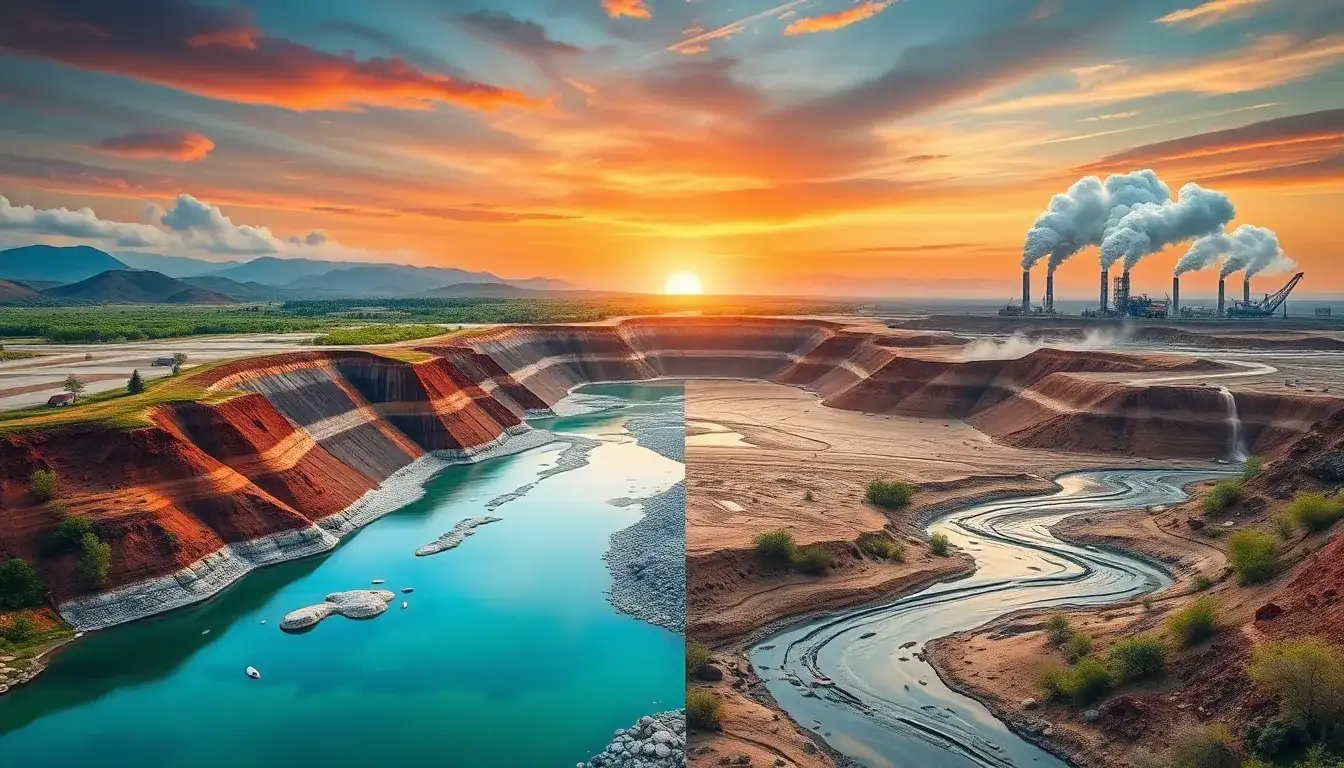
The main environmental impacts of lithium mining include:
1. Water Usage and Contamination
- Lithium mining, especially through brine extraction (pumping saline underground water to the surface and evaporating it), requires massive quantities of water—about 500,000 liters per ton of lithium mined.
- This intense water usage leads to depletion of scarce freshwater resources, often in arid regions like South America’s salt flats (e.g., Salar de Atacama and Salar de Uyuni), causing water scarcity for local communities and ecosystems.
- Chemicals used in extraction, such as sulfuric acid and sodium hydroxide, can seep into soil and water supplies, polluting ecosystems and threatening biodiversity, including endangered species like flamingos.
- Contamination of ponds and groundwater has been reported, rendering traditional water sources unusable for indigenous and local populations.
2. Carbon Emissions and Energy Intensity
- Lithium mining is energy-intensive and generates significant carbon dioxide emissions. One ton of mined lithium can emit nearly 15 tons of CO2, largely due to fossil fuel-powered extraction and processing methods.
- In some cases, the carbon footprint of lithium battery production is comparable to or exceeds that of producing a conventional fossil fuel-powered car.
- Overall, while lithium mining emissions are lower than fossil fuel extraction, they remain substantial enough to impact climate change efforts.
3. Habitat Destruction and Biodiversity Loss
- Mining activities lead to land degradation, deforestation, and destruction of habitats, disrupting fragile ecosystems in mining areas.
- The disturbance affects local wildlife, including threatened species reliant on local water bodies and wetlands impacted by mining operations.
- Displacement of indigenous communities disrupts traditional ecological knowledge and conservation practices, which historically help preserve biodiversity.
4. Waste and Toxicity
- Lithium-ion batteries contain hazardous metals (arsenic, cadmium, chromium, cobalt, copper) which, if improperly disposed of in landfills, can leak toxins into soil and groundwater, causing pollution and health risks.
- Mining operations generate large volumes of mineral waste, which needs proper management to avoid environmental damage.
5. Social and Human Rights Issues (Indirect Environmental Factor)
- Lithium mining often displaces indigenous peoples and local communities, compromising their livelihoods and relationship with the land, which can indirectly cause environmental degradation by disrupting sustainable land stewardship.
Summary Table of Environmental Impacts
| Impact | Description |
|---|---|
| Water Depletion | Massive water use (~500,000 liters/ton), causing scarcity in arid regions |
| Water Pollution | Toxic chemical contamination of soil, groundwater, and surface water |
| Carbon Emissions | ~15 tons CO2 emitted per ton of lithium mined, driven by energy-intensive fossil fuel processes |
| Habitat Loss | Land degradation, deforestation, and ecosystem disruption |
| Biodiversity Threats | Endangered species impacted through habitat and water source disruption |
| Toxic Waste Risks | Hazardous metals from batteries pollute environment if not properly recycled or managed |
| Social Displacement | Indigenous and local communities displaced, affecting ecological stewardship |
Conclusion
Although lithium is essential for renewable technologies like electric vehicles and energy storage, its mining poses serious environmental challenges—water scarcity and pollution, high carbon emissions, habitat destruction, and toxic waste risks. These impacts highlight the need for more sustainable extraction methods, stricter regulations, improved recycling, and alternative battery technologies to mitigate lithium mining’s ecological footprint.
Original article by NenPower, If reposted, please credit the source: https://nenpower.com/blog/what-are-the-main-environmental-impacts-of-lithium-mining/

