

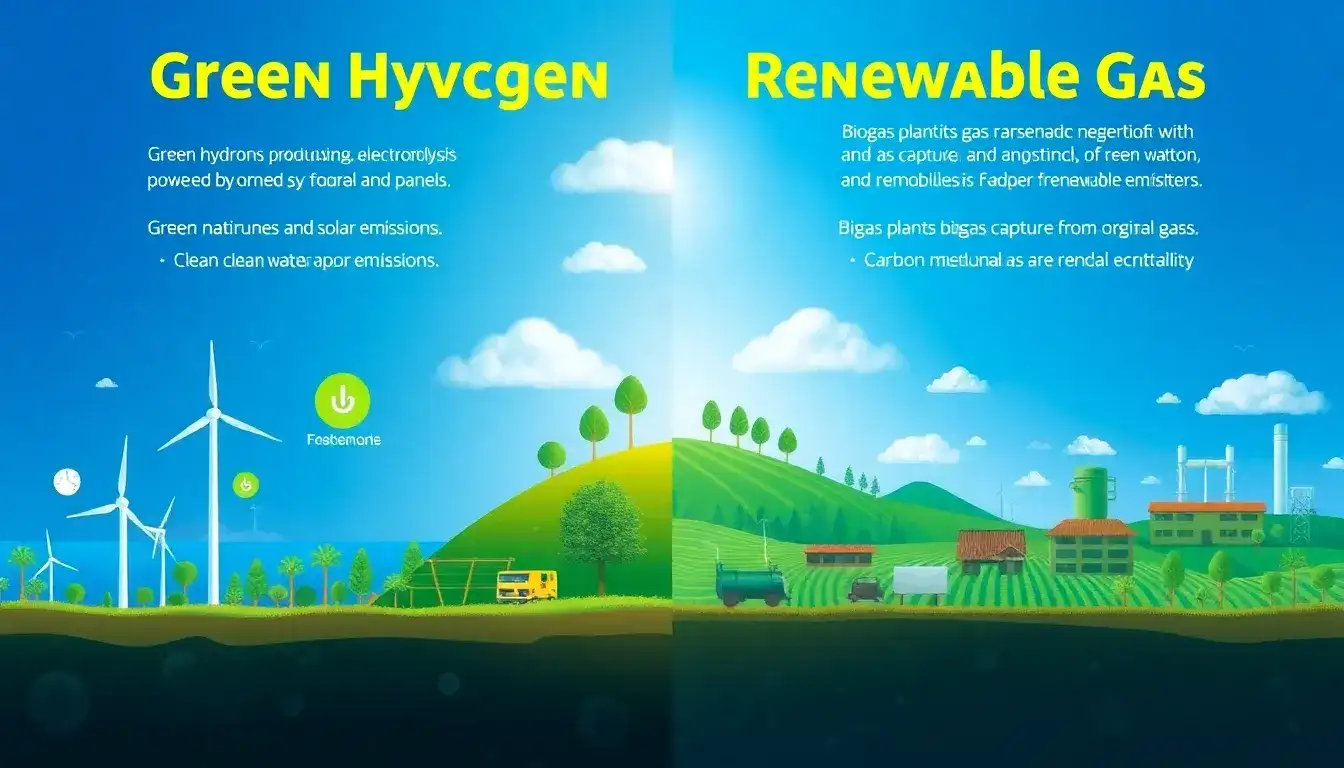
The main environmental impacts of green hydrogen compared to renewable natural gas (RNG) differ fundamentally due to their production processes and emissions profiles:
Green Hydrogen
- Production and Emissions: Green hydrogen is produced by electrolysis of water using electricity generated from renewable sources such as wind or solar. As such, it emits no direct greenhouse gases during production, making it essentially emissions-free if the electricity is fully renewable.
- Potential Environmental Risks:
- Water use: Electrolysis consumes significant quantities of water, which raises concerns about water scarcity, especially in arid regions.
- Land use: The renewable electricity required for green hydrogen often depends on large-scale wind or solar farms, which can lead to land-use change impacting biodiversity, natural habitats, and agricultural land. Loss of natural buffers like wetlands could increase vulnerability to natural hazards.
- Climate Benefits: Green hydrogen pathways can reduce warming impacts compared to fossil fuels by more than 60% over various timescales. However, near-term climate benefits may be reduced if hydrogen leaks occur or renewable electricity is not additional to the existing grid requirements.
Renewable Natural Gas (RNG)
- RNG is typically derived from biogas sources such as landfills, wastewater treatment plants, or agricultural waste, by upgrading methane to pipeline-quality gas. Although not explicitly detailed in the search results, RNG is generally considered a lower-carbon alternative to fossil natural gas because it uses methane that would otherwise be released into the atmosphere.
- Environmental impacts include:
- Methane leakage: RNG systems can still emit methane, a potent greenhouse gas, through leaks during production, processing, or transportation, similar to fossil natural gas systems, potentially undermining climate benefits.
- Resource competition and land use: RNG feedstock production (e.g., energy crops, manure) may compete with food production or natural ecosystems, impacting biodiversity and land use.
- Air pollutants: Combustion of RNG releases nitrogen oxides and other pollutants impacting air quality and health.
Comparative Summary
| Environmental Aspect | Green Hydrogen | Renewable Natural Gas |
|---|---|---|
| Greenhouse Gas Emissions | Virtually zero if using renewable electricity; some reduction if hydrogen leaks occur | Lower than fossil gas but methane leaks possible; combustion emits pollutants |
| Water Use | High due to electrolysis | Low to moderate, depending on feedstock source |
| Land Use | Potentially large due to renewable electricity infrastructure | Potential impacts if energy crops are grown; depends on feedstock source |
| Biodiversity and Habitat Impact | Possible habitat loss from renewable energy projects | Possible from feedstock cultivation |
| Air Pollution | Minimal to none | Produces nitrogen oxides and other combustion pollutants |
| Climate Impact | High potential for climate mitigation but depends on renewable electricity availability and methane leakage | Climate benefits can be undermined by methane leakage |
In conclusion, green hydrogen offers near-zero direct emissions if produced with renewables but requires careful management of water and land resources. RNG can reduce methane emissions compared to fossil natural gas but still poses risks from methane leakage and air pollution. Both have environmental trade-offs, with green hydrogen generally seen as having a lower environmental footprint when powered by truly additional renewable energy.
Original article by NenPower, If reposted, please credit the source: https://nenpower.com/blog/what-are-the-main-environmental-impacts-of-green-hydrogen-compared-to-renewable-natural-gas/

