

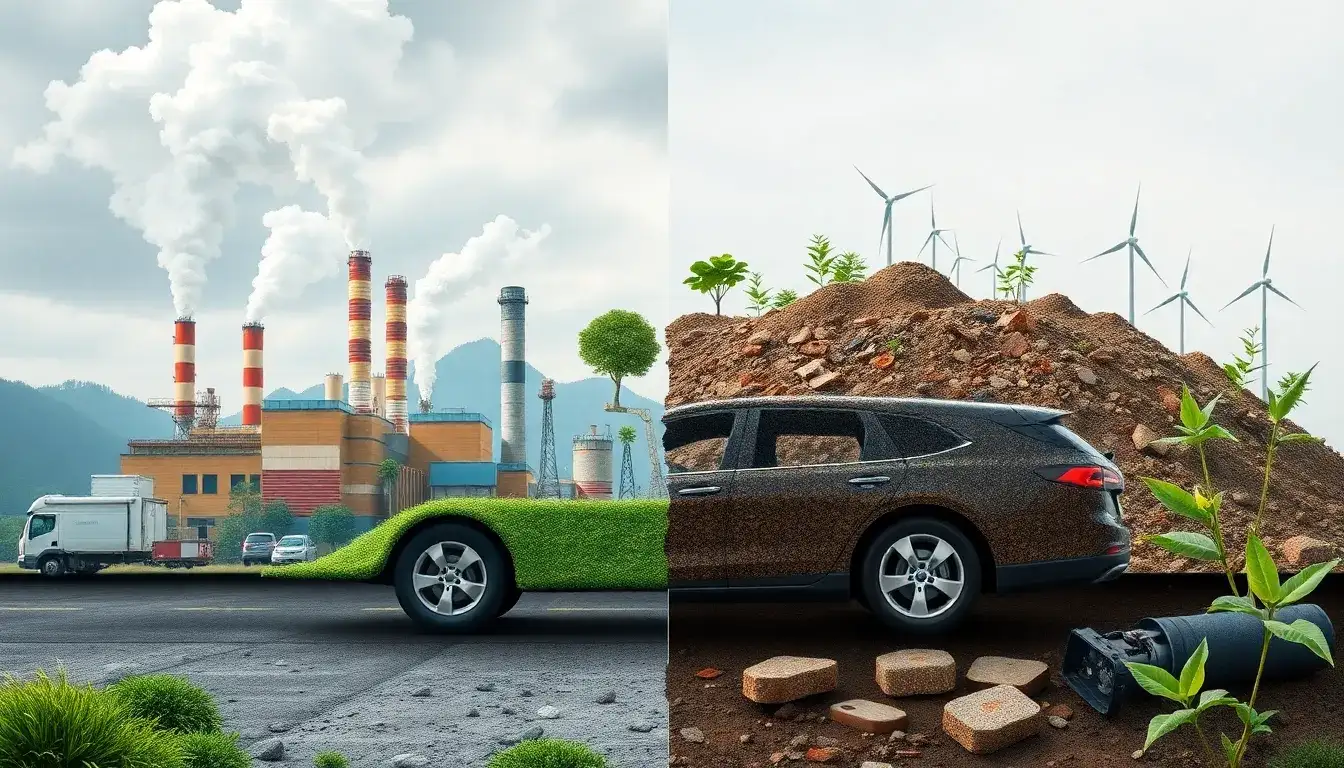
Environmental Drawbacks of EVs
- Battery Production Impact:
- Material Extraction: The mining of materials such as lithium, cobalt, and nickel for EV batteries is energy-intensive and often conducted in regions with poor environmental records, leading to air pollution, loss of biodiversity, and decreased freshwater supply.
- Carbon Footprint: EV battery production generates significant CO2 emissions, often comparable to driving gasoline-powered vehicles for tens of thousands of miles.
- Power Source Dependency:
- Fossil Fuel Reliance: Most EVs are charged using electricity generated from fossil fuels, which contributes to CO2 emissions and other environmental impacts.
- Grid Capacity: The increased power demand for EV charging could strain electrical grids, necessitating more power generation, often from non-renewable sources.
- Transportation and Waste:
- Transportation Emissions: The transportation of batteries and other components contributes to the overall carbon footprint of EVs.
- Waste Disposal: The recycling of EV batteries is not yet efficient, contributing to a growing e-waste problem.
- Water Usage and Pollution:
- The water-intensive nature of battery production processes can lead to water pollution and decreased water quality in affected areas.
Original article by NenPower, If reposted, please credit the source: https://nenpower.com/blog/what-are-the-main-environmental-drawbacks-of-evs/

