

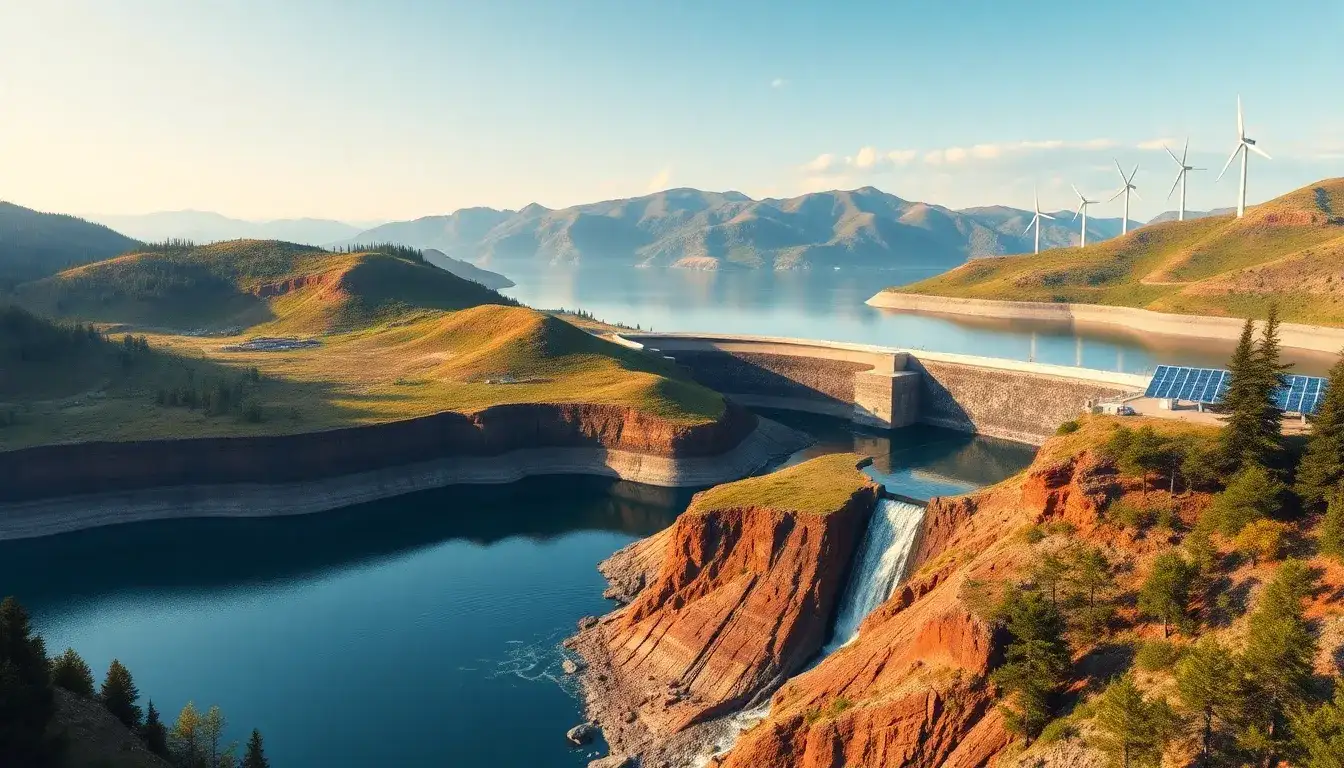
The main environmental concerns associated with pumped hydroelectric storage (PHS) vary somewhat depending on whether the system is open-loop (connected to natural flowing water) or closed-loop (not connected to natural water). However, key concerns generally include the following:
1. Ecological Impacts
- Aquatic and Terrestrial Ecosystems: Open-loop systems can disrupt aquatic ecosystems by altering river flows, water temperature, and habitats, potentially affecting fish populations and other aquatic life. Construction may also require river diversion and can lead to ecological disturbances.
- Localized Environmental Effects: Closed-loop systems, which are often off-stream, tend to have more localized and shorter-duration impacts but can still affect surrounding terrestrial and aquatic environments, though typically to a lesser extent than open-loop projects.
2. Water Usage and Rights
- Closed-loop PHS depends on sourcing and managing large volumes of water, which can complicate water rights and create competition with other uses such as agriculture or municipal supply. This can delay project development and affect local water availability.
3. Geology, Soils, and Groundwater
- Closed-loop projects, especially those involving underground reservoirs or groundwater use, may have considerable impacts on geology, soils, and groundwater resources. These impacts can sometimes be higher than those from open-loop systems due to excavation, land disturbance, and groundwater extraction or recharge.
4. Risk of Flooding and Infrastructure Impacts
- The construction and operation of dams and reservoirs for PHS carry risks such as potential major flooding due to dam failure or extreme weather events, which could have significant environmental and safety consequences.
5. Greenhouse Gas Emissions
- Although PHS is considered one of the lowest greenhouse gas-emitting energy storage technologies, some emissions can arise, particularly in open-loop systems due to reservoir creation and organic matter decomposition underwater. Closed-loop systems show lower greenhouse gas emissions overall.
Summary Table of Environmental Concerns
| Concern | Open-Loop PHS | Closed-Loop PHS |
|---|---|---|
| Aquatic Ecosystem Impact | Significant, affects river systems | Localized, less impact |
| Water Sourcing | Uses natural flowing water | Water rights and sourcing complexity |
| Geology/Soil/Groundwater | Moderate impact | Potentially higher due to construction |
| Risk of Flooding | Dam-related risks | Similar dam risks |
| Greenhouse Gas Emissions | Higher potential due to reservoirs | Lower emissions overall |
In conclusion, while pumped hydroelectric storage is a key renewable energy storage technology with relatively low greenhouse gas emissions, its environmental concerns primarily involve impacts on aquatic and terrestrial ecosystems, water resource management challenges, geological and groundwater disturbances, and risks related to dam infrastructure. Closed-loop PHS systems tend to have fewer and more localized environmental effects compared to open-loop systems, though they present unique challenges related to groundwater and site geology.
Original article by NenPower, If reposted, please credit the source: https://nenpower.com/blog/what-are-the-main-environmental-concerns-associated-with-pumped-hydroelectric-storage/

