

- Air Pollutant Emissions: CAES systems, particularly those using gas turbines, emit pollutants similar to conventional gas turbines, such as particulate matter and nitrogen oxides.
- Water Consumption and Discharge: CAES facilities require water for cooling and other operational needs, which can impact local aquatic ecosystems if not managed properly.
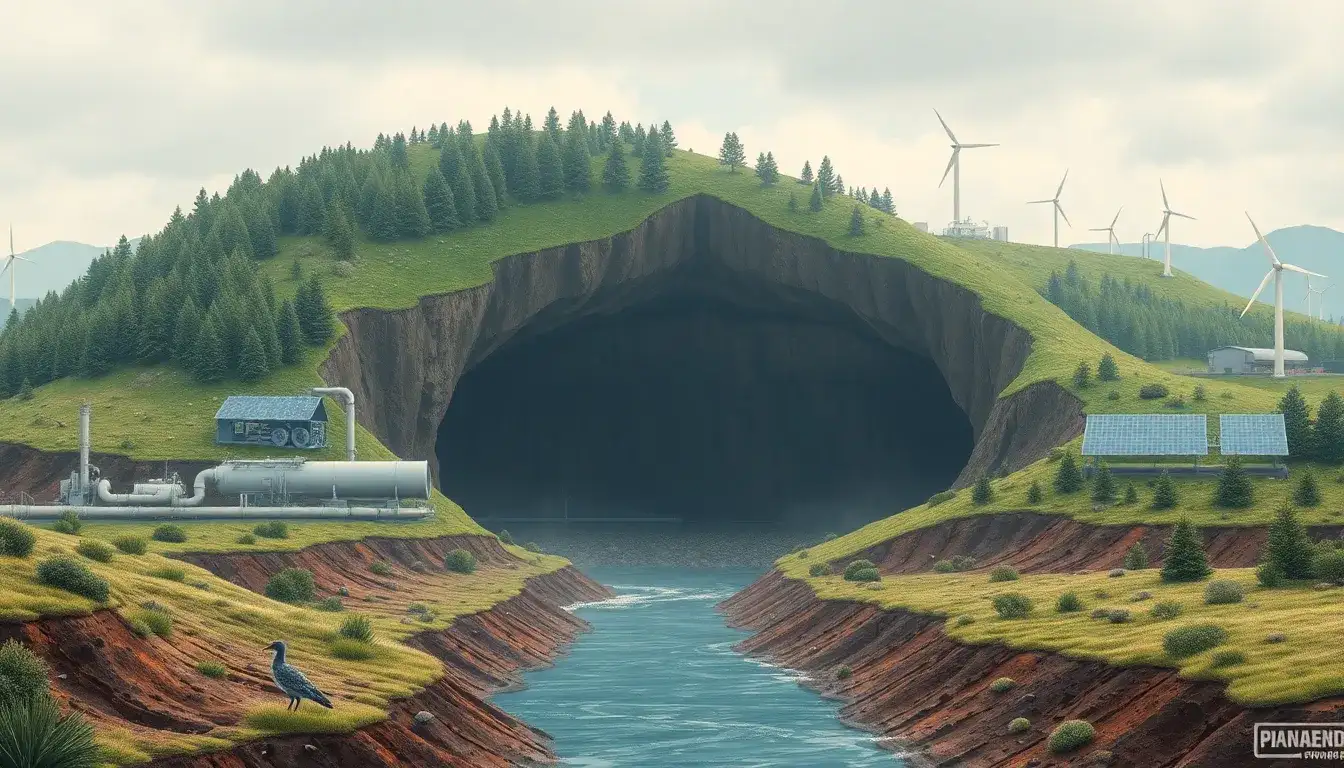
- Land Use and Geology: The construction of storage caverns can disrupt local geology and cause land subsidence or groundwater contamination if geological conditions are not suitable.
- Fuel Consumption: Especially for diabatic CAES, natural gas is often used to reheat compressed air during the expansion process, contributing to greenhouse gas emissions and depending on fossil fuels.
- Noise Pollution: The operation of compressors and generators can generate significant noise levels, impacting nearby populations.
- Impact on Local Meteorology and Ecology: CAES can affect local ecosystems and weather patterns, particularly if construction or operations are not carefully managed.
To mitigate these impacts, careful site selection, advanced technological solutions (such as adiabatic CAES), and comprehensive environmental assessments are crucial.
Original article by NenPower, If reposted, please credit the source: https://nenpower.com/blog/what-are-the-main-environmental-concerns-associated-with-caes/

