

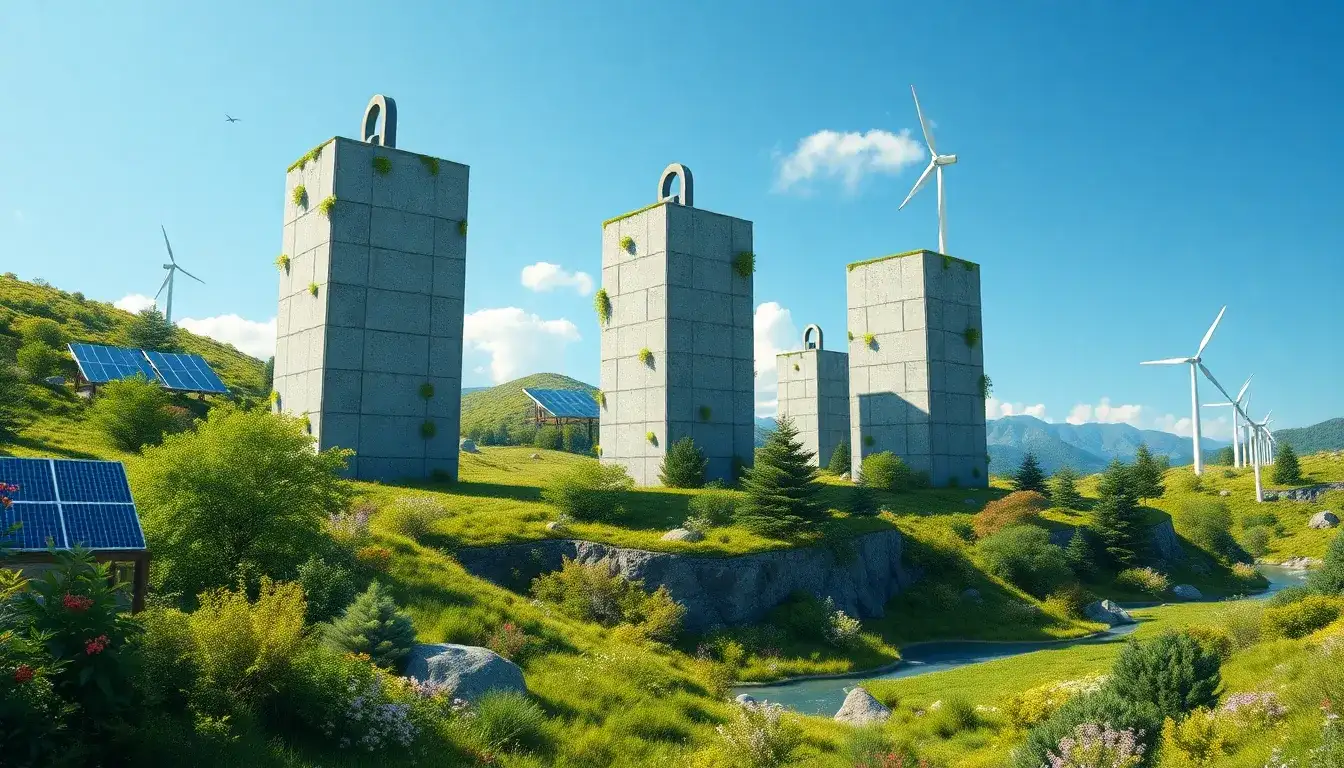
The environmental benefits of gravity-based energy storage (GBES) are significant, particularly as the world shifts towards more sustainable energy sources. Here are the main advantages:
1. Low Environmental Impact
Gravity-based energy storage systems primarily utilize gravitational potential energy by lifting heavy objects. Unlike traditional battery technologies such as lithium-ion, GBES does not rely on the extraction of rare materials, which often involves destructive mining practices. Instead, it employs abundant and inexpensive materials, such as concrete and steel, significantly reducing its ecological footprint.
2. Mitigation of Greenhouse Gas Emissions
A notable advantage of GBES is its capability to achieve net-negative lifecycle greenhouse gas emissions. For instance, systems that convert idle oil wells into energy storage facilities can effectively seal these wells, preventing methane leaks—a potent greenhouse gas. This dual functionality of providing energy storage while addressing environmental concerns related to fossil fuels highlights the innovative nature of gravity storage technologies.
3. Longevity and Durability
Gravity systems are designed to be long-lasting and require minimal maintenance. While lithium-ion batteries lose capacity over time, gravity systems are constructed from durable components that can withstand numerous cycles of energy storage and release without significant degradation. This longevity contributes to a lower environmental impact over the system’s lifetime.
4. Support for Renewable Energy Integration
By providing reliable energy storage, GBES enhances the operational efficiency of renewable energy sources like wind and solar. These sources are intermittent by nature, meaning that energy generated during peak times may not align with demand periods. Gravity storage can capture excess energy during high production times and release it when needed, thus stabilizing the grid and facilitating a more extensive shift to renewable energy.
5. Reduction of Land Use and Resource Allocation
Gravity storage systems can be deployed in various locations, including urban areas and previously utilized sites (e.g., abandoned mines), making them more versatile. This adaptability reduces the need for extensive new land development typically associated with other forms of energy generation or storage, such as pumped hydroelectric systems, which require specific geographic conditions.
6. Economic Viability
The cost-effectiveness of gravity-based systems further supports their environmental benefits. By utilizing existing infrastructure, like oil wells or mining shafts, these systems can achieve lower costs compared to new battery technologies. This economic viability can encourage more widespread adoption, ultimately leading to greater investments in renewable energy solutions.
Conclusion
Gravity-based energy storage presents a promising avenue for addressing the energy storage challenges faced as renewable sources become more prevalent. Its environmental benefits—from reduced emissions to the sustainable use of materials—position it as a vital component in the transition to a cleaner energy future. As technologies continue to advance, gravity storage systems will likely play an integral role in achieving global carbon neutrality goals.
Original article by NenPower, If reposted, please credit the source: https://nenpower.com/blog/what-are-the-main-environmental-benefits-of-using-gravity-based-energy-storage/

