

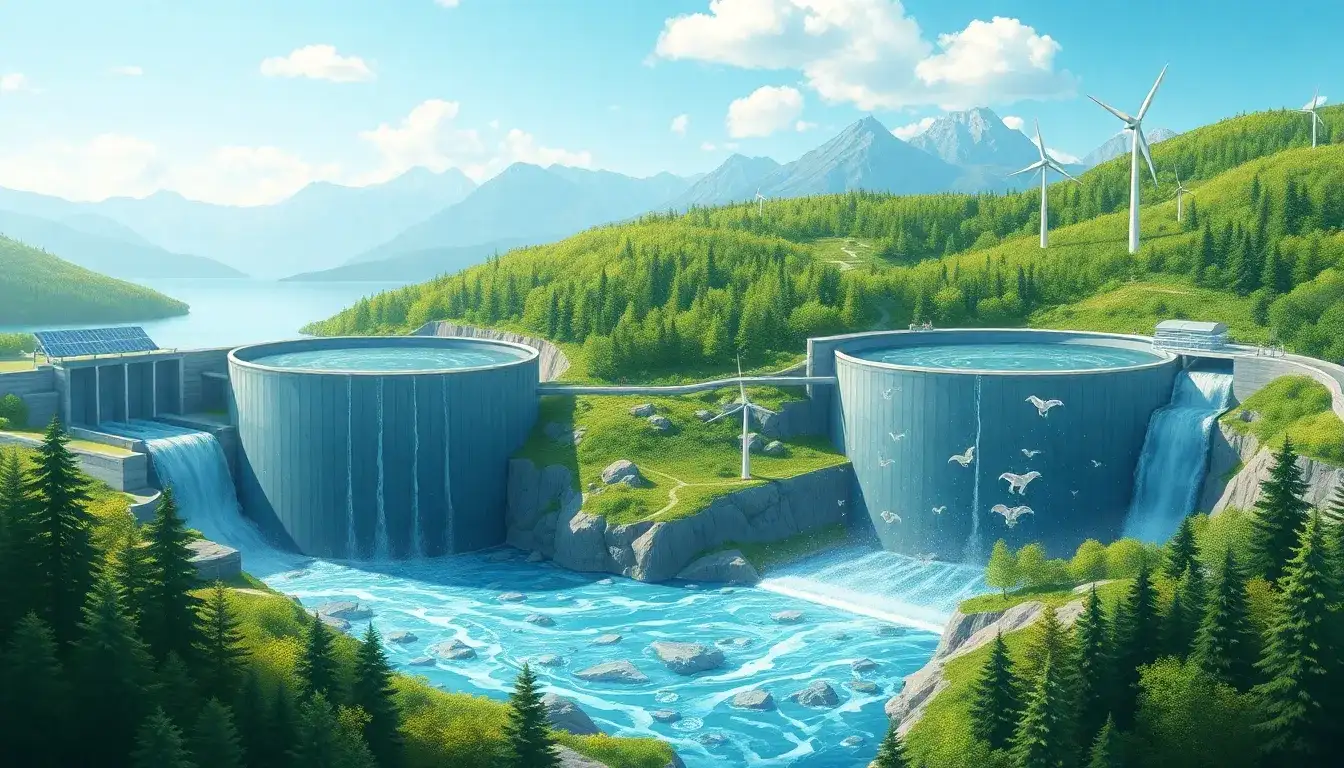
The main environmental benefits of pumped hydroelectric energy storage (PHES) include:
- Sustainability and Renewable Resource Use: PHES utilizes water, a renewable and abundant natural resource, which minimizes environmental impact compared to fossil fuels and aligns with global goals to shift towards greener energy options.
- Low Greenhouse Gas Emissions: Closed-loop pumped storage hydropower systems, which operate between two reservoirs without connecting to an external water body, have the lowest potential greenhouse gas emissions among grid-scale energy storage technologies. Studies show their life cycle greenhouse gas emissions range between 58 to 502 grams of CO2 equivalent per kWh of electricity delivered, significantly lower than battery technologies and other storage methods.
- Reduced Global Warming Potential (GWP): Life cycle assessments confirm PHES has the smallest carbon footprint when accounting for materials, construction, and operational phases. Choosing construction sites carefully (e.g., brownfield sites) can further reduce GWP by about 20%.
- Durability and Low Operational Emissions: Hydropower storage solutions like PHES are durable with low ongoing emissions, enabling long-term sustainable energy storage with minimal environmental degradation over time.
In summary, pumped hydroelectric energy storage offers a highly sustainable, low-carbon, and environmentally friendly method for grid-scale energy storage that supports the integration of renewable energy while minimizing greenhouse gas emissions and other environmental impacts.
Original article by NenPower, If reposted, please credit the source: https://nenpower.com/blog/what-are-the-main-environmental-benefits-of-pumped-hydroelectric-energy-storage/

