

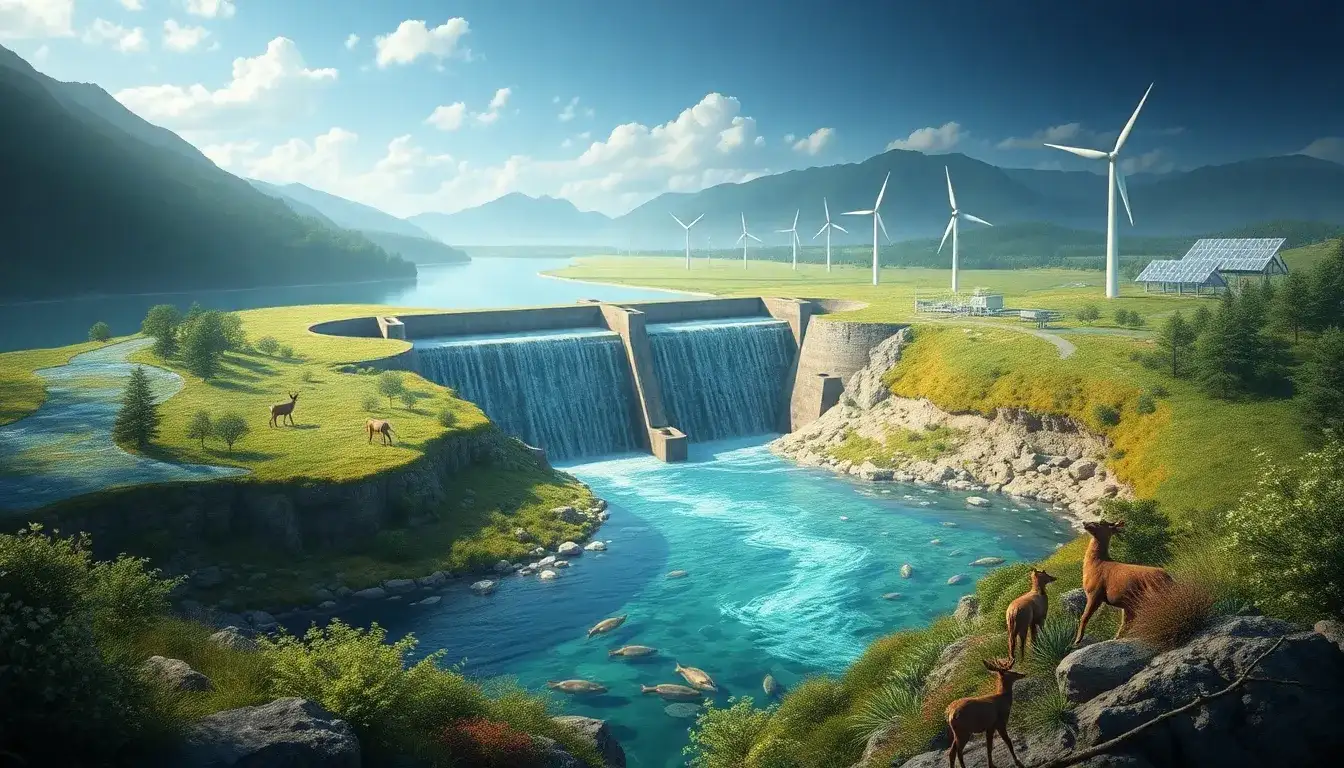
Ecological Changes Caused by PHS Facilities
1. Alteration of Local Ecosystems
- Water Flow Alteration: The construction of reservoirs and dams required for PHS can disrupt natural water flows and alter the habitats of aquatic species.
- Wildlife Habitats: Large reservoirs can displace local wildlife by flooding areas that were previously their habitats, leading to ecological imbalances.
2. Landscaping Changes
- Geographical Limitations and Alterations: PHS facilities often require suitable topography with significant elevation differences, which can necessitate substantial landscape modifications.
3. Displacement of Communities
- Local Community Displacement: The creation of large reservoirs can also displace local communities, affecting human habitats and cultural sites.
4. Water Evaporation and Loss
- Reservoirs in Arid Regions: Water evaporation from reservoirs, particularly in arid regions, can lead to significant water loss and affect the efficiency of the system.
5. Environmental Impacts from Construction Materials
- Use of Concrete, Steel, and Cement: The construction phase of PHS facilities involves the use of large amounts of materials like concrete, steel, and cement, which have environmental impacts due to their production and transportation.
In summary, while pumped hydro storage is a renewable energy solution with low carbon emissions compared to other energy storage options, its construction can have significant ecological impacts, including habitat disruption and environmental changes.
Original article by NenPower, If reposted, please credit the source: https://nenpower.com/blog/what-are-the-main-ecological-changes-caused-by-the-construction-of-pumped-hydro-storage-facilities/

