

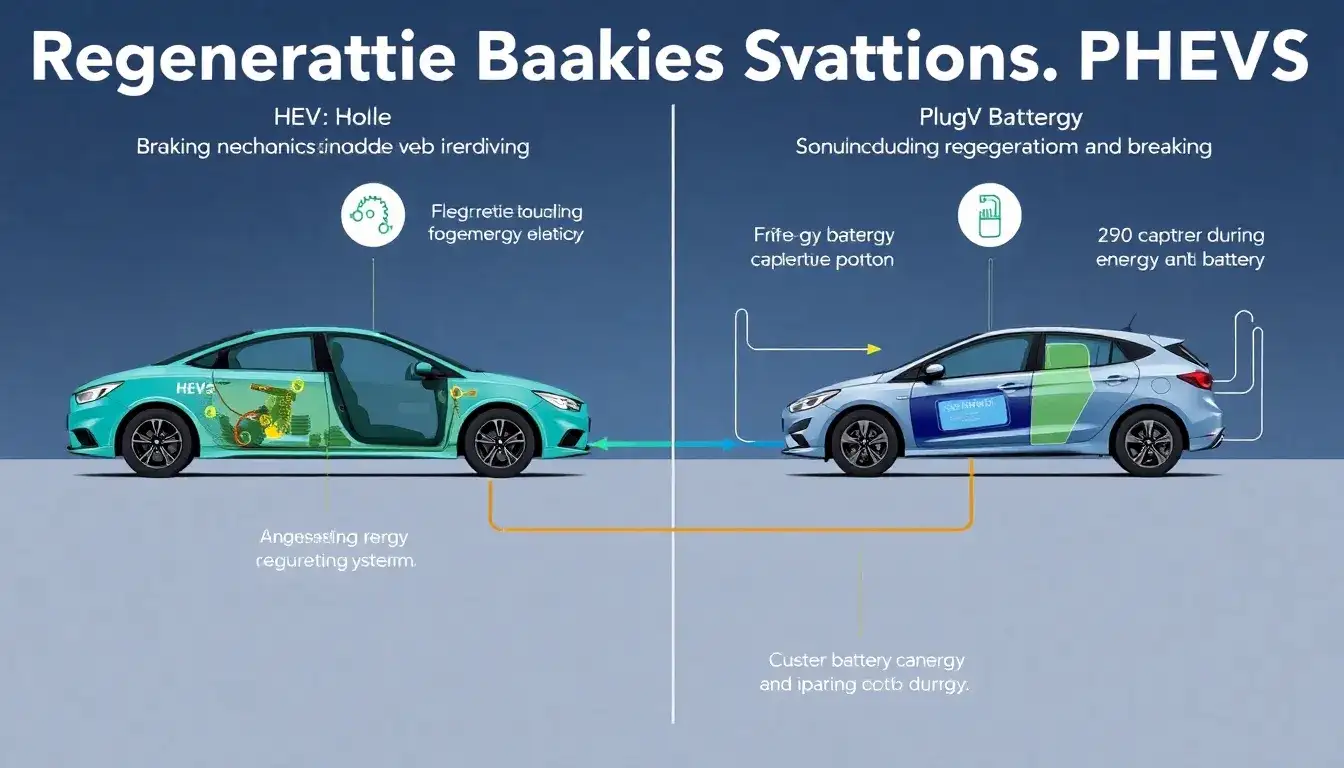
Regenerative braking systems in Hybrid Electric Vehicles (HEVs) and Plug-in Hybrid Electric Vehicles (PHEVs) function similarly in capturing kinetic energy during braking and converting it into electrical energy. However, there are some differences in how they are implemented and their impact on the vehicle’s efficiency and operation:
Key Similarities
- Energy Capture: Both HEVs and PHEVs use regenerative braking to capture kinetic energy that would otherwise be lost as heat during braking.
- Electric Motor Role: In both systems, the electric motor acts as a generator when the vehicle brakes, converting kinetic energy into electrical energy.
- Battery Recharging: The captured energy is used to recharge the vehicle’s battery.
Main Differences
- Battery Size and Charge Strategy:
- HEVs: Typically have smaller batteries that are charged primarily through regenerative braking and the internal combustion engine. The battery is designed to assist the engine during acceleration and braking but is not intended for extended electric-only operation.
- PHEVs: Equipped with larger batteries that can be charged both through regenerative braking and by plugging into an external power source. This allows for more significant electric-only driving capabilities compared to HEVs.
- Electric-Only Driving Capability:
- HEVs: Generally designed for short distances in electric mode and depend more heavily on their combustion engines.
- PHEVs: Can travel longer distances using only electric power before the combustion engine kicks in, making regenerative braking more crucial for optimizing electric range.
- Efficiency and Emissions:
- HEVs: While they improve efficiency compared to conventional vehicles, their reliance on the combustion engine means they might not offer the same emissions reductions as PHEVs.
- PHEVs: By having larger batteries and longer electric-only operation capabilities, they can significantly reduce emissions over HEVs, especially when regularly charged from an external source.
- Brake Wear and Maintenance: Both types benefit from reduced brake wear due to regenerative braking, but PHEVs might see more pronounced effects due to their heavier reliance on electric propulsion, which can further reduce friction brake usage.
In summary, while both HEVs and PHEVs utilize regenerative braking to enhance efficiency, the differences lie in the design and operational capabilities of the vehicle, particularly in terms of battery size and electric-only driving range.
Original article by NenPower, If reposted, please credit the source: https://nenpower.com/blog/what-are-the-main-differences-in-regenerative-braking-systems-between-hevs-and-phevs/

