

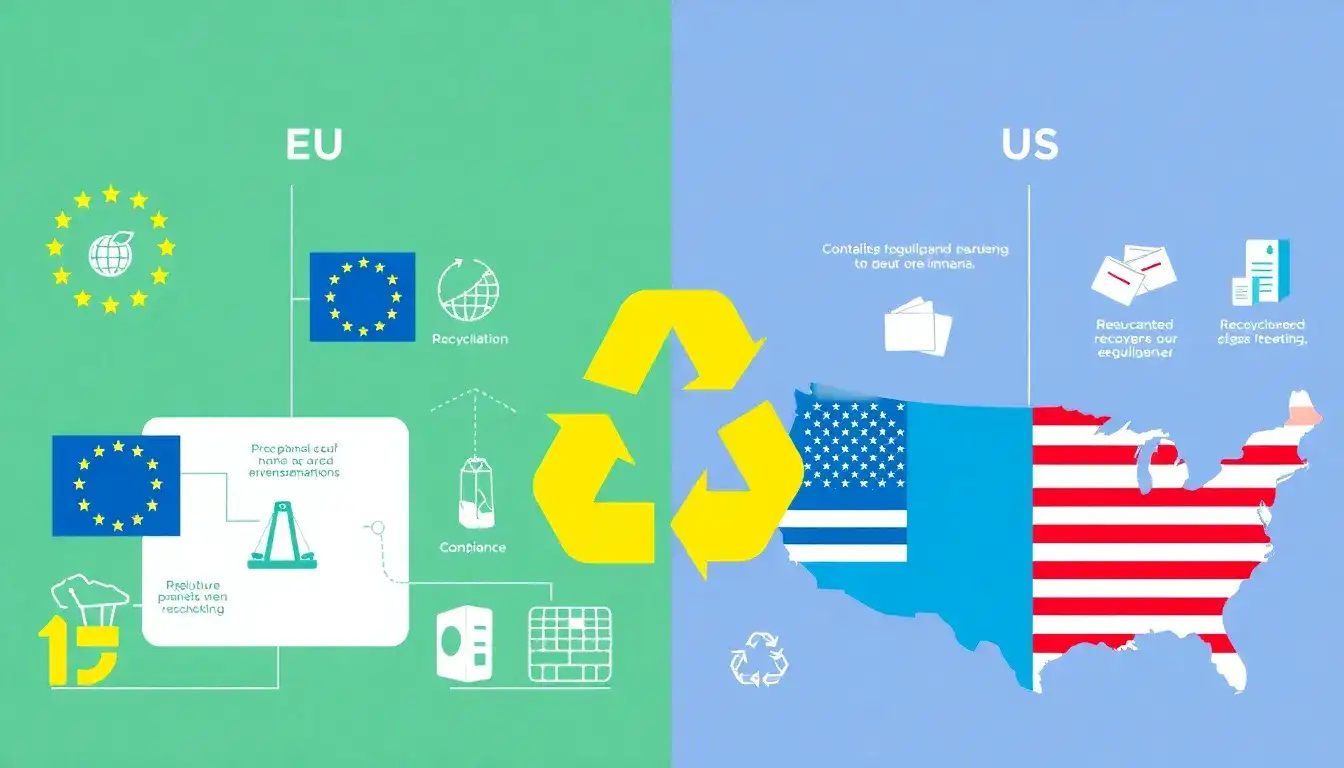
Key Differences in PV Recycling Regulations
1. Legislative Framework
- European Union (EU): The EU has implemented specific legislation addressing the entire lifecycle of solar PV panels. This includes the Waste Electrical and Electronic Equipment (WEEE) Directive, which has been adopted into national laws across member states. Additionally, there are country-specific compliance schemes for PV manufacturers.
- United States (US): The US lacks federal regulations specifically tailored for solar PV waste management. Instead, regulations vary by state, leading to inconsistent approaches across different regions.
2. Recycling Rates
- EU: Has a significantly higher solar PV recycling rate, estimated at about 80%. This is largely due to the mandatory recycling requirements in place across the EU.
- US: Currently has a much lower recycling rate, around 10%. This disparity is attributed to the absence of comprehensive federal regulations and varying state-level policies.
3. Economic and Environmental Impact
- EU: The EU’s rigorous recycling policies contribute to the economic recovery of valuable materials from solar panels and reduce environmental risks by ensuring proper waste disposal.
- US: Due to the lack of consistent regulations, a substantial portion of PV waste in the US is expected to end up in landfills (approximately 20 MT), which poses potential environmental hazards and missed economic opportunities.
4. High-Value Recycling Facilities
Both regions have high-value recycling facilities, but the EU has more facilities like Veolia (France), Tialpi Srl (Italy), and FLAXRES GmbH (Germany), compared to the US’s We Recycle Solar (Arizona) and SOLARCYCLE (Texas).
These differences reflect the EU’s proactive stance on managing PV waste compared to the more fragmented approach in the US.
Original article by NenPower, If reposted, please credit the source: https://nenpower.com/blog/what-are-the-main-differences-in-pv-recycling-regulations-between-the-eu-and-the-us/

