

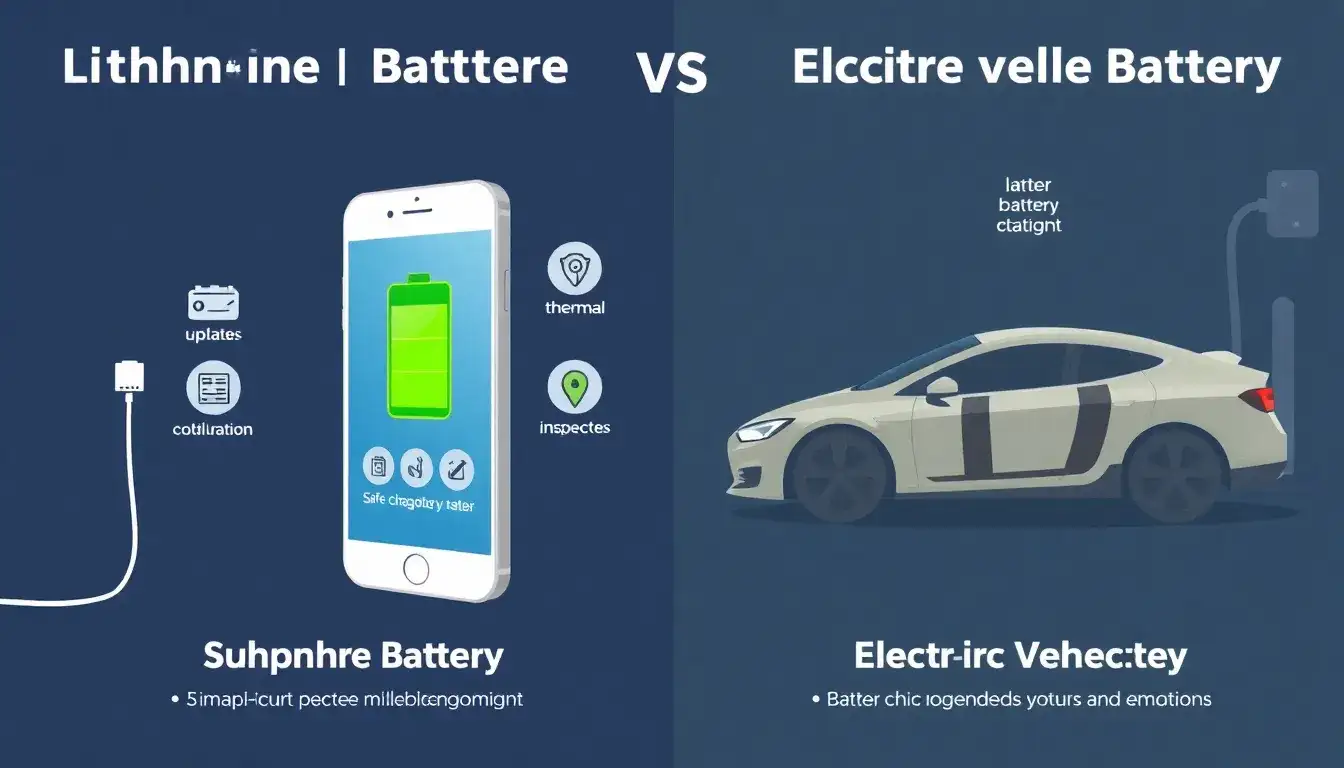
Lithium-ion batteries used in smartphones and electric vehicles (EVs) have different maintenance requirements due to their distinct usage patterns, scale, and environmental conditions. Here are the main differences in maintenance requirements between these two types of lithium-ion batteries:
1. Depth of Discharge (DoD) and Charging Habits
- Smartphones: For smartphones, partial discharge is common, and it is advised to avoid full discharges. Keeping the charge level between 20% and 80% is recommended to reduce stress on the battery and prolong its life.
- Electric Vehicles: EVs typically manage their batteries more aggressively. They often use battery management systems (BMS) to control charging and discharging, ensuring the battery is kept within a healthy state of charge. Partial discharges are common, but the BMS may allow deeper discharges when necessary.
2. Temperature Management
- Smartphones: Keeping smartphones at room temperature is generally sufficient. High temperatures can reduce battery longevity, so avoiding direct sunlight or hot cars is recommended.
- Electric Vehicles: EVs require more sophisticated temperature management. The BMS helps regulate battery temperature, often using cooling or heating systems to maintain optimal operating temperatures, which can significantly affect battery longevity.
3. Storage Conditions
- Smartphones: When storing smartphones, it’s best to keep the battery at a moderate charge level (around 40%) and avoid extreme temperatures.
- Electric Vehicles: Storing EVs involves a similar approach, often maintaining a partial charge (not full or empty) to prevent degradation. Specialized garages or climate-controlled environments can help maintain optimal storage conditions.
4. Scale and Complexity
- Smartphones: Smaller, simpler systems with less emphasis on large-scale cooling or heating systems.
- Electric Vehicles: Larger, more complex systems with integrated BMS, cooling systems, and safety features like fault detection and isolation.
5. Cycle Life and Charging Speeds
- Smartphones: Typically, hundreds of charge cycles are expected. Slower charging is often recommended to minimize heat stress.
- Electric Vehicles: Thousands of partial charge cycles are common. Fast charging is available but managed to avoid excessive heat buildup, often through more advanced BMS systems.
In summary, while both types of batteries benefit from similar care strategies like avoiding extreme temperatures and deep discharges, electric vehicle batteries require more complex systems and management due to their larger scale and specific operational demands.
Original article by NenPower, If reposted, please credit the source: https://nenpower.com/blog/what-are-the-main-differences-in-maintenance-requirements-between-lithium-ion-batteries-used-in-smartphones-and-those-used-in-electric-vehicles/

