

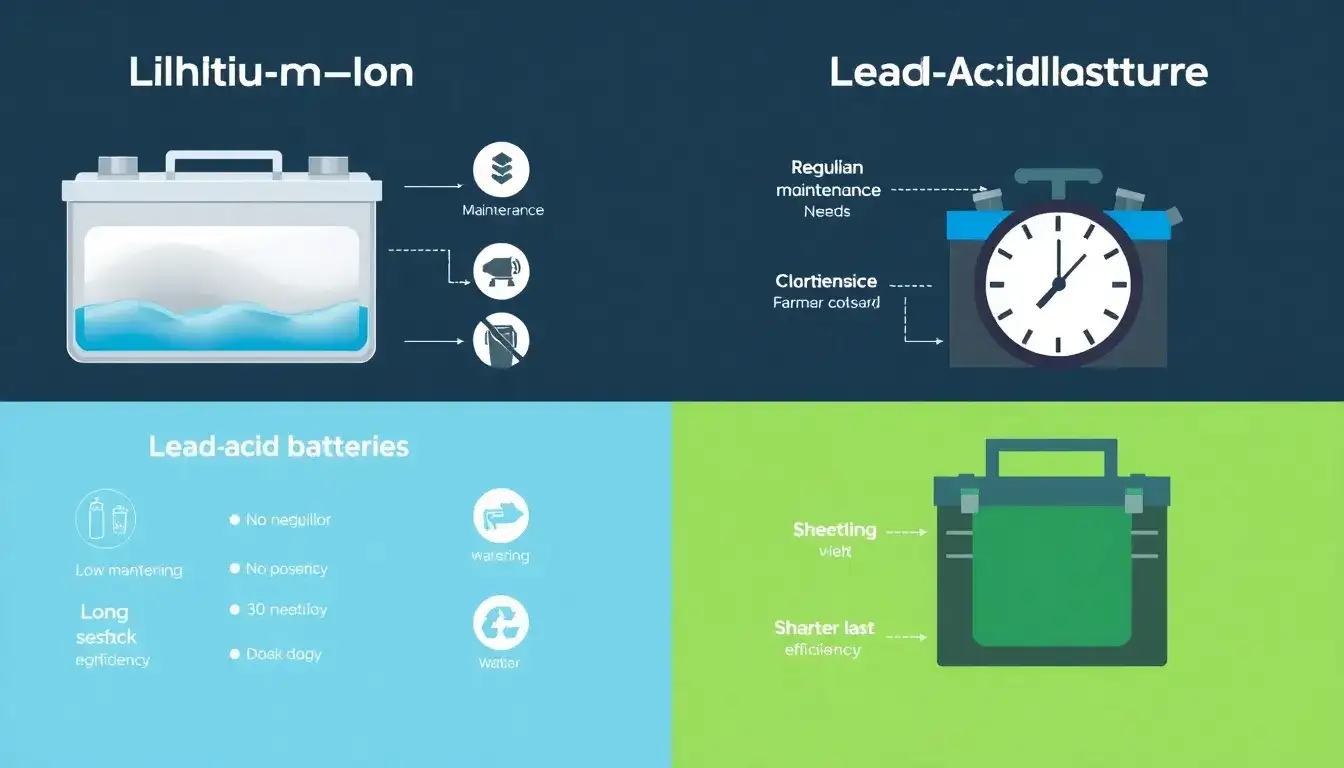
Maintenance Requirements Comparison
Lead-Acid Batteries
- Water Refilling: Flooded lead-acid batteries need regular water refilling to prevent drying out.
- Inspections and Desulfation: Frequent checks are necessary to prevent sulfation, which can reduce battery capacity.
- Cooling Periods: They produce heat during charging and require an 8-hour cool-down period after charging.
- Charging Method: Batteries must be removed from the forklift and placed in a charging base, often requiring a special charging storage room due to ventilation needs.
Lithium-Ion Batteries
- Minimal Maintenance: Lithium-ion batteries do not require water refilling or desulfation procedures.
- Built-in Management Systems: They often have sophisticated battery management systems (BMS) that minimize operator intervention by monitoring and controlling battery health.
- No Cooling Period: These batteries do not need cool-down periods after charging.
- Convenient Charging: Lithium-ion batteries can be charged quickly (typically 1-2 hours) and can be charged while installed in the forklift.
Overall, lithium-ion batteries offer a more streamlined maintenance experience compared to lead-acid batteries, which can lead to cost and time savings over their operational life.
Original article by NenPower, If reposted, please credit the source: https://nenpower.com/blog/what-are-the-main-differences-in-maintenance-requirements-between-lithium-ion-and-lead-acid-batteries/

