

Fuel Efficiency Differences Between PHEVs and HEVs
Key Points
- Mode of Operation:
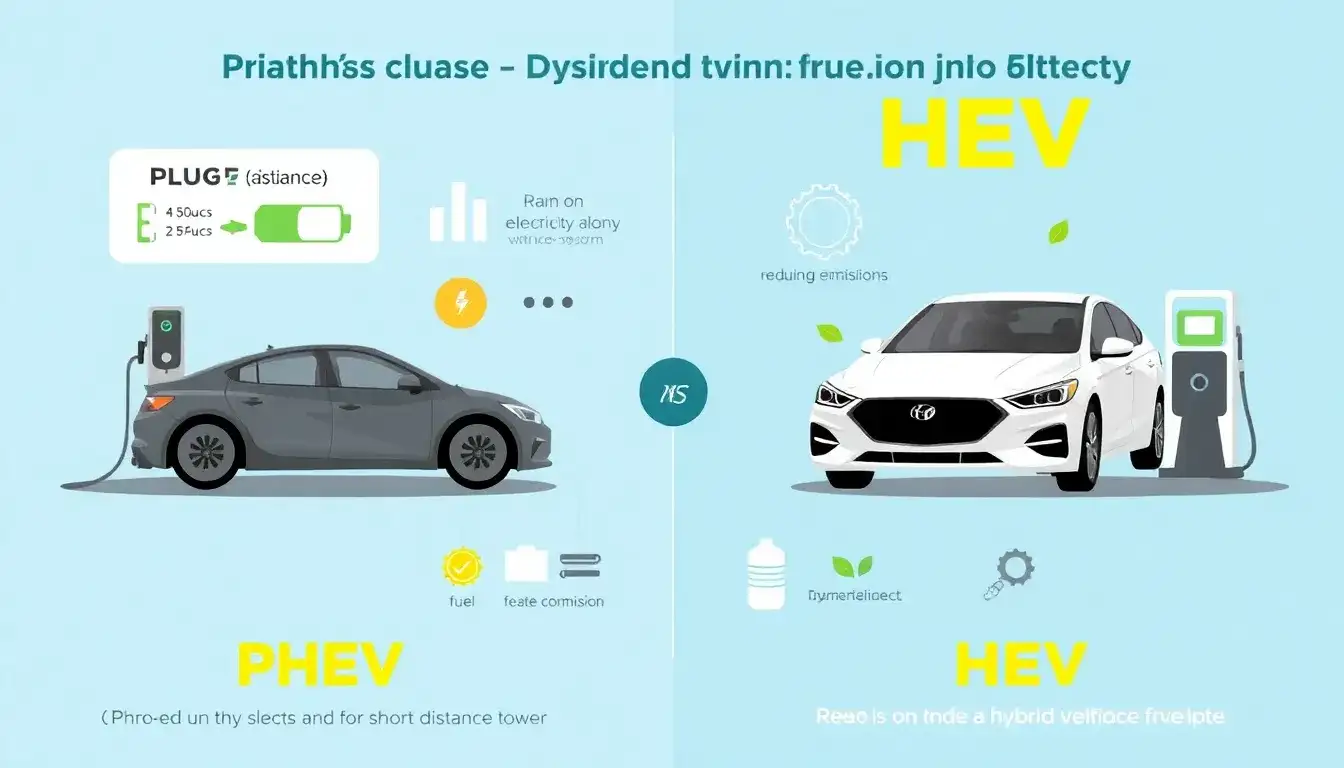
- PHEVs (Plug-in Hybrid Electric Vehicles) can run entirely on electric power for a certain distance (typically up to 50 miles or more), depending on the model and battery capacity. This electric-only mode significantly enhances their fuel efficiency compared to running on gasoline alone.
- HEVs (Hybrid Electric Vehicles) do not have an electric-only mode for extended distances. Instead, they use both the electric motor and internal combustion engine simultaneously to improve fuel efficiency. However, they cannot be charged from an external power source like a PHEV.
- Fuel Economy:
- PHEVs generally have better fuel economy when used primarily in electric mode, often achieving fuel consumption as low as 1.3 to 3.1 L/100 km. However, when running on gasoline, their fuel efficiency is comparable to or slightly worse than HEVs.
- HEVs typically deliver fuel economies between 4.0 and 6.6 L/100 km, which is lower than PHEVs in electric mode but often better when PHEVs are running on gasoline.
- Real-World Performance:
- In real-world driving, PHEVs tend to exceed their claimed fuel efficiency less reliably than HEVs. PHEVs often show higher discrepancies from claimed fuel efficiencies, especially when not fully utilized in electric mode.
- HEVs generally perform closer to their claimed fuel efficiencies, despite lower overall figures.
Conclusion
PHEVs offer superior fuel efficiency when used predominantly in electric mode, especially for short trips and city driving. However, their advantage diminishes when relying on the gasoline engine. HEVs provide consistent fuel efficiency improvements across various driving conditions but lack the high efficiency of PHEVs in electric mode.
Original article by NenPower, If reposted, please credit the source: https://nenpower.com/blog/what-are-the-main-differences-in-fuel-efficiency-between-phevs-and-hevs/

