

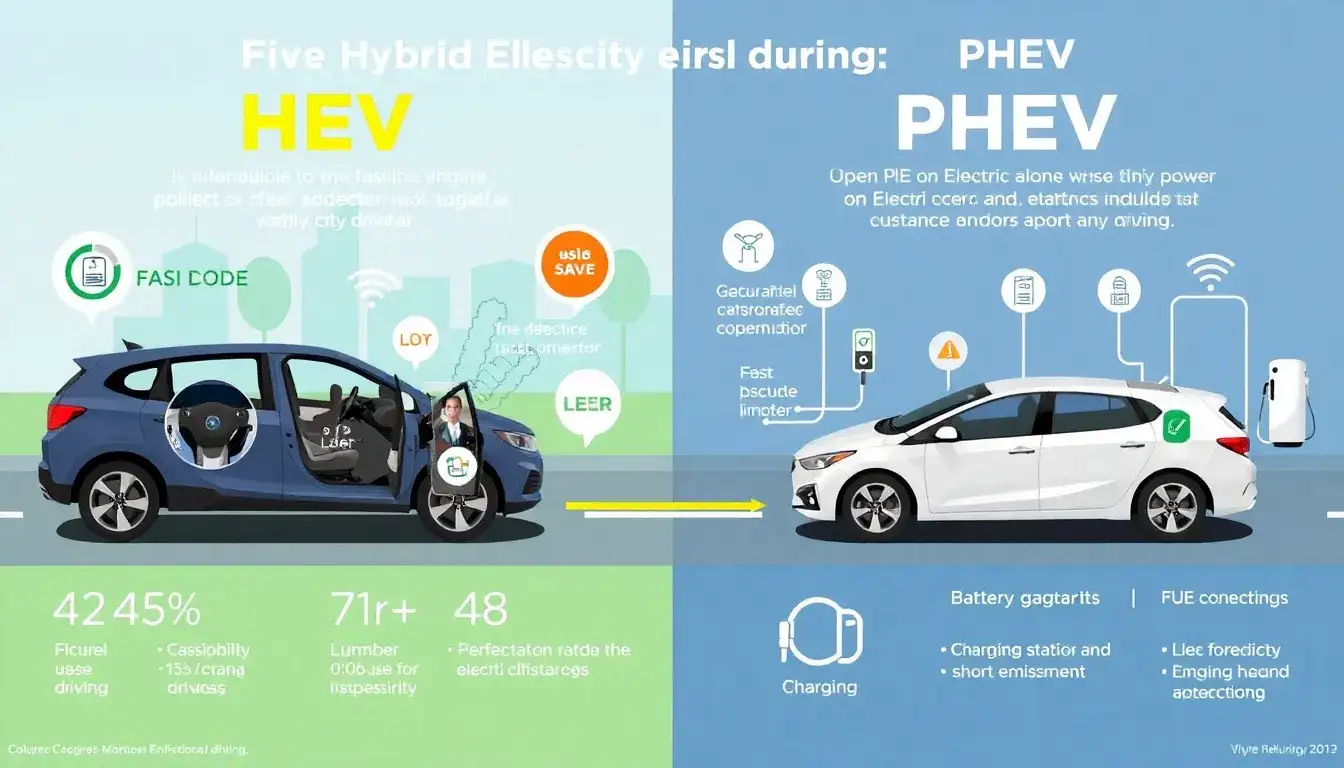
Differences in Fuel Efficiency between HEVs and PHEVs in City Driving
Hybrid Electric Vehicles (HEVs) and Plug-in Hybrid Electric Vehicles (PHEVs) both offer improved fuel efficiency compared to traditional gasoline-powered vehicles, especially in city driving. However, they differ significantly in how they achieve this efficiency.
Hybrid Electric Vehicles (HEVs)
- Fuel Economy: Traditional hybrids often achieve 50 mpg or higher in city driving, thanks to regenerative braking and efficient use of both gasoline and electric power.
- Powertrain: HEVs use a small battery (typically around 1 kWh) that captures energy from regenerative braking. This energy is reused quickly to aid acceleration but cannot be plugged in for charging.
- Operational Mode: They switch seamlessly between electric and gasoline power, but they always rely on the gasoline engine for extended driving or when the battery is depleted.
Plug-in Hybrid Electric Vehicles (PHEVs)
- Fuel Economy: PHEVs can achieve over 100 mpg-equivalent when electric driving is included. This efficiency is particularly high over short trips where the vehicle can operate primarily on electric power.
- Powertrain: PHEVs have a larger battery (10 to 20 times larger than HEVs) that allows for fully electric driving for 25 to 50 miles before the gasoline engine kicks in. This battery can be charged via a plug.
- Operational Mode: PHEVs can run solely on electric power for short distances, greatly reducing fuel consumption in city driving if the vehicle is regularly charged.
Key Points for City Driving
- City Driving Advantage: Both HEVs and PHEVs excel in city driving due to regenerative braking and electric assistance. However, PHEVs offer more significant fuel savings if the battery is kept charged, as they can operate in electric-only mode for a substantial portion of urban trips.
- Charging and Battery Size: The larger battery in PHEVs means they require external charging, which can be a major advantage in city driving but may require more planning for charging stops.
In summary, while both HEVs and PHEVs are efficient in city driving, PHEVs offer superior fuel efficiency over short distances if charged regularly, thanks to their ability to run on electric power alone for significant portions of a trip.
Original article by NenPower, If reposted, please credit the source: https://nenpower.com/blog/what-are-the-main-differences-in-fuel-efficiency-between-hevs-and-phevs-in-city-driving/

