

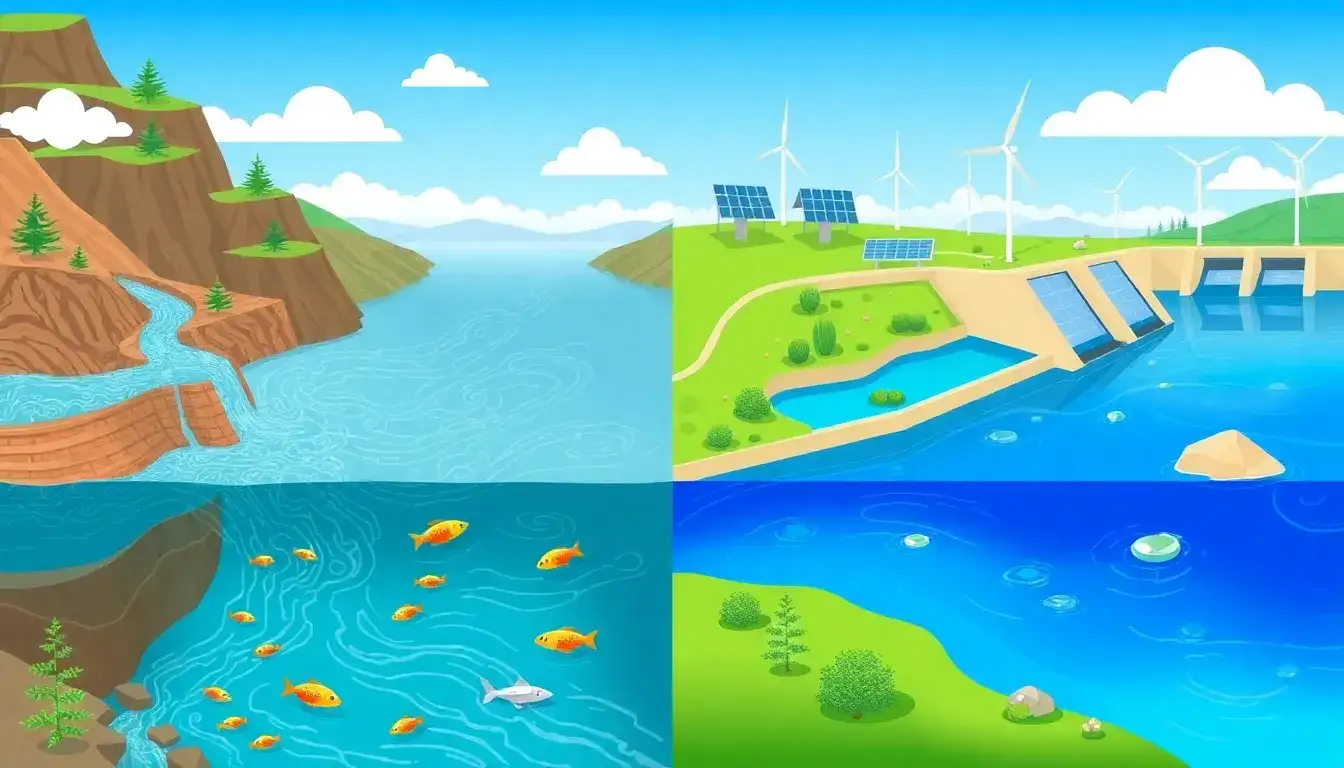
Main Differences in Environmental Impacts Between Open-Loop and Closed-Loop Pumped Storage Hydropower (PSH) Systems
The differences in environmental impacts between open-loop and closed-loop PSH systems are significant, with closed-loop systems generally having fewer and more localized impacts.
Environmental Impact Comparison: Open-Loop vs. Closed-Loop PSH
- Aquatic Ecology:
- Open-Loop: These systems are continuously connected to a naturally flowing water body, leading to ongoing impacts on fish and aquatic ecosystems. These impacts include altering natural flow regimes and affecting downstream habitats.
- Closed-Loop: Not connected to a naturally flowing water feature, thus minimizing aquatic impacts by avoiding continuous withdrawal and discharge of water from rivers or lakes.
- Terrestrial Habitat:
- Open-Loop: Generally, have more extensive terrestrial impacts due to shoreline erosion and sedimentation in natural water bodies.
- Closed-Loop: Being “off-stream,” they have greater siting flexibility and lower terrestrial habitat disturbance, but may still affect local land use and geology.
- Water Sourcing:
- Open-Loop: Uses natural water bodies without additional water rights issues.
- Closed-Loop: Often requires securing rights for groundwater or surface water for initial fill and replenishment, which can be a source of contention and environmental concern.
- Groundwater Impacts:
- Open-Loop: Generally limited to seepage effects.
- Closed-Loop: May use groundwater for replenishment, potentially affecting groundwater quality and quantity.
- Cultural Resources:
Both types of projects can have cultural resource impacts, but these are more commonly noted in closed-loop projects due to their varied and often unconventional locations.
Summary
- Closed-Loop Systems: Generally offer more opportunities to minimize environmental impacts due to their off-stream location and greater siting flexibility.
- Open-Loop Systems: Have more widespread and longer-lasting impacts, particularly on aquatic ecosystems.
Overall, while closed-loop systems are more environmentally friendly compared to open-loop systems, they still pose unique environmental challenges, such as groundwater impacts and land use conflicts.
Original article by NenPower, If reposted, please credit the source: https://nenpower.com/blog/what-are-the-main-differences-in-environmental-impacts-between-open-loop-and-closed-loop-psh-systems/

