

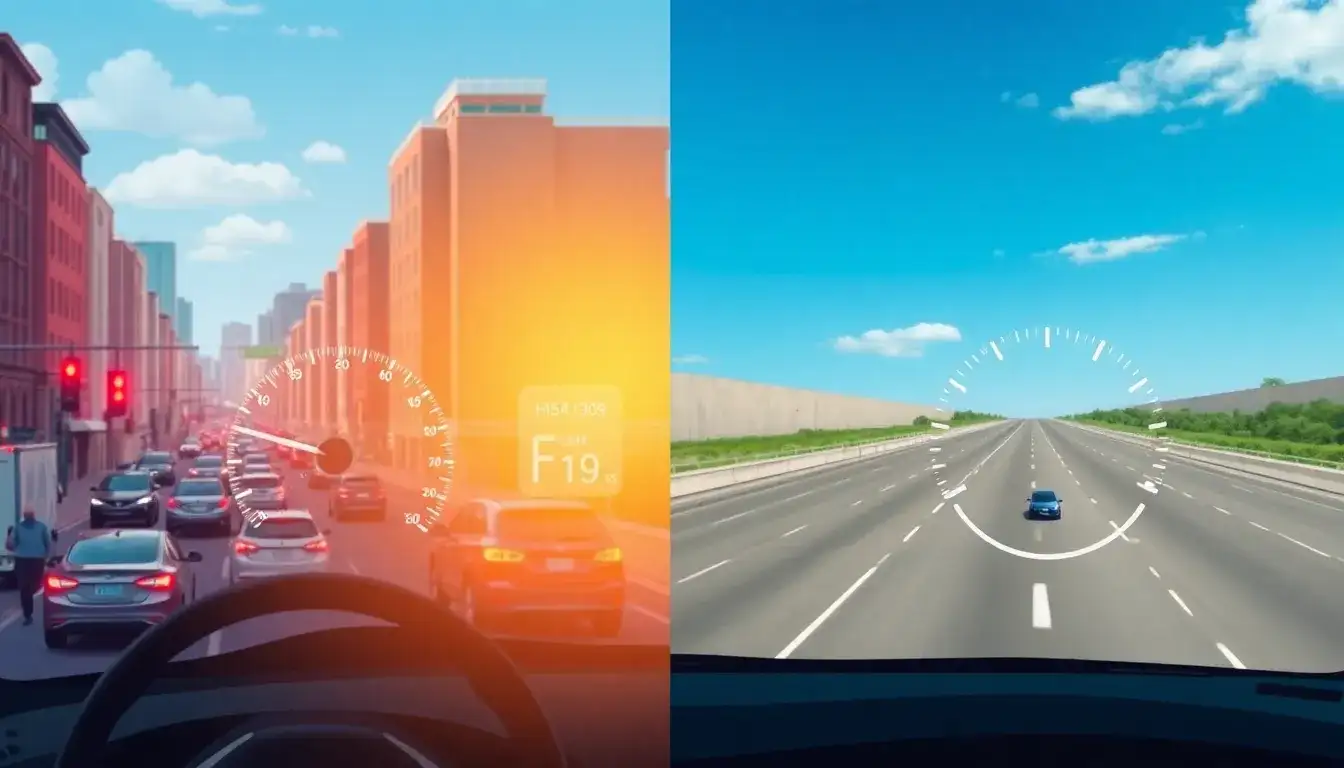
Energy Consumption Differences Between City and Highway Driving for EVs
- Higher Energy Use on Highways: EVs consume significantly more energy per mile when driving on highways compared to city streets. This is primarily because higher speeds increase aerodynamic drag exponentially (by the square of the speed), forcing the electric motor to work harder and spin at higher, less efficient RPMs. Unlike internal combustion engines, EVs usually have single-speed transmissions that do not optimize efficiency across wide speed ranges, which makes high-speed highway driving less energy efficient.
- Battery Efficiency Degradation at High Currents: At highway speeds, EVs demand higher electrical currents from their batteries. Research shows that batteries become less efficient at these high currents due to increased energy losses, further contributing to greater energy consumption during highway driving than city driving.
- City Driving Is More Efficient for EVs: Contrary to gasoline vehicles, which tend to have better fuel economy on highways, EVs benefit from city driving conditions. Lower speeds, frequent stops, and regenerative braking in urban environments help improve overall energy efficiency. Regenerative braking recovers energy during deceleration, which is more frequent in city driving, thus conserving battery charge.
- Quantitative Differences:
- An example from Green NCAP data shows that highway driving energy consumption can be around 30.2 kWh/100 km, while in mixed or city driving it can be substantially lower, around 22.5 kWh/100 km—indicating roughly a 35% higher consumption on highways compared to official test cycles that combine city and highway.
- EPA testing weights city driving at 55% and highway at 45% when reporting combined range figures, reflecting the importance of both conditions in overall consumption estimates. Real-world highway range is often lower than official ratings by about 15% or more because of higher consumption at sustained high speeds.
Summary
| Aspect | City Driving | Highway Driving |
|---|---|---|
| Average Speed | Lower (~15 mph typical in traffic) | Higher (e.g., 75 mph or more) |
| Aerodynamic Drag | Low | High (increases with speed²) |
| Motor Efficiency | Higher (lower RPM) | Lower (high RPM, less efficient) |
| Battery Current Demand | Lower | Higher |
| Battery Efficiency | Higher (less loss) | Lower (more energy loss) |
| Regenerative Braking Impact | Significant (recovers energy) | Minimal |
| Typical Energy Consumption | Lower (better efficiency) | Higher (up to 35% more) |
EVs are therefore more energy-efficient in city driving due to lower speeds and the benefit of regenerative braking, while sustained high-speed highway driving significantly increases energy consumption by raising aerodynamic drag and battery losses.
This contrasts with traditional gasoline vehicles, which typically achieve better mileage on highways rather than in stop-and-go city traffic.
Original article by NenPower, If reposted, please credit the source: https://nenpower.com/blog/what-are-the-main-differences-in-energy-consumption-between-city-and-highway-driving-for-evs/

