

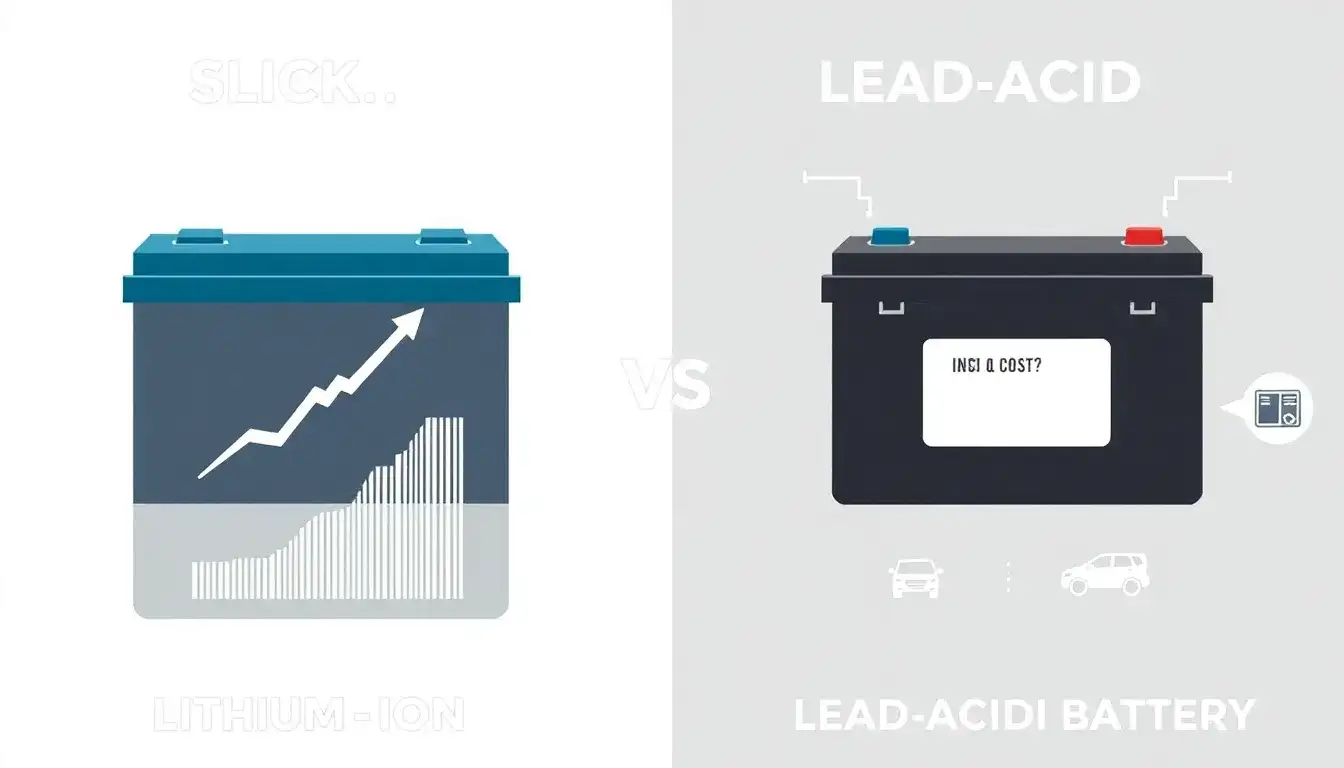
Cost Differences Between Lithium-Ion and Lead-Acid Batteries
Lithium-ion and lead-acid batteries have distinct differences in their cost structures over their lifetimes. Here are the main differences:
- Initial Cost:
- Lead-Acid Batteries: Generally cheaper upfront, with costs ranging from $65 to $200 per kWh.
- Lithium-Ion Batteries: More expensive initially, priced between $200 and $500 per kWh.
- Lifespan and Cycle Life:
- Lead-Acid Batteries: Typically last for 300 to 500 cycles with a lifespan of about 3 to 12 years. They may need multiple replacements over a decade.
- Lithium-Ion Batteries: Can last for 3,000 to 5,000 cycles or more, often exceeding 10 years.
- Cost Over Lifetime:
- Lead-Acid Batteries: Despite lower initial costs, they are more expensive over their lifespan due to frequent replacements and maintenance.
- Lithium-Ion Batteries: Although more expensive upfront, they are often less costly over their lifetime due to their longer lifespan and higher efficiency.
- Maintenance:
- Lead-Acid Batteries: Require regular maintenance, including watering and cleaning, which adds to their long-term cost.
- Lithium-Ion Batteries: Require virtually no maintenance.
- Efficiency and Energy Density:
- Lead-Acid Batteries: Have lower energy density and efficiency (around 80-85%) compared to lithium-ion batteries.
- Lithium-Ion Batteries: Offer higher energy density and efficiency (around 95%) which translates into more usable power.
Overall, while lead-acid batteries have a lower initial cost, lithium-ion batteries provide better long-term value due to their extended lifespan, efficiency, and lower maintenance needs.
Original article by NenPower, If reposted, please credit the source: https://nenpower.com/blog/what-are-the-main-differences-in-cost-between-lithium-ion-and-lead-acid-batteries/

